
Berenjenas con Miel
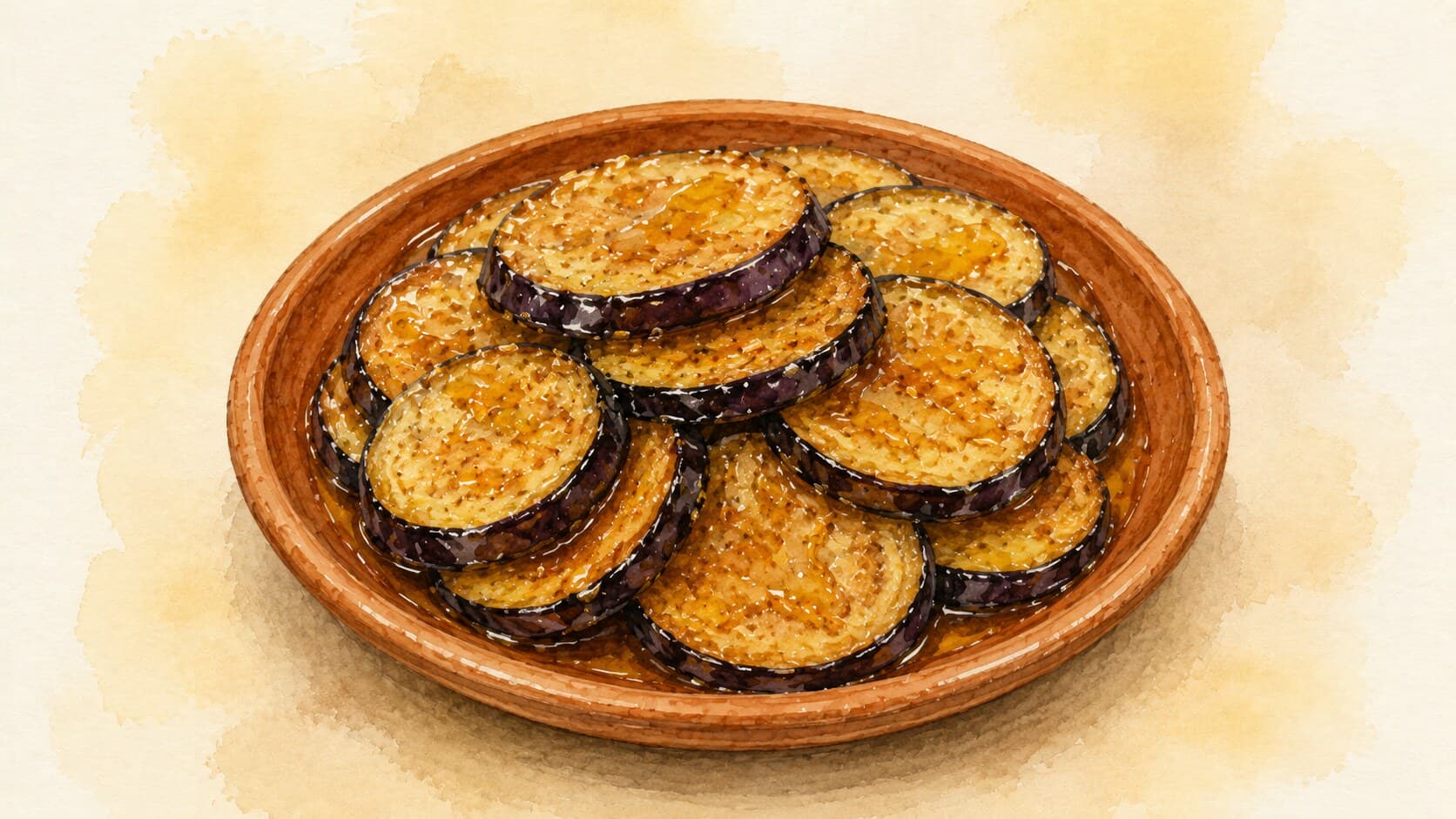
Delight in the sweet-savory blend of crispy fried eggplants drizzled with honey, a classic Andalusian tapa.
Contents (5 sections)▾
Ingredients
- 2 medium eggplants
- 1 tsp salt
- 1 cup all-purpose flour
- Oil for frying (enough to submerge the eggplants)
- 1/2 cup cane molasses (miel de caña) or honey
Steps
Slice the eggplants into 1/4-inch thick rounds. This size ensures they cook evenly.
Sprinkle salt over the eggplant slices and let them sit for 30 minutes. This process draws out moisture and helps reduce bitterness.
Rinse the salted eggplant slices under cold water and pat them dry with a paper towel. Removing excess moisture is crucial for achieving crispiness.
Heat oil in a deep frying pan over medium-high heat until it reaches 180°C (350°F). A proper frying temperature ensures a golden crust.
Dredge the eggplant slices in flour, shaking off any excess. This coating helps create a crispy texture when fried.
Fry the eggplant slices in batches for about 3-4 minutes or until golden brown. Avoid overcrowding the pan to maintain oil temperature.
Remove the fried eggplants and drain them on paper towels to absorb excess oil.
Drizzle warm cane molasses or honey over the fried eggplant slices before serving, enhancing the sweet-savory flavor.
Tools you'll want
Why this works
This recipe leverages the technique of salting eggplant to draw out moisture, which reduces bitterness and prevents the eggplant from becoming soggy during frying. The flour coating aids in achieving a crunchy exterior, while frying gives it a crisp, golden surface. If the eggplants seem too soft after frying, ensure they were adequately salted and dried before frying, as excess moisture can lead to a less crisp texture. Additionally, maintaining the correct oil temperature is crucial; if the oil is too cool, the eggplants will absorb more oil and become greasy. Conversely, if the oil is too hot, they may brown too quickly without cooking through. Using cane molasses or honey provides a delightful glaze that complements the savory flavor of the eggplants, making each bite a perfect blend of sweet and savory.
Common mistakes
Skipping the salt-and-rest, or not drying the eggplant afterward.
Target: Salt the slices, rest them ~30 minutes, then rinse and pat them thoroughly dry before flouring.
Why it matters: Salt pulls water out of the eggplant by osmosis (water moving out of the cells toward the salt), which both firms the flesh and reduces any bitterness. But the drying step is just as important: surface water is the enemy of crisp frying. Wet slices drop the oil temperature, spit and steam, and fry up soggy and oil-soaked instead of crisp.
What to do: After resting, rinse off the salt, then press the slices between paper towels or a clean cloth until the surface is genuinely dry. Flour them only once they're dry.
Frying in oil that isn't hot enough.
Target: Oil at about 180°C (350°F), holding steady.
Why it matters: Hot oil flash-evaporates the surface moisture and sets a crust almost instantly, which seals the slice so it crisps instead of drinking oil. Cool oil does the opposite — the eggplant sits there absorbing fat and turns heavy and greasy. (Eggplant is spongy and especially prone to this.)
What to do: Use a thermometer, or test with a pinch of flour or a cube of bread — it should sizzle briskly and rise, not sink quietly. Bring the oil back up to temperature between batches.
Crowding the pan.
Target: Fry in small batches, a single uncrowded layer at a time.
Why it matters: Every slice you add cools the oil. Pile too many in and the temperature crashes below the crisping point, so the whole batch turns greasy and pale — the exact problem you salted and dried to avoid.
What to do: Fry a few pieces at a time, give them room, and let the oil recover its heat before the next batch.
Saucing too early — or letting the fried eggplant sit before serving.
Target: Drizzle the warm honey or cane molasses over the eggplant right before serving, and serve straight away.
Why it matters: The crust stays crisp only while it's hot and dry. Honey is water-rich; coat the slices too far ahead and the moisture softens the crust from the outside, while steam trapped under a waiting pile softens it from within. Sauce and serve together and you get the signature contrast — crisp, hot eggplant against sweet honey.
What to do: Have everyone ready to eat, then drain, drizzle, and bring it to the table. Warming the honey slightly helps it pour into a thin, even coat rather than a heavy puddle.
What to look for
- Beads of moisture on the salted slices: after resting, the surface should look damp or beaded where the salt has drawn water out. That's your sign the salting worked — now rinse and dry well.
- A brisk, steady sizzle the moment a slice hits the oil: lively bubbling around the edges means the oil is hot enough to seal and crisp. A weak, slow sizzle means it's too cool and the eggplant will soak up fat.
- An even golden-brown crust, firm to the tongs: the coating should set into a crisp, golden shell. Pale and soft means more time or hotter oil; dark brown means pull it now before it turns bitter.
- Honey that slides over the crust in a thin, glossy coat: warm honey should drape and gloss the surface rather than soak in. If it's disappearing into the eggplant, the crust has gone soft — serve faster next time.
A note on history
This Andalusian dish carries the imprint of Al-Andalus, the centuries of Muslim rule in southern Spain. Both of its core elements arrived with that period: eggplant was brought to the Iberian Peninsula by the Moors (the Arab and Berber Muslims who entered Spain from 711 CE), and they also introduced sugar cane — the source of miel de caña, the dark cane-sugar syrup traditionally drizzled over the fried eggplant (MarocMama; Spanish Sabores). The dish is especially associated with Córdoba, a major center of Al-Andalus, where miel de caña (rather than bee honey) is the traditional finish (Spanish Sabores).
Get the essays in your inbox — free
Weekly notes on flavor, fermentation, and food history — the writing behind the Atlas of Flavor. No spam; unsubscribe anytime.