
Fufu and Light Soup
Fufu and Light Soup is a savory West African dish featuring a starchy dough ball served with a flavorful broth.
Contents (5 sections)▾
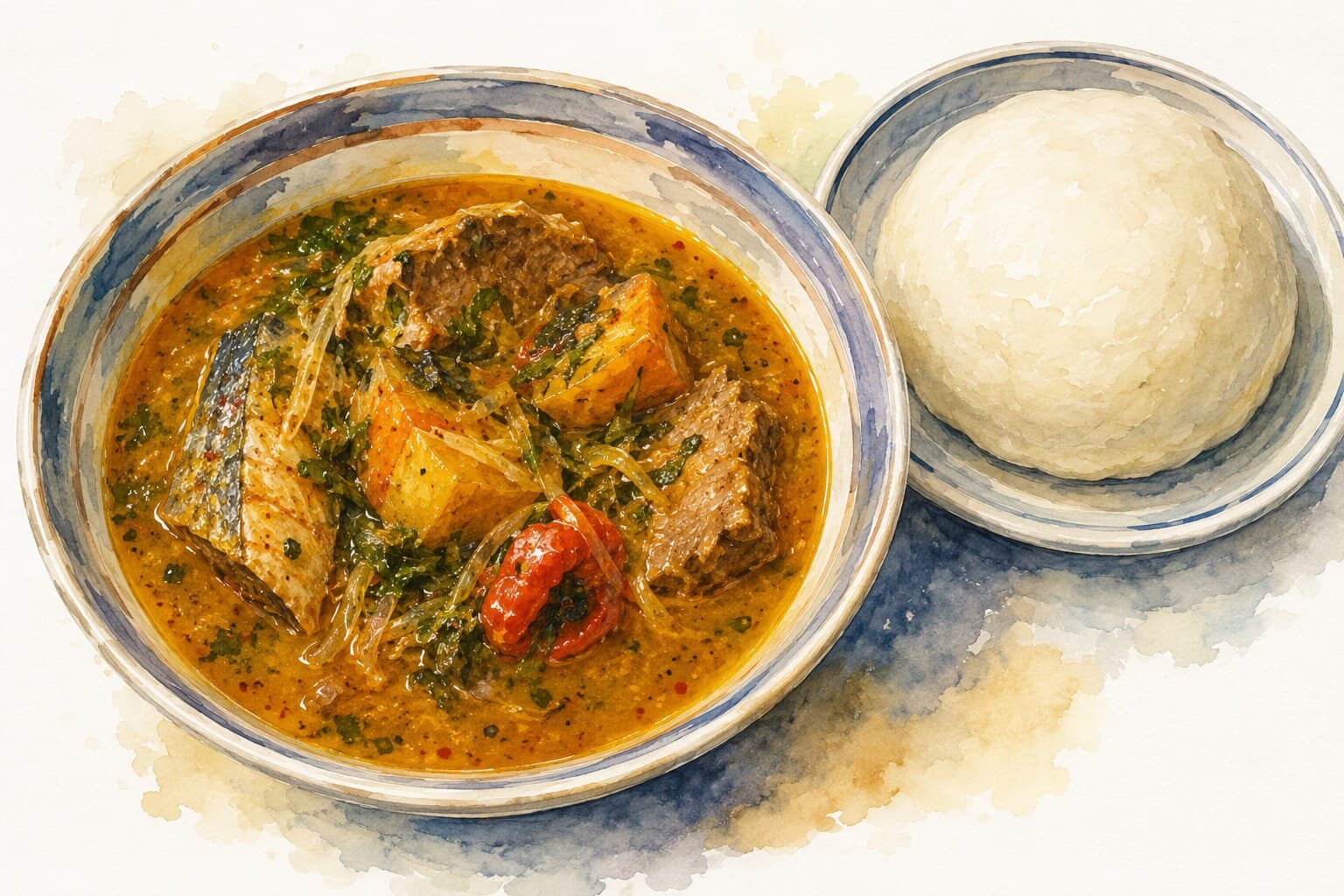
Ingredients
- 500 g cassava flour
- 250 g plantain flour
- 1.5 liters water
- 500 g goat meat or fish
- 4 medium tomatoes, chopped
- 1 large onion, diced
- 2 inches ginger, minced
- 4 cloves garlic, minced
- 1 scotch bonnet pepper, whole
- Salt to taste
- Pepper to taste
Steps
In a large pot, bring 1 liter of water to a boil and add the goat meat or fish. Cook for 30 minutes over medium heat until tender.
Add the chopped tomatoes, diced onion, minced ginger, minced garlic, whole scotch bonnet pepper, salt, and pepper to the pot. Simmer for another 15 minutes.
In a separate large bowl, mix the cassava flour and plantain flour with 500 ml of water, stirring until smooth. Knead until a sticky dough forms.
Shape the fufu into balls or a single large ball. Use water to prevent sticking. Keep warm while the soup finishes cooking.
Once the broth is ready, remove the meat or fish and strain the soup if desired. Serve the light soup hot with fufu on the side.
Why this works
The combination of cassava and plantain (a starchy cooking banana) flour creates a stretchy and elastic fufu that pairs perfectly with the clear and aromatic light soup. The fufu acts as a neutral canvas to absorb the flavors of the broth, enhancing the overall dish. As the soup simmers, the flavors from the tomatoes, onions, and spices meld together, creating a rich and satisfying experience. If the fufu seems too dry, you can add a bit more water while kneading. It's important to maintain a balance in the soup's seasoning, as too much salt can overpower the delicate flavors. Using whole scotch bonnet (a fiery West African and Caribbean chili) adds warmth without overwhelming heat, making it approachable for various palates.
A note on cassava: This recipe uses commercial cassava flour, which has already been processed to remove the cyanogenic compounds present in fresh cassava root. Do not substitute raw cassava root unless you know the traditional soaking-and-fermentation method — improper preparation of fresh cassava is genuinely unsafe. Stick with a trusted flour brand and the recipe is straightforward.
Common mistakes
Under-kneading the fufu dough or adding all the water at once.
Target: Add the water gradually while stirring or kneading vigorously, working the mixture until it forms one smooth, stretchy mass with no dry lumps or streaks.
Why it matters: Cassava and plantain flour need real working to develop the sticky, elastic texture fufu is known for; add the liquid too fast or stop kneading early and the result is grainy and lumpy instead of smooth.
What to do: Add water a little at a time, and keep working the dough past the point it looks roughly combined — the stretch tends to develop in the last minute or two.
Letting the soup rip at a hard boil instead of a gentle simmer.
Target: Bring the pot to a boil once, then reduce the heat so the broth barely simmers for the rest of the cooking time.
Why it matters: A hard boil is rough on both goat meat and fish, toughening the meat's fibers and breaking fish into ragged shreds, and it also evaporates the broth faster than intended, throwing off the seasoning balance by the time the protein is done.
What to do: Watch for a gentle bubble rather than a rolling boil, adjusting the burner down as soon as it comes up to temperature.
Using the same cooking time for goat meat and fish without checking doneness directly.
Target: Whichever protein you're using, confirm it's actually done by looking and testing rather than by the clock alone — goat meat should be fork-tender with no pink remaining, and fish should be opaque and flake easily apart.
Why it matters: Goat meat is tough and needs sustained cooking to tenderize, while fish cooks through in a fraction of that time; treating them as interchangeable on the same timeline risks undercooked, unsafe meat if you rush it, or dry, overcooked fish if you don't adjust down.
What to do: Check goat meat with a fork for tenderness and no raw color at the center; check fish by pressing gently to see that it flakes and looking for opaque flesh all the way through, and pull it as soon as it does.
Letting shaped fufu sit out and firm up before serving.
Target: Shape the fufu close to serving time and keep it covered with a lid or damp cloth if there's any delay.
Why it matters: The starches in the dough firm up and form a dry skin within minutes of shaping and cooling, so fufu left uncovered loses the soft, stretchy texture it's meant to have by the time it reaches the table.
What to do: Time the shaping for right before serving, and cover it the moment it's formed if the soup needs a few more minutes.
What to look for
- Fufu that pulls into a smooth, stretchy mass with no dry streaks or grainy bits when you press or tear off a piece. Lumps or a crumbly texture mean it needs more kneading or a little more water worked in.
- Goat meat that is fork-tender with no pink at the center and juices that run clear rather than red; or, if using fish, flesh that has turned fully opaque and flakes apart easily with no translucent, raw-looking center. Either protein should show no raw color before serving.
- A broth that stays relatively thin and clear rather than thick or cloudy, with the tomato, ginger, and garlic visible as small flecks rather than a heavy gravy. That lighter consistency is what distinguishes this dish from thicker West African soups.
- A background warmth from the scotch bonnet rather than overwhelming heat. If the broth turns sharply hot, the pepper likely split or got crushed against the pot; fish it out once the broth tastes the way you want.
A note on history
Fufu is a staple across West and Central Africa — Ghana, Nigeria, Cameroon, and Côte d'Ivoire among many other countries — traditionally made by boiling a starch (cassava, yam, plantain, or cocoyam, depending on the region) and then pounding it in a large mortar with a long pestle until smooth and stretchy, often a two-person job with one person pounding rhythmically and another turning the dough between strikes. The flour-based version made in this recipe is a modern shortcut toward that same texture. "Light soup," for its part, gets its name from its consistency: a thin, clear, tomato-and-pepper broth, in contrast to thicker West African soups like egusi or okra soup, which are built more like stews. Eating a starchy dough alongside a soup by hand — pinching off a piece of fufu to scoop up the broth — is a shared style across many West African tables, built around a communal pot rather than individually plated portions.
Get the essays in your inbox — free
Weekly notes on flavor, fermentation, and food history — the writing behind the Atlas of Flavor. No spam; unsubscribe anytime.