
Yakitori
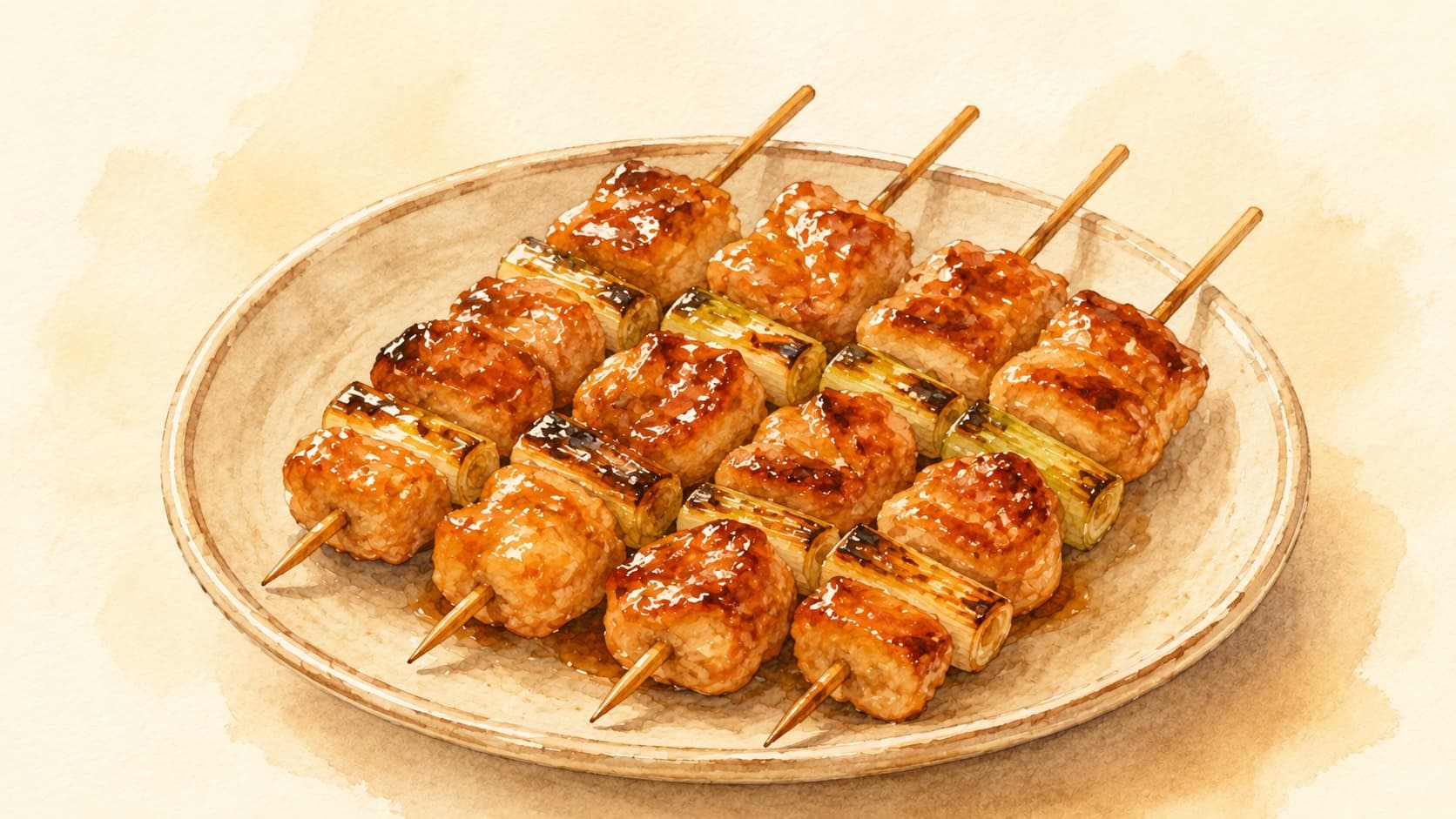
Yakitori combines marinated chicken skewers with precise grilling techniques to create a flavorful dish.
Contents (5 sections)▾
Ingredients
- 500g chicken thighs, boneless, skinless
- 2 tablespoons soy sauce
- 2 tablespoons mirin
- 1 tablespoon sake
- 1 tablespoon sugar
- 1 teaspoon sesame oil
- 1 bunch green onions, cut into 5cm pieces
- Salt, to taste
- Bamboo skewers, soaked in water
Steps
Cut chicken thighs into bite-sized pieces.
In a bowl, mix soy sauce, mirin, sake, sugar, and sesame oil.
Marinate chicken pieces in the mixture for at least 10 minutes.
Thread chicken and green onion pieces onto soaked skewers.
Grill the skewers over medium-high heat for 15-20 minutes, turning occasionally, until charred and cooked through. Because these are chicken skewers, confirm doneness rather than going by time or char alone: the thickest piece should reach 74 °C / 165 °F on an instant-read thermometer, opaque with no pink at the center.
Season with salt and serve hot.
Tools you'll want
Why this works
Yakitori relies on the balance of sweet and savory from the marinade, enhancing the chicken's natural flavors. Grilling over medium-high heat ensures the chicken cooks through while developing a charred exterior. The sugars in the marinade caramelize, creating a glossy finish. Marinating for at least 10 minutes allows the chicken to absorb flavors without overpowering its taste.
Common mistakes
Using chicken breast.
Target: Chicken thigh (skin-on, bone-out) cut into 2.5 cm cubes. NOT breast.
Why it matters: Yakitori cooks fast over high heat. Chicken breast dries out in under 60 seconds at grill temperatures, becoming chalky. Thigh meat has enough collagen and fat to stay juicy through the grill's sear, AND the rendered fat from the skin self-bastes the meat.
What to do: Buy boneless skin-on thighs. Cut into uniform cubes — uniformity is more important than size.
Workarounds:
- Skinless thighs work; add a small piece of chicken skin on each skewer for the fat-baste effect.
- For tare-style yakitori, breast is acceptable IF brined for 30 minutes first.
Wrong skewer.
Target: Thin bamboo skewers (15–20 cm), soaked in water 30+ minutes before threading.
Why it matters: Unsoaked bamboo splinters and burns; metal skewers conduct heat too well and overcook the meat from the inside. Soaked bamboo provides the right grip without compromising the cook.
What to do: Soak in cold water for 30 minutes minimum. Thread tightly — pieces should touch each other.
Workarounds:
- Soaking time short? At least 10 minutes makes a noticeable difference.
- Premium option: kushi-grade flat bamboo skewers from a Japanese restaurant supply — grip the meat better, look cleaner.
Tare applied too early.
Target: Salt yakitori (skewered chicken) first (10 minutes pre-grill), grill 70 % cooked, THEN dip in tare (sweet-savoury soy-mirin glaze) for the final 30 %.
Why it matters: Tare contains sugar from mirin (sweet rice wine) and soy. Applied early, the sugar caramelizes immediately and turns to char before the chicken finishes cooking. Apply at the end and the glaze hits the perfect sticky-glossy stage.
What to do: Have a small bowl of tare ready. Use tongs (not a brush) to dip each skewer 2–3 times in the final minute of grilling.
Workarounds:
- For mid-process tare layering, brush thin coats every 30 seconds in the last 90 seconds — builds up flavor without burning.
- Shio (salt) yakitori skips tare entirely. Just salt + lemon at the end.
Wrong heat source.
Target: Binchotan charcoal at 250 °C+ surface temperature. Gas grill is a distant second.
Why it matters: Binchotan (white Japanese charcoal) burns at very high temperature with low smoke and intense infrared radiation. This produces the characteristic "yakitori sear" — fast Maillard development (the browning chemistry that gives grilled food its savoury crust) without burning. Gas grills can sear but lack the radiant heat profile.
What to do: Source binchotan from Japanese specialty stores. Pre-burn 30 minutes before grilling.
Workarounds:
- No binchotan? Lump hardwood charcoal is the next best — higher heat than briquettes, cleaner burn.
- Indoor: cast-iron griddle pre-heated for 5 minutes + small splash of water for steam.
Turning too often.
Target: Turn skewers only every 30–45 seconds — let the meat develop color before flipping.
Why it matters: Constant flipping prevents the Maillard reaction from completing on either side — the meat steams instead of sears. The signature yakitori char requires sustained contact with the heat source.
What to do: Set a timer if needed. Wait until you see good color, then flip.
Workarounds:
- If your grill has hot spots, rotate the skewers (don't flip) to even out the cooking.
Skipping the rest.
Target: Rest skewers 2 minutes after pulling from the grill.
Why it matters: Yakitori cooks fast and comes off screaming-hot. A brief rest lets it cool off its peak before you eat.
What to do: Place on a wire rack (not a plate) to keep the underside from steaming. Sprinkle with finishing salt or sansho pepper during the rest.
What to look for
- A caramelized, glossy surface on the chicken.
- Chicken cooked through to 74°C / 165°F at the thickest piece on a food thermometer — the safety check; glaze, char, and clear juices are cues, not a reliable test.
- A slight char on the edges for added flavor.
- An enticing aroma of grilled meat and marinade.
Chef's view
Yakitori has deep cultural roots in Japanese cuisine, often enjoyed at izakayas (Japanese pubs serving small plates with drinks) and street stalls. The technique emphasizes simplicity and quality ingredients. Each skewer represents a balance between seasoning and cooking method, showcasing the skill of the cook. The communal aspect of sharing skewers enhances the dining experience, making it a cherished social food.
<!-- beginner-glossed v1 -->Get the essays in your inbox — free
Weekly notes on flavor, fermentation, and food history — the writing behind the Atlas of Flavor. No spam; unsubscribe anytime.