
Tonjiru
Tonjiru is a Japanese soup made with pork, root vegetables, and miso-dashi, simmered to develop a rich broth and enhance flavors.
Contents (6 sections)▾
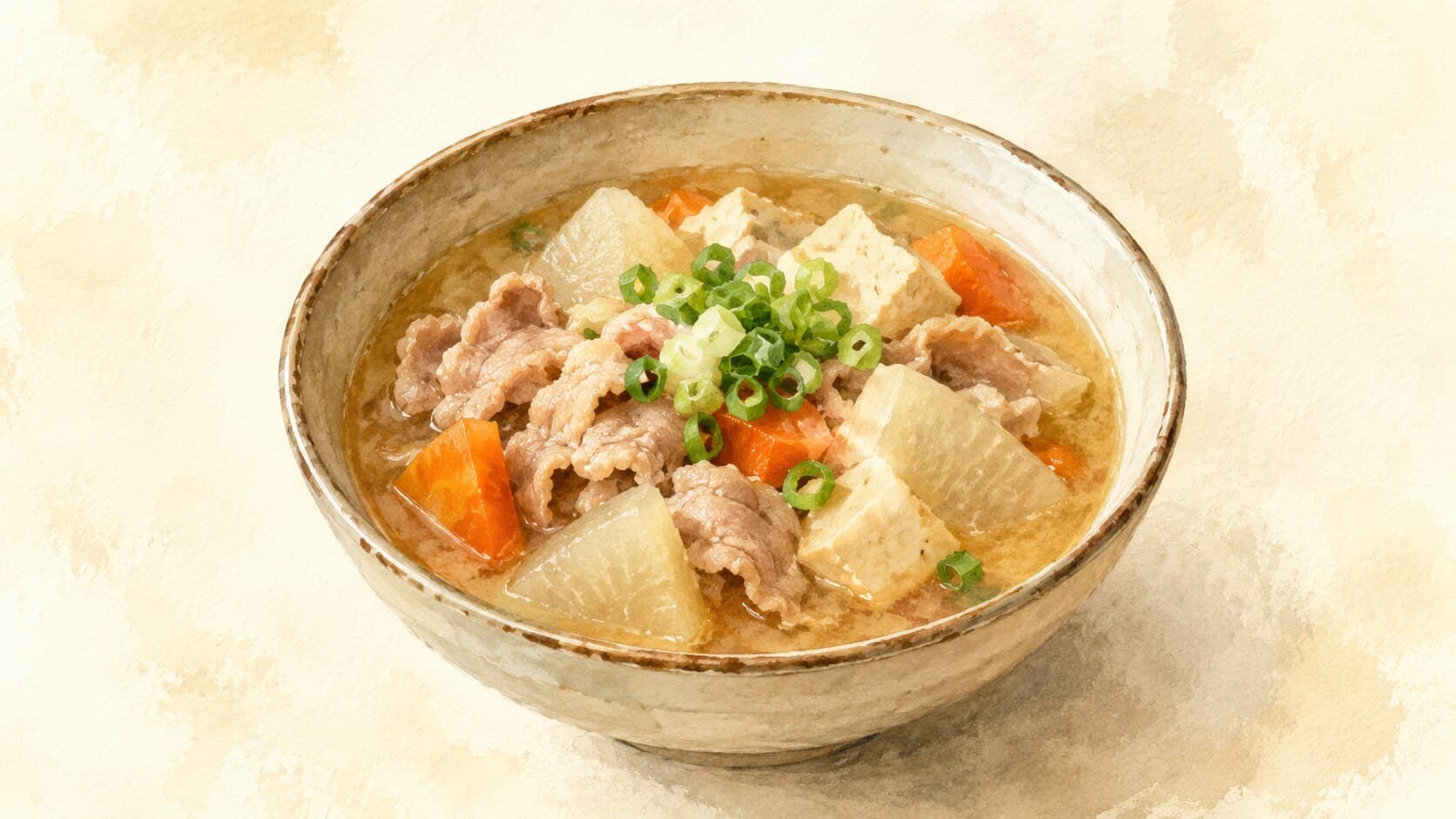
Ingredients
- 200 g pork belly, sliced
- 1 medium carrot, sliced
- 1 medium daikon radish, sliced
- 100 g burdock root, sliced
- 2 green onions, chopped
- 4 cups dashi stock
- 4 tbsp miso paste
- 1 tbsp soy sauce
- 1 tbsp sesame oil
- to taste salt
Steps
In a large pot, heat the sesame oil over medium heat. Add the sliced pork belly and sauté for about 5 minutes, until browned. This helps to render the fat and add flavor.
Add the sliced burdock root, carrot, and daikon to the pot, and sauté for another 5 minutes. This step softens the vegetables and enhances their natural sweetness.
Pour in the dashi stock and bring to a simmer over medium-high heat. Once simmering, reduce the heat to low and let it cook for 10 minutes to develop the flavors.
In a small bowl, mix the miso paste with a few ladles of hot broth until smooth. This prevents lumps in your soup.
Stir the miso mixture back into the pot along with the soy sauce. Simmer gently for an additional 2-3 minutes, being careful not to boil, as boiling can destroy the delicate flavors of the miso.
Taste and adjust the seasoning with salt if necessary. Serve hot, garnished with chopped green onions.
Why this works
The key to a successful Tonjiru lies in the simmer-in-miso-dashi technique, which harmonizes the umami flavors of the dashi and miso. Dashi, made from kombu (seaweed) and bonito flakes, provides a rich base with inherent umami, while miso adds depth and a creamy texture. The choice of pork belly contributes a satisfying richness that complements the earthy root vegetables. During cooking, the vegetables release their natural sweetness, enhancing the overall flavor. If the soup seems too salty, you can add a little more water or dashi to dilute it without losing the essence. Conversely, if it appears too bland, a dash of soy sauce or an extra spoonful of miso can add to the taste. This balance of flavors is what makes Tonjiru a comforting staple in Japanese cuisine, especially for weeknight meals.
Common mistakes
- Pork before vegetables. Pork rendered (heated so its fat melts out) on cold steel sticks. Brown the pork lightly in a hot pan, then add aromatics.
- Boiling miso. Miso aroma is volatile — once boiled, the soup tastes flatly salty. Add miso off heat at the very end.
- All root vegetables added at once. Daikon (a long white Japanese radish) takes 20 minutes; carrot 12; potato 8; konnyaku 1. Stage them so everything finishes together.
- Skipping the skim. Pork releases scum (impurities + denatured protein) in the first 5 minutes. A clear broth needs that scum off.
What to look for
- Pork color: the slices have just gone matte and the edges curl slightly — that is when aromatics go in.
- Skim: the surface foams gray-brown in the first 5 minutes; skim until the foam stays white and small.
- Vegetable doneness: a chopstick goes through daikon with no resistance, carrot offers slight give.
- Final miso: dissolved through, no streaks, color a uniform cloudy amber, aroma at the rim distinctly sweet-savory.
Substitutions
- Pork belly → pork shoulder. Less fat, leaner result; still tonjiru. Avoid pork loin — too lean, ends up dry.
- Awase miso → red miso (use 15% less). Saltier, denser; pair with the same vegetables but expect a heavier bowl.
- Daikon → kabu (turnip) or kohlrabi. Faster cook (8 minutes); milder flavor.
- Konnyaku → 「skip». Konnyaku (a firm, jelly-like cake made from konjac yam) is texture, not flavor. Leaving it out doesn't break the dish.
Make-ahead and storage
- Tonjiru improves overnight. Make it ahead, refrigerate without the miso, and stir in fresh miso at service.
- Refrigerate within 2 hours of cooking. Keeps 3 days; freezes well in 500 ml portions for up to 2 months.
- Reheat gently — never boil with miso in. Bring to a quiet simmer, off heat, then stir in any additional miso to brighten.
- Pork-safety note: Cooked pork should not sit at room temperature longer than 2 hours (1 hour above 30 °C). Refrigerate or freeze rather than relying on smell.
Get the essays in your inbox — free
Weekly notes on flavor, fermentation, and food history — the writing behind the Atlas of Flavor. No spam; unsubscribe anytime.