
Tamagoyaki
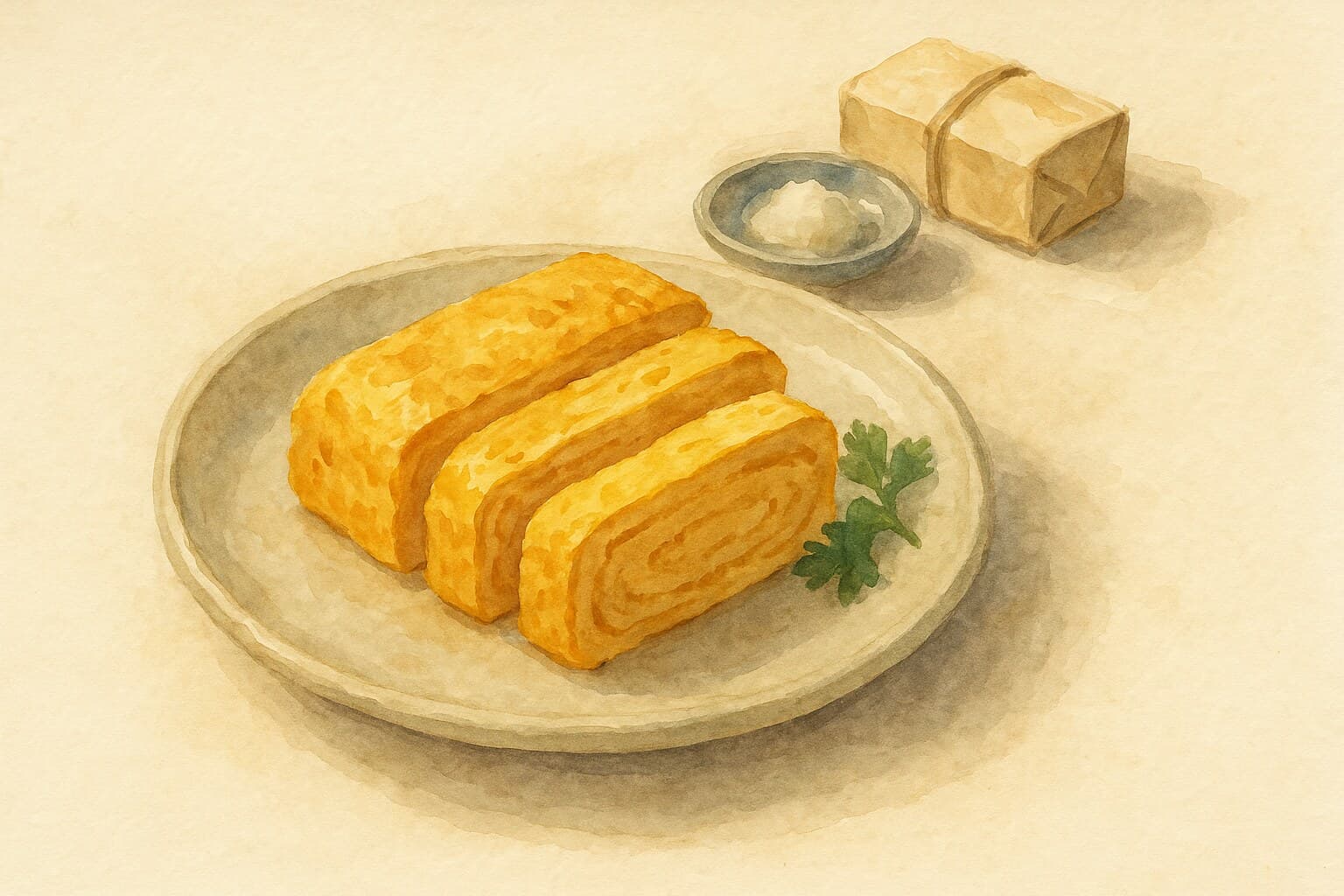
Tamagoyaki is a classic Japanese rolled omelette that showcases the delicate balance of sweet and savory flavors.
Contents (6 sections)▾
Ingredients
- 4 large eggs
- 2 tbsp dashi stock
- 1 tbsp soy sauce
- 1 tbsp sugar
- 1 tbsp mirin
- 1 tbsp vegetable oil
- salt to taste
Steps
In a bowl, whisk together the eggs, dashi stock, soy sauce, sugar, mirin, and a pinch of salt until well combined and slightly frothy.
Heat a rolled-omelette pan over medium heat and lightly oil it with a paper towel dipped in vegetable oil.
Pour a small amount of the egg mixture into the pan, tilting it to cover the surface evenly. Cook for about 1-2 minutes until the edges begin to set.
Using chopsticks or a spatula, gently roll the omelette towards you, creating a cylinder. Push the rolled omelette to the back of the pan.
Add more egg mixture to the pan, lifting the rolled omelette to let the raw egg flow underneath. Cook for another 1-2 minutes, then roll again. Repeat until all the mixture is used.
Once cooked, remove the tamagoyaki from the pan and let it cool slightly before slicing into bite-sized pieces.
Why this works
Tamagoyaki is a beautiful representation of balance in Japanese cuisine, where the umami of dashi enhances the natural flavor of the eggs, while the sugar and mirin add a subtle sweetness that harmonizes the dish. The technique of rolling helps create the signature layered texture, which looks appealing and adds a unique mouthfeel. When cooking, controlling the heat is crucial; too high, and the eggs may become tough, while too low may result in undercooked layers. If it breaks while rolling, don't panic—simply press the mixture back together in the pan, allowing it to cook slightly longer to bind. This resilient technique ensures that even if the first attempt is imperfect, you can salvage the dish and enjoy a delicious tamagoyaki. The key lies in patience and practice, as mastering the rolling technique takes time, but the reward is worth it.
Common mistakes
- Pan too hot. Eggs brown before they layer. Target medium-low — the first pour should sizzle gently, not crackle.
- Too much oil between layers. Pools instead of films. A folded paper towel dipped in oil and wiped across the pan is the right amount.
- Pouring too thick. Each layer should be a thin film, not a pancake — about 3 tbsp per layer in a 13×18 cm maki pan (the small rectangular Japanese skillet sold for rolling tamagoyaki, named after the rolling motion).
- Rolling before set. If the top is still wet, the roll cracks. Wait until the surface is almost dry but the underside still pliable.
What to look for
- Pan temperature: a dab of egg on the surface sets in 5–7 seconds, not 2.
- Edge before rolling: the edge nearest the handle has lifted slightly from the pan and looks matte, not glossy.
- The roll: the cylinder feels light, not dense — dense means too much egg per layer.
- The slice: concentric rings clearly visible, no cracks, color a uniform pale yellow.
Substitutions
- Dashi (the kelp-and-bonito base stock that underpins many Japanese savoury dishes) → 2 tsp boiling water + 1/4 tsp soy + tiny pinch katsuobushi (shaved dried-and-smoked bonito flakes) powder. Quick approximation; lighter flavor.
- Sugar → mirin (1.5× by volume). Mirin (sweet Japanese rice wine used as a seasoning, adding gloss and gentle sweetness) adds dimension; sugar alone is cleaner-tasting.
- Maki (rectangular) pan → 8-inch round skillet, then trim edges to a rectangle. Works but you lose the natural square cross-section.
- Atsuyaki-style (no dashi, plain egg + salt). Different dish, same technique — useful for sandwiches.
Make-ahead and storage
- Best within 30 minutes of rolling. Surface dries and texture firms as it sits.
- Refrigerate in plastic wrap up to 2 days. Bring to room temperature 15 minutes before slicing.
- Do not freeze. Texture turns rubbery on thaw.
- Egg-safety note: Egg dishes should not sit at room temperature longer than 2 hours (1 hour above 30 °C). Discard rather than judge by smell alone.
Get the essays in your inbox — free
Weekly notes on flavor, fermentation, and food history — the writing behind the Atlas of Flavor. No spam; unsubscribe anytime.