
Samgyeopsal
A quintessential Korean dish that emphasizes the art of grilling pork belly at the table.
Contents (5 sections)▾
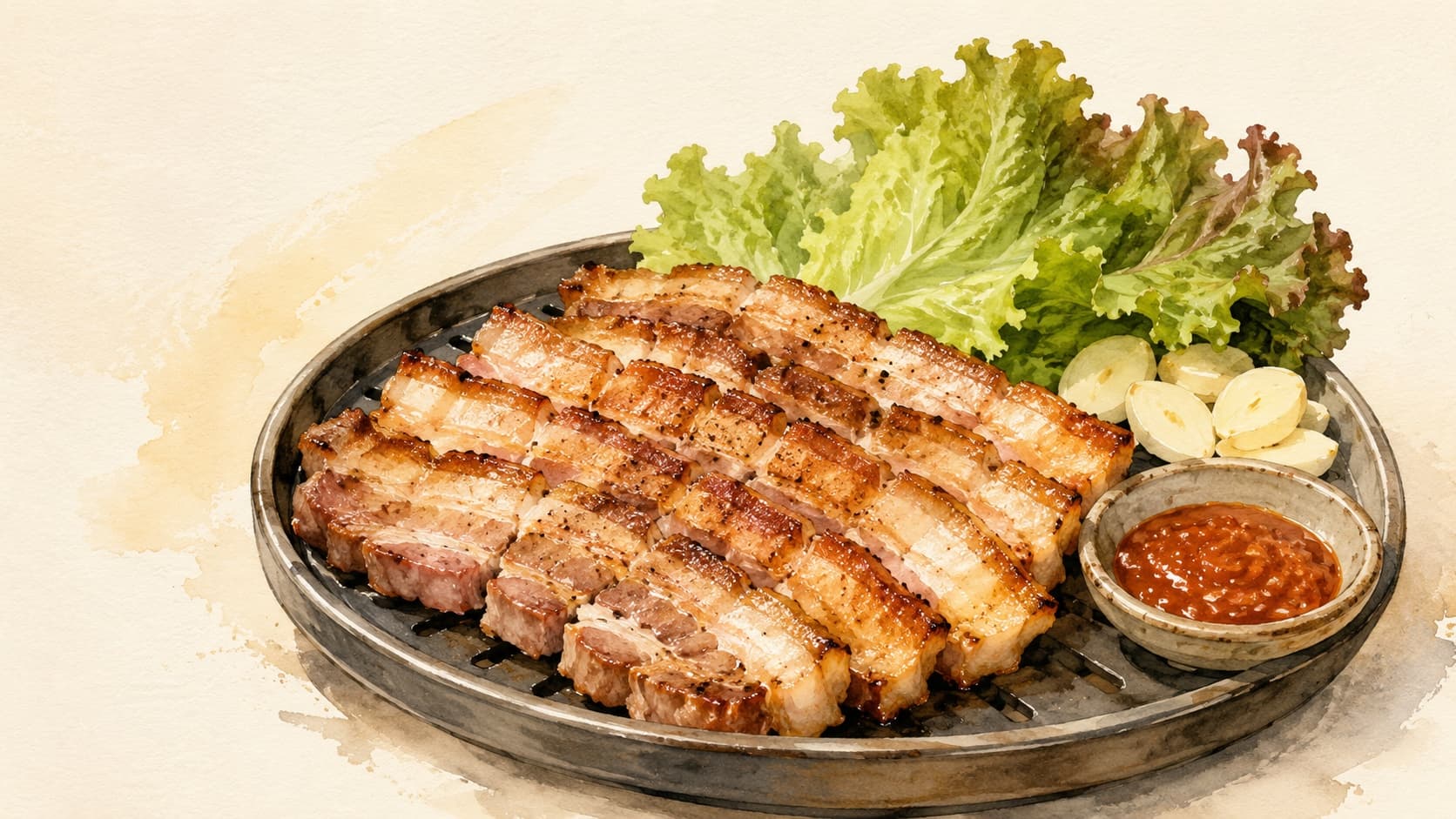
Ingredients
- 1 kg pork belly, sliced
- 4 tbsp sesame oil
- 2 tbsp salt
- 1 tbsp black pepper
- 1 head of lettuce
- 1 bunch green onions
- 4 cloves garlic, whole
- 2 tbsp gochujang (Korean red pepper paste)
- 1 tbsp soy sauce
- 1 tsp sugar
- 1 tbsp vinegar
- Sliced chili peppers for garnish
Steps
Preheat a grill or skillet over medium-high heat.
Season pork belly slices with salt and black pepper.
Place pork belly on the grill, cooking for 3-4 minutes per side until crispy.
Serve with lettuce, garlic, gochujang, and dipping sauces.
Wrap grilled pork in lettuce with garlic and sauce; enjoy.
Tools you'll want
Why this works
Samgyeopsal relies on the Maillard reaction, which occurs when the pork belly is grilled at high temperatures. This process creates a savory, browned crust, while the pork belly's own fat keeps the inside tender. The balance of fat and lean meat in pork belly contributes to rich flavors, which are enhanced by the accompanying sauces and fresh vegetables.
The use of sesame oil in the preparation adds a nutty aroma and depth to the dish. The salt and pepper seasoning accentuates the natural taste of the pork without overpowering it. Wrapping the grilled meat in lettuce introduces a refreshing crunch, helping to balance the meal.
Cooking times are crucial; the ideal grilling duration is around 3-4 minutes per side. This ensures that the outer layer crisps up while the inside remains juicy. Serve immediately for the best experience, as the flavors are most pronounced when hot.
Common mistakes
Using sliced pork belly that is too thin.
Target: 8-10 mm thick slices, not the paper-thin shabu-shabu cuts.
Why it matters: Thin slices cook to leather in seconds — no chew, no crispy edge, no juicy interior. Samgyeopsal's signature texture (crispy outside, soft inside) requires thickness for that contrast.
What to do: Buy from a Korean butcher who knows samgyeopsal cuts, or slice your own from a pork belly slab.
Workarounds:
- Only thin slices available → reduce cook time to 90 seconds per side; will still be acceptable.
No skin or wrong fat ratio.
Target: Skin-off pork belly with 60% fat / 40% lean visible in the cross-section. Fat layers should be clearly defined.
Why it matters: Too lean = dry; too fatty = greasy. Skin-on doesn't crisp properly on a stovetop pan (needs higher temps). The fat ratio is what makes pork belly the right cut for this dish.
What to do: Look at the cross-section before buying. Visible stripes of fat + lean is the right pattern.
Workarounds:
- Too lean → marinate in a little neutral oil + soy sauce before grilling for added richness.
Not letting the pan get hot enough.
Target: Medium-high heat, pan ripping hot before pork goes on. Cast iron or carbon steel ideal.
Why it matters: Cool pan = pork releases water and poaches in its own juices. Hot pan = immediate sear, Maillard browning, crispy edges. The difference between restaurant samgyeopsal and home flop.
What to do: Preheat 3-4 minutes. Test with a small piece — should sizzle aggressively, not whimper.
Workarounds:
- No good heavy pan → outdoor grill or grill pan is better than a thin nonstick.
Flipping too often.
Target: One flip only after 3-4 min first side, 2-3 min second side.
Why it matters: Frequent flipping prevents proper crust development on either side. Single flip = each side gets uninterrupted contact time with the hot surface.
What to do: Resist the urge to turn. Let it cook until the bottom is deep golden, then flip.
Workarounds:
- Sticking to the pan → wait another 30 seconds; well-seared pork releases naturally.
Skipping the lettuce wrap (ssam) accompaniments.
Target: Perilla leaves (large fragrant green leaves used like edible wrappers in Korean cooking), ssamjang (a Korean dipping paste blending fermented soybean paste and chili paste, used to season each wrapped bite), raw garlic, kimchi, scallion salad all ready before cooking starts.
Why it matters: Samgyeopsal is a build-your-own-bite dish. Pork alone is just grilled pork; the ssam (wrap) with all its components is the experience. Without them, you've made a different dish.
What to do: Prep all accompaniments before lighting the burner. Serve everything simultaneously.
Workarounds:
- Minimum acceptable → at least lettuce + ssamjang + raw garlic; everything else is bonus.
Eating cold or reheated.
Target: Serve immediately from the pan/grill — ideally at the table, with the cooking surface still warm.
Why it matters: Pork belly fat congeals fast as it cools — what was crispy becomes greasy. The Korean approach (cook at the table) solves this perfectly.
What to do: Cook in batches at the table, eat as you go. Don't pre-cook for serving later.
Workarounds:
- No tabletop grill → cook in 2-3 batches in the kitchen, serve hot batches sequentially.
What to look for
- A golden-brown crust on the pork belly.
- Crisped edges while the center remains juicy.
- Fresh, vibrant greens in the lettuce wraps.
- The aroma of grilled meat and sesame oil.
- A harmonious balance of flavors in each wrap.
Chef's view
Samgyeopsal is more than just a meal; it's a social experience. Traditionally enjoyed in Korea, it brings people together around the grill. Diners actively participate in cooking, fostering engagement. The dish has its roots in Korean barbecue culture, emphasizing communal dining.
The simplicity of the ingredients allows the quality of the pork to shine. Each element, from the dipping sauces to the lettuce wraps, serves a purpose, enhancing the overall experience. Samgyeopsal is a celebration of flavor, texture, and togetherness, making it a familiar choice for gatherings.
<!-- beginner-glossed v1 -->Get the essays in your inbox — free
Weekly notes on flavor, fermentation, and food history — the writing behind the Atlas of Flavor. No spam; unsubscribe anytime.