
Saltimbocca alla Romana
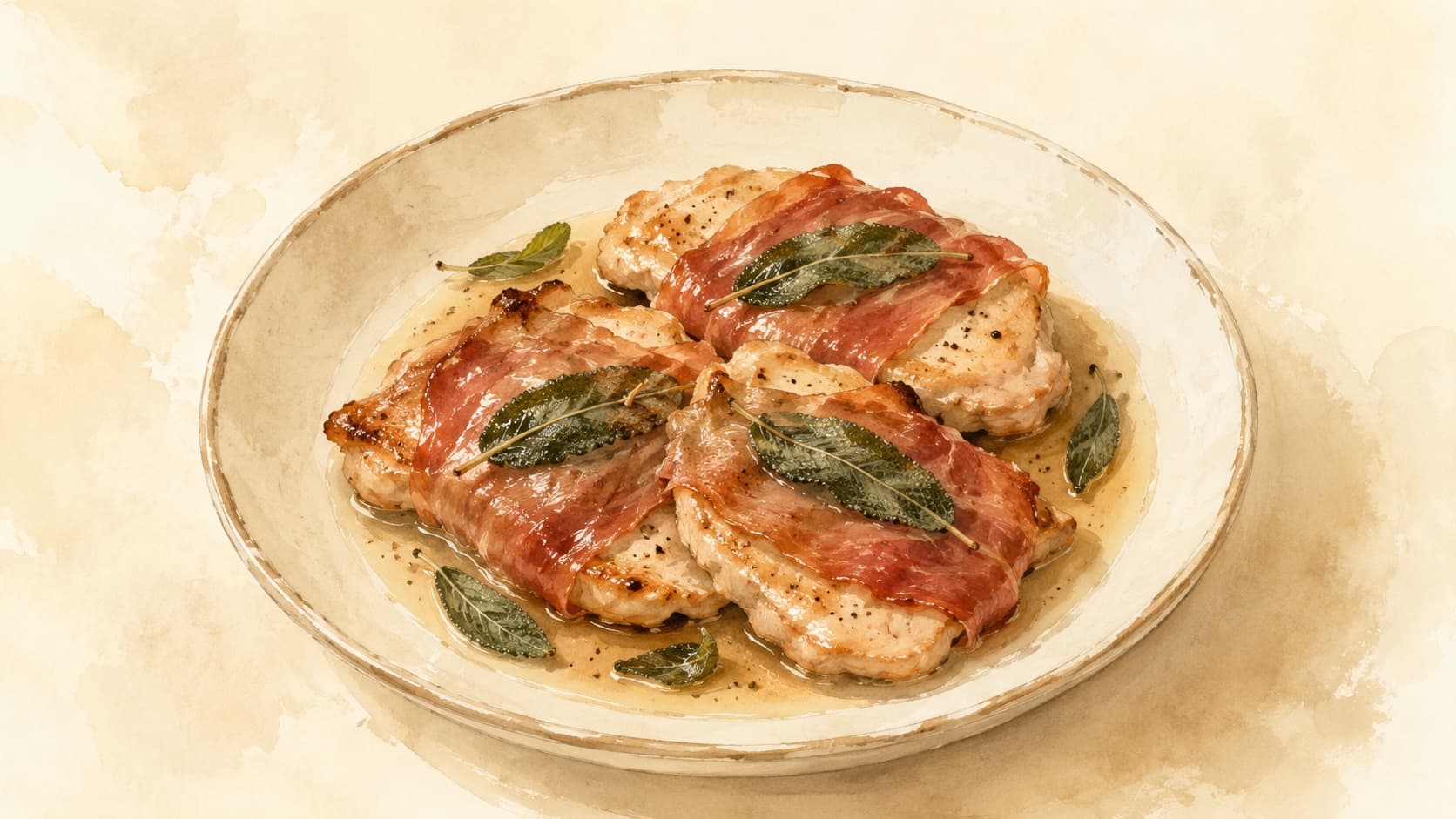
This dish combines tender veal with aromatic prosciutto and fresh sage, creating a harmonious blend of flavors.
Contents (5 sections)▾
Ingredients
- 4 veal cutlets (about 150g each)
- 4 slices of prosciutto
- 8 fresh sage leaves
- 1/2 cup dry white wine
- 2 tablespoons unsalted butter
- 2 tablespoons olive oil
- Salt, to taste
- Black pepper, to taste
Steps
Place a slice of prosciutto on each veal cutlet.
Top each with two sage leaves and secure with toothpicks.
Heat butter and olive oil in a skillet over medium-high heat.
Sear cutlets for 3-4 minutes per side until golden brown.
Deglaze the pan with white wine, scraping up browned bits.
Serve immediately, spooning sauce over cutlets.
Tools you'll want
- · Digital kitchen scale (gram precision)
Why this works
Saltimbocca alla Romana relies on the classic technique of wrapping veal in prosciutto and sage. The prosciutto imparts a salty umami flavor while the sage adds a fresh herbaceous note. This pairing creates a balanced and aromatic dish.
Cooking at medium-high heat ensures that the veal sears quickly, building a browned, flavorful surface. The wine deglazing step captures the fond, enhancing the sauce's depth. The emulsification of butter into the pan juices results in a rich, velvety texture.
Proper seasoning is critical. Salt enhances the natural flavors of the ingredients, while pepper adds a subtle kick. The timing of cooking is crucial; overcooking can lead to dry veal, while undercooking may yield an undesirable texture.
Common mistakes
Veal cutlets too thick.
Target: 3-4 mm thick — pounded between plastic wrap with a meat mallet (a flat-headed mallet used to flatten meat to an even thickness) to uniform thinness.
Why it matters: Thick cutlets need long cooking, which dries out veal and burns the prosciutto (the thin Italian dry-cured ham wrapped around each cutlet). Saltimbocca is a 2-minute-per-side dish; only thin cutlets allow this speed.
What to do: Place cutlet between plastic wrap or parchment, pound gently with mallet or rolling pin to even thinness.
Workarounds:
- No mallet → use bottom of a heavy pan to flatten.
Skipping the flour dredge.
Target: Light flour dust on the meat side only (not the prosciutto side) before pan.
Why it matters: The flour creates a thin coating that browns to golden, helps the prosciutto stick to the veal, and gives the pan sauce body when deglazed with wine.
What to do: Dust meat side, shake off excess, place prosciutto-side down first in the pan.
Workarounds:
- Gluten-free → rice flour or cornstarch works similarly.
Salting the veal.
Target: No salt on the veal itself — prosciutto provides all the salt the dish needs.
Why it matters: Prosciutto is already heavily cured; salting the veal too creates an over-salted dish where prosciutto can't be enjoyed for its own flavor. Italian tradition: salt the dish, not both components.
What to do: Black pepper only on veal. Salt only the wine sauce at the end if needed.
Workarounds:
- Using non-prosciutto cured ham (bresaola, speck) → adjust salt accordingly.
Cooking prosciutto-side last.
Target: Prosciutto-side down FIRST in hot fat for 1-2 minutes until crisp and golden.
Why it matters: Prosciutto-side down first crisps the ham into the meat, fuses the layers, and renders the salty fat into the pan. Flipped order = soggy prosciutto, looser layers.
What to do: Start prosciutto-side down. Flip once when prosciutto is golden and adhering.
Workarounds:
- Toothpicks for security → fine, remove before serving.
Boiling the wine sauce.
Target: Splash white wine to deglaze (pour liquid into the hot pan to lift the browned bits stuck to the bottom), scrape fond (the flavour-rich brown residue left in the pan after searing), reduce 30-45 seconds. Finish with cold butter cubes off heat.
Why it matters: Long reduction concentrates the salt from prosciutto residue — sauce becomes harsh. Quick deglaze keeps it bright. Butter off-heat = emulsified, glossy.
What to do: Wine in hot pan, scrape, reduce briefly. Off heat, swirl in 20 g cold butter.
Workarounds:
- Want richer sauce → add a splash of chicken stock with the wine; longer reduction OK with stock as buffer.
Serving immediately is essential.
Target: Plate within 30 seconds of finishing. Saltimbocca cools fast.
Why it matters: The dish's tender hot quality fades quickly — veal stiffens, prosciutto loses crisp, sauce congeals. Restaurant timing: cook and serve, no plating delay.
What to do: Warm plates ready before cooking. Plate and walk to the table.
Workarounds:
- Multiple portions → cook in batches, keep finished portions in 60°C oven 5 minutes max while finishing others.
What to look for
- A golden-brown crust on the veal.
- The prosciutto should be slightly crisp.
- The sauce should be glossy and cling to the meat.
- A fragrant aroma of sage and wine.
Chef's view
Originating from Rome, saltimbocca reflects the simplicity of Italian cooking, emphasizing quality ingredients over complex techniques. The art lies in the balance of flavors, showcasing the veal while allowing the prosciutto and sage to shine.
This dish is often reserved for special occasions, yet its straightforward preparation allows it to be enjoyed frequently. It embodies the Italian philosophy of bringing family and friends together around the table.
<!-- beginner-glossed v1 -->Get the essays in your inbox — free
Weekly notes on flavor, fermentation, and food history — the writing behind the Atlas of Flavor. No spam; unsubscribe anytime.