
Saba Miso-ni
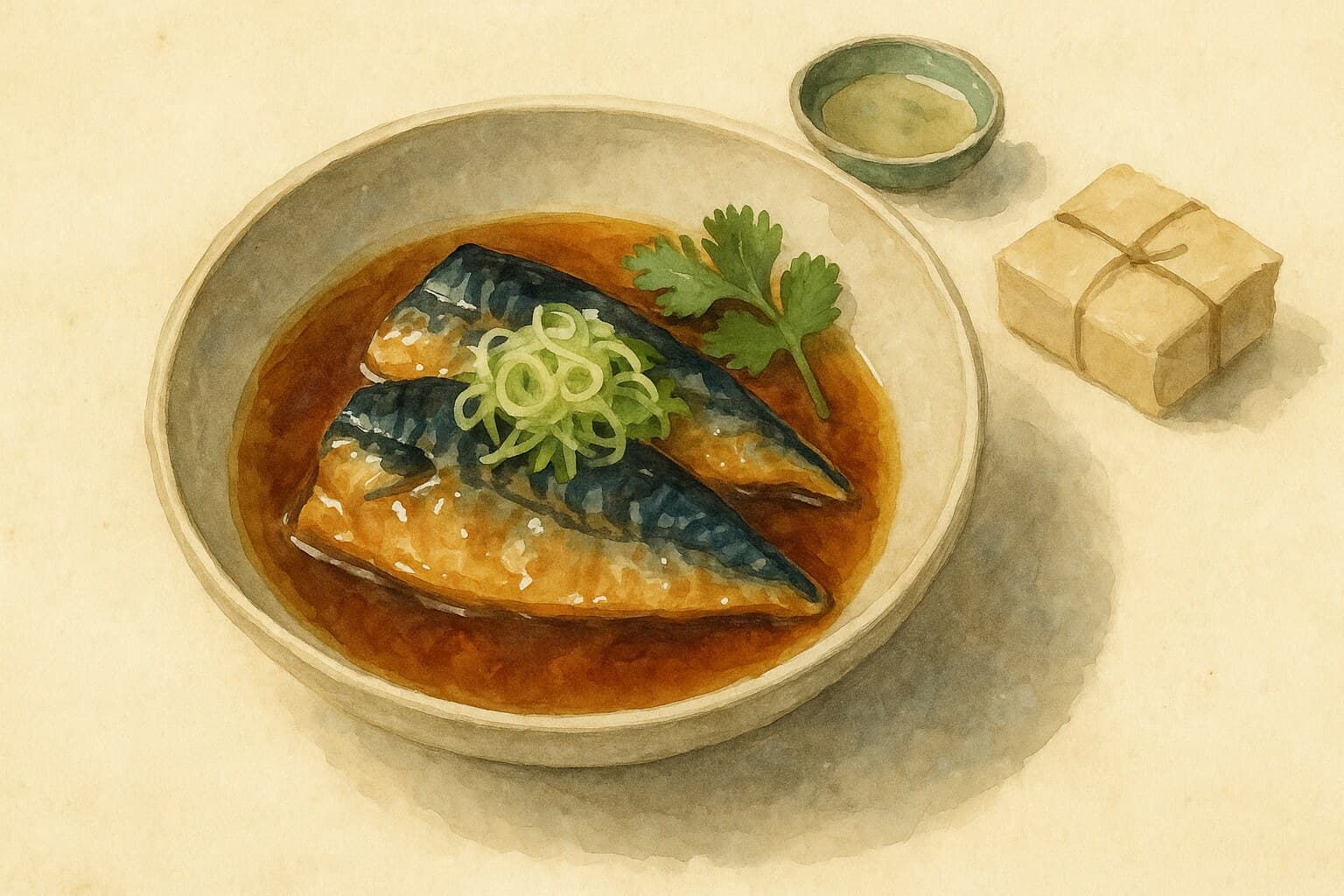
Saba Miso-ni is a Japanese dish of mackerel simmered in miso broth with sake and ginger, balancing flavors while masking fishy odors.
Contents (6 sections)▾
Ingredients
- 2 mackerel fillets (about 200g each)
- 2 tbsp miso paste
- 1 tbsp sake
- 1 tbsp mirin
- 200 ml dashi stock
- 1 inch ginger, sliced
- 1 green onion, chopped
- to taste: sugar
- to taste: salt
Steps
In a pot, combine dashi stock, miso paste, sake, mirin, and sugar. Stir well over medium heat until the miso dissolves completely.
Add the sliced ginger to the pot and bring the mixture to a gentle simmer over low heat.
Carefully place the mackerel fillets skin-side down into the broth. Simmer for 10 minutes, allowing the fish to absorb the umami flavors.
After 10 minutes, check the fish for doneness; it should be opaque and flaky. If it seems too firm, simmer for an additional 2-3 minutes.
Once done, transfer the mackerel to serving plates, spoon the miso broth over them, and garnish with chopped green onion.
Why this works
The technique of simmering mackerel in a miso (a fermented soybean paste, the savory backbone of Japanese cooking) broth infuses the fish with deep umami (a deep savory taste, the "fifth taste" beyond sweet/salty/sour/bitter) flavors while keeping it moist. Miso, rich in fermentation, complements the oily nature of mackerel, enhancing the dish's overall taste profile. The addition of sake (Japanese rice wine, used as a cooking aromatic) and mirin (a sweet rice cooking wine, lower in alcohol than sake) balances the flavors, providing a touch of sweetness that rounds out the savory notes. It's important to monitor the cooking time closely; if the fish seems too firm or not easily flaked, simply extend the simmering time by a few minutes. Conversely, if the fish begins to break apart, reduce the heat to prevent overcooking. This method ensures a tender, flavorful result that highlights the essence of Japanese home cooking, making it perfect for a weeknight meal.
Common mistakes
- Skipping the salt-rest on the fish. A 10-minute salt pre-cure draws out the sea smell (TMA — trimethylamine) and tightens the flesh. Skip this and the dish reads fishier than it should.
- Skipping the blanch. A 5-second dip in just-boiled water (with the fish lowered in and pulled out immediately) sets the surface and pulls off more sea aroma. Lazy versions skip this and pay for it at the plate.
- Boiling the miso. As with miso soup, the aroma volatiles flash off. Add miso in two stages: half at the start of braise (for body), half off-heat at the end (for aroma).
- Braising too long. Mackerel goes dry after 15 minutes in simmering liquid. The window is 8–12 minutes, depending on fillet thickness.
What to look for
- After the salt cure: fillet surface looks slightly tacky, small beads of water on the surface — wipe before blanching.
- Blanch: the surface turns opaque-white in 5 seconds; pull immediately.
- Braising liquid: gentle bubbles, slightly syrupy, just covering the bottom 1/3 of the fillet — not submerging the fish.
- Doneness: a chopstick at the thickest part sees the flesh flake easily but not fall apart; color is uniform throughout.
Substitutions
- Saba (mackerel) → sanma (Pacific saury), iwashi (sardine), or any oily fish. Saury cooks 2 minutes faster; sardine needs 1 minute longer because of pin bones.
- Awase miso → red miso (use 15% less, add a touch of sake). Deeper register; suits stronger fish.
- Sake → mirin (cut the added sugar by half). Mirin's natural sweetness picks up the slack.
- Fresh ginger → 1/2 tsp ground ginger. Functional substitute; flavor edge is less sharp.
Make-ahead and storage
- Saba miso-ni improves after 4 hours. The fish flavor and the miso braise reconcile.
- Refrigerate within 2 hours of cooking. Keeps 2 days. Beyond day 2, oily fish degrades quickly — discard rather than push the window.
- Reheat covered in a pan with 1 tbsp water added. Gentle low heat — high heat dries the fillet.
- Fish-safety note: Oily fish (mackerel, saury, sardine) goes off faster than white fish. Refrigerate immediately after cooling; discard rather than judging by smell alone, especially after day 2.
Get the essays in your inbox — free
Weekly notes on flavor, fermentation, and food history — the writing behind the Atlas of Flavor. No spam; unsubscribe anytime.