
Pesto Alla Genovese
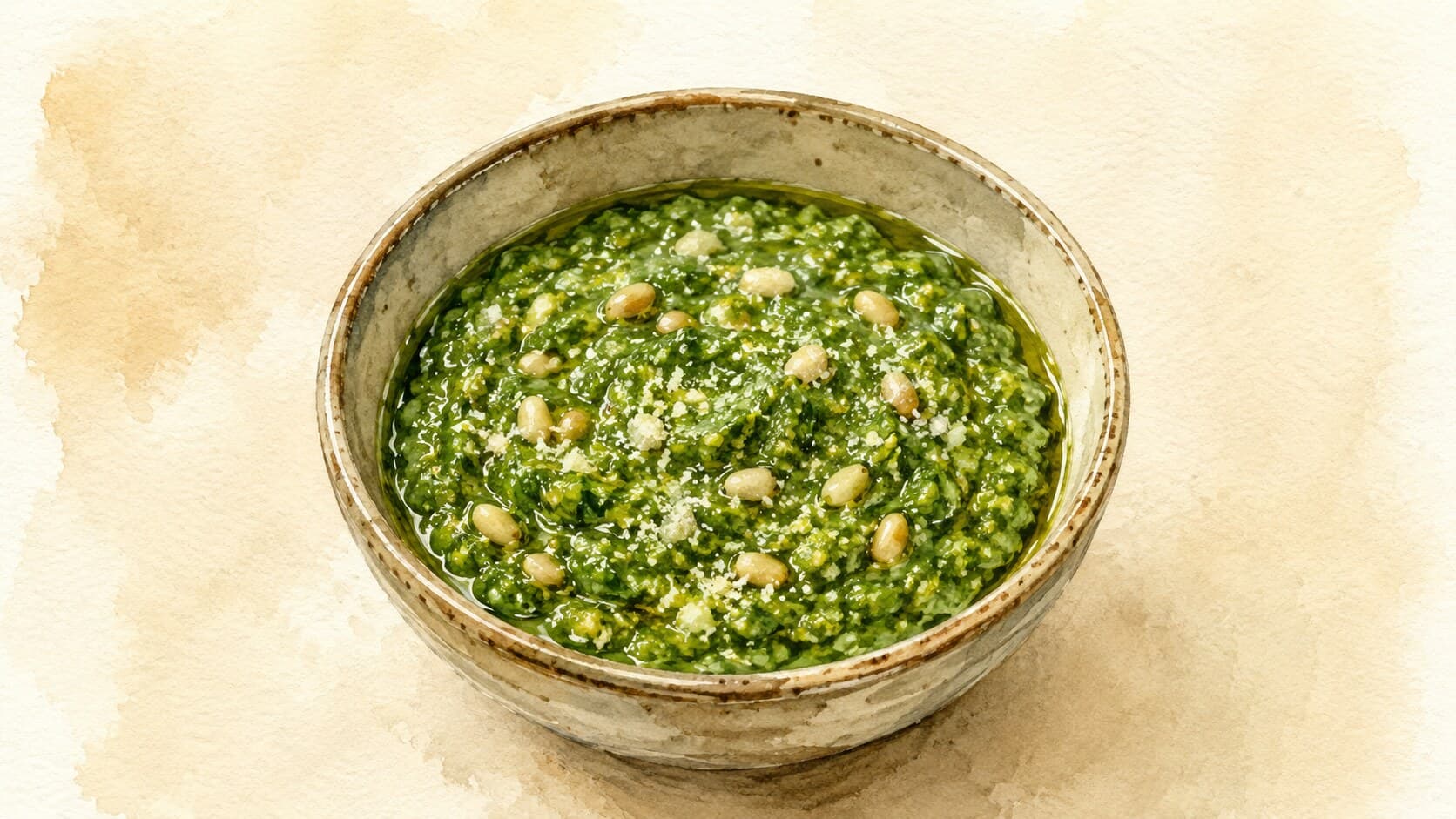
Pesto Alla Genovese is an Italian sauce made by blending fresh basil, garlic, pine nuts, Parmesan cheese, and olive oil.
Contents (6 sections)▾
Ingredients
- 100 g fresh basil leaves
- 50 g pine nuts
- 2 cloves garlic
- 100 g Parmesan cheese, grated
- 150 ml extra virgin olive oil
- Salt to taste
Steps
In a food processor, combine the basil leaves, pine nuts, and garlic. Pulse until coarsely chopped, about 10 seconds.
Add the grated Parmesan cheese and pulse for another 10 seconds to mix.
With the processor running, slowly drizzle in the olive oil until the mixture is well combined and creamy. This emulsifies the sauce.
Season with salt to taste, and give it one final quick pulse to blend.
Transfer the pesto to a bowl. If it seems too thick, adjust the consistency with a bit more olive oil.
Why this works
Pesto Alla Genovese showcases the brilliant flavors of fresh basil, enhanced by the nutty profile of pine nuts and the savory depth of Parmesan cheese. The key technique involves emulsifying the oil with the other ingredients, creating a cohesive sauce that clings beautifully to pasta. The garlic provides an aromatic quality that complements the basil, while the salt enhances all the flavors. If your pesto seems too thick, you can easily adjust the consistency by adding more olive oil, allowing for versatility based on personal preference. Additionally, using fresh ingredients ensures a vibrant color and intense flavor. Mixing the ingredients in a food processor minimizes exposure to air, which helps preserve the bright green color of the basil. However, if the pesto turns brown, it indicates oxidation; in this case, consider adding a squeeze of lemon juice to restore some freshness and acidity.
Common mistakes
- Heat from the blender or food processor. Fast-spinning blades heat the basil and turn it black-green within seconds. Pulse — don't run continuously.
- No mortar register. A mortar (a heavy bowl, traditionally marble, used with a club-shaped pestle to crush ingredients) gives the texture pesto is named for (Genoese pestare = to pound). Blender pesto is a paste, not a pesto. If you must blend, pulse with frozen basil to keep the temperature down.
- Old pine nuts. Pine nuts go rancid fast (the oil oxidizes). A bitter pesto almost always traces back to pine nuts that have been open longer than 3 weeks at room temperature.
- Cheese too coarse. Pre-grated supermarket parmesan is too dry and the wax-paper coating won't blend. Grate from a wedge, immediately before pounding.
What to look for
- Basil leaves: bright green, no black spots, dry. Wet basil oxidizes faster — pat dry before pounding.
- Garlic: the green germ removed (it's bitter); the cloves bruise easily under the pestle.
- Final color: vibrant, oil-glossy green — not olive-drab, not gray-green. If it browns, it was over-blended or sat exposed.
- Texture: loose paste that holds a soft mound; you can still see the cheese flecks and pine-nut pieces. Smooth = too far.
Substitutions
- Pine nut → walnut, blanched almond, cashew. Walnut for a heavier, slightly bitter result; almond for a milder cousin; cashew for the smoothest blender version.
- Pecorino (a hard sheep's-milk cheese, saltier and sharper than parmesan) + parmigiano → all parmigiano. Less salty, gentler. Pecorino brings the sheep-milk sharpness that's classic in Liguria.
- Basil → rocket / arugula or carrot tops or parsley. Different sauce, same technique. Arugula pesto is excellent on grilled chicken; parsley version pairs with white fish.
- Lemon juice → splash of white wine vinegar. Helps lock in color (acid slows browning) — useful in any version, optional in the classic.
Make-ahead and storage
- Best within the hour. Color, aroma, and bite all peak the first hour.
- Refrigerate up to 3 days in a clean glass jar with a 5 mm layer of olive oil on top to seal out air. Surface oxidation is the enemy.
- Freeze in ice-cube trays. Portion 2–3 tbsp per cube, pop out when solid, store in a freezer bag. Up to 2 months. Color holds better than refrigerated.
- Do not heat directly. Toss pesto into hot pasta off heat (or with the pan off heat), or stir into a sauce at the very end. Heating cooks the chlorophyll out and you get the hay-flavored brown mess instead.
- Safety note: Pesto is not a room-temperature condiment once opened. Refrigerate after each use; discard rather than judge by smell alone if the surface darkens significantly or develops a sharp / fizzy aroma.
Get the essays in your inbox — free
Weekly notes on flavor, fermentation, and food history — the writing behind the Atlas of Flavor. No spam; unsubscribe anytime.