
Pajeon
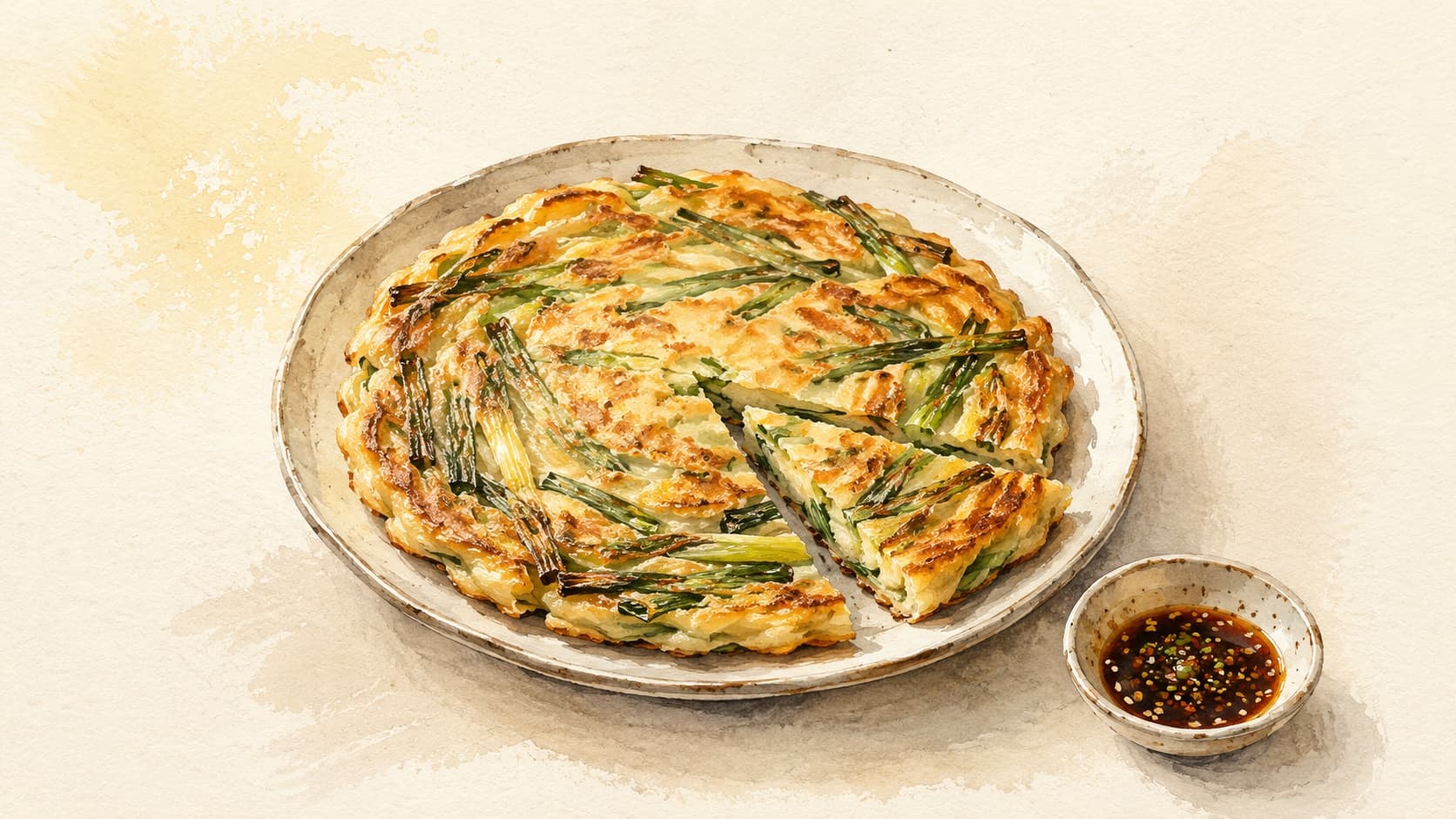
Pajeon achieves a crispy, savory texture through the perfect balance of batter and ingredients.
Contents (5 sections)▾
Ingredients
- 1 cup all-purpose flour
- 1/2 cup water
- 1 egg
- 1/2 teaspoon salt
- 4 green onions, cut into 2-inch pieces
- 1/2 cup shrimp, peeled and deveined
- 1/2 cup squid, sliced
- Vegetable oil for frying
Steps
In a bowl, mix flour, water, egg, and salt until smooth.
Fold in green onions, shrimp, and squid.
Heat a wide skillet over medium heat and add oil.
Pour the batter into the skillet, spreading it evenly.
Cook until golden brown on one side, then flip and cook the other side.
Serve hot with dipping sauce.
Tools you'll want
Why this works
The batter's consistency is crucial. A thinner batter allows for a crispy texture, while a thicker one yields a chewier pancake. The water-to-flour ratio should be balanced to maintain this texture. High heat is essential for achieving that golden crust. It also ensures that the ingredients cook through without becoming overdone.
Using fresh green onions and seafood enhances flavor and texture. The moisture from these ingredients interacts with the batter, promoting a tender interior. Cooking in a well-oiled skillet ensures even browning and prevents sticking, allowing for easy flipping.
The addition of an egg enriches the batter, providing structure. Eggs coagulate during cooking, helping to bind the ingredients together. This creates a cohesive pancake that holds its shape while maintaining a light, airy quality.
Common mistakes
Batter too thin or too thick.
Target: 1:1 flour to liquid ratio (by weight) — pourable but coats the back of a spoon. Cold water for extra crispness.
Why it matters: Too thin = floppy soggy pancake, can't hold the green onions. Too thick = doughy interior that won't crisp. The right consistency is the structural foundation.
What to do: Mix until just combined (lumps OK), don't overwork. Cold water suppresses gluten formation for crispier result.
Workarounds:
- Want extra crispness → replace 1/3 flour with potato starch or rice flour.
Pan not hot enough.
Target: Medium-high heat, pan ripping hot with oil shimmering before batter goes in.
Why it matters: Cool pan = oil absorbed into batter = greasy pancake. Hot pan = immediate seal, crisp exterior, no oil saturation. The signature crispy edges happen here.
What to do: Preheat 2-3 minutes before adding oil. Test with a drop of batter — should sizzle aggressively.
Workarounds:
- Stove runs cool → cast iron preheated longer (4-5 min); holds heat better than thin pans.
Not using enough oil.
Target: Generous oil — about 3 tbsp per medium pancake. Pan should look slicked, not dry.
Why it matters: Pajeon is half-fried, half-pancaked. Stingy oil = soft uniform pancake, no crispy edges. The Korean street-food version is almost pan-fried.
What to do: Don't be afraid of oil here. Add more around the edges as it cooks to crisp them.
Workarounds:
- Want less oil → use a non-stick pan and a heat-tolerant oil sprayer; still less crispy.
Flipping too early.
Target: Wait until edges look set and slightly lifted, bottom golden — 3-4 min first side.
Why it matters: Early flipping breaks the pancake into pieces; batter is still liquid underneath, fillings shift, structure collapses.
What to do: Lift the edge with a spatula to check the bottom color. Confident flip when underside is golden.
Workarounds:
- Pan-flipping technique tough → slide onto a plate, cover with a second plate, invert, slide back into pan.
Pressing the pancake.
Target: Don't press with the spatula after flipping.
Why it matters: Pressing forces oil and moisture out, reduces puff, and compacts the batter. The pancake should be allowed to puff slightly during cooking.
What to do: Flip and let it cook undisturbed.
Workarounds:
- For extra-crispy bottom → let cook 1 minute longer per side rather than pressing.
No dipping sauce.
Target: Soy + rice vinegar + sesame oil + chili (optional) — small bowl per person.
Why it matters: Pajeon is designed to be dipped — the sauce is the bright counterpoint to the rich oil-fried pancake. Plain pajeon is half a dish.
What to do: Mix soy/vinegar 2:1 ratio, splash sesame oil, sprinkle chili flakes. Make while pancake rests.
Workarounds:
- Faster → simple soy + rice vinegar (no sesame oil) still works.
What to look for
- A golden-brown crust on both sides.
- Crisp edges that hold together.
- Bubbles forming on the surface before flipping.
- A slight puffing as it cooks, indicating air pockets.
- An aromatic scent of cooked seafood and green onions.
Chef's view
Pajeon (a Korean savory pan-fried pancake — "pa" means scallion, "jeon" means pan-fried — typically loaded with scallions and sometimes cooked seafood) is a familiar dish in Korean cuisine, often enjoyed during rainy days. Traditionally, it is made with various ingredients, including seasonal vegetables and seafood, making it a versatile option. The communal aspect of cooking pajeon reflects Korean culture, where meals are shared and enjoyed together.
The technique emphasizes balance. The right amount of batter allows the fillings to shine while providing structure. Pajeon can also be adapted to include different proteins or vegetables, showcasing culinary creativity. This adaptability ensures its place in both home kitchens and restaurants, celebrated for its comforting nature and satisfying crunch.
<!-- beginner-glossed v1 -->Get the essays in your inbox — free
Weekly notes on flavor, fermentation, and food history — the writing behind the Atlas of Flavor. No spam; unsubscribe anytime.