
Pad See Ew
Pad See Ew, a delicious Thai stir-fried noodle dish, combines flavors of soy sauce and vegetables for a satisfying meal.
Contents (6 sections)▾
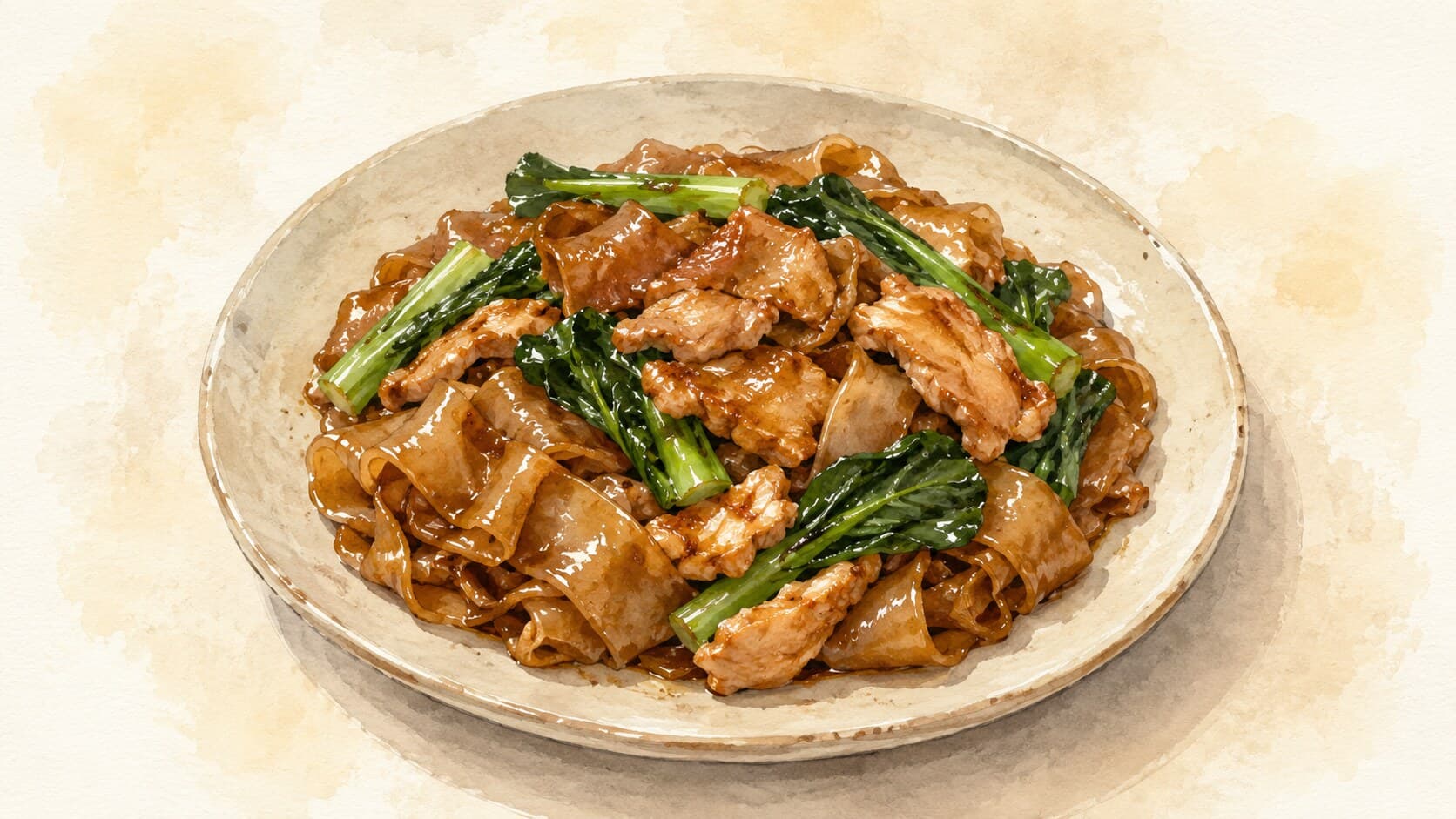
Ingredients
- 200 g wide rice noodles
- 150 g chicken breast, sliced thinly
- 2 tbsp vegetable oil
- 2 cloves garlic, minced
- 1 cup Chinese broccoli, cut into bite-sized pieces
- 2 large eggs
- 3 tbsp soy sauce
- 1 tbsp dark soy sauce
- 1 tbsp oyster sauce
- 1 tsp sugar
- Salt and pepper to taste
Steps
Soak the wide rice noodles in hot water for about 10 minutes or until softened, then drain and set aside.
Heat 1 tablespoon of vegetable oil in a large pan or wok over medium-high heat, then add the sliced chicken. Cook the chicken until the thickest slices reach 74 °C / 165 °F on an instant-read thermometer (no longer pink), about 4-5 minutes, before the recipe advances; colour and time are guides, not the safety test.
Add the minced garlic and Chinese broccoli to the pan, stir-frying for another 2-3 minutes until the broccoli is tender.
Push the chicken and broccoli to one side of the pan and crack the eggs into the other side, stirring gently to scramble until just set.
Add the soaked rice noodles to the pan along with the soy sauce, dark soy sauce, oyster sauce, and sugar. Stir-fry everything together for about 3-4 minutes, ensuring the noodles are well coated and heated through.
Season with salt and pepper to taste, then serve immediately.
Why this works
The technique of stir-frying at high heat allows for the quick cooking of ingredients, which helps preserve the vibrant colors and textures of the vegetables. The wide rice noodles are perfect for absorbing the rich umami flavors of the soy and oyster sauces, creating a well-rounded dish. If you find the noodles seem too dry while cooking, add a splash of water or broth to help them achieve the desired consistency. This method also helps to prevent the dish from becoming mushy. Additionally, using high heat ensures that the proteins and vegetables remain crisp and flavorful, rather than steaming in the pan.
Common mistakes
- Wok / pan not hot enough. Pad see ew lives or dies by wok hei — the char from very high heat. A medium-hot pan steams the noodles instead of charring them, and you get a wet, flat dish.
- Cold noodles into the pan. Fresh rice noodles refrigerated and then dropped into a hot pan stick and tear. Loosen them at room temperature for 30 minutes before cooking, or warm them with a quick rinse under hot water.
- Too much sauce. A puddled pan steams everything. Add the sauce in two stages: half over the noodles for color, half over the protein and gai lan for flavor — never pour the bottle in at once.
- Crowding the wok. A wok with too much food never recovers heat. Stir-fry in two batches if you're cooking for more than two.
What to look for
- Smoke point: a thin wisp of smoke from the empty wok before the oil goes in — that's your signal that the metal is hot enough.
- Char on the noodles: after the sauce hits, leave the noodles undisturbed for 20–30 seconds. They should pick up dark patches — that's wok hei. Toss, then repeat once.
- Gai lan (Chinese broccoli): bright green stalks, slightly translucent, with a snap when bitten. Limp gai lan = too much steam.
- Egg: scrambled into curds before the noodles go back in — soft, just-set, not dried out.
Substitutions
- Wide fresh rice noodles → dried wide rice noodles (sen yai), soaked. Soak 30–45 minutes in warm water until pliable; drain and pat dry. The texture is close enough.
- Gai lan → broccolini, kale stems, or yu choy. Broccolini is the closest substitute; kale stems are firmer and need an extra minute in the pan.
- Dark soy sauce → regular soy + 1 tsp molasses or 1/2 tsp brown sugar dissolved. Dark soy provides color and a slight sweetness; this approximates both.
- Chicken → tofu (firm, pressed, cubed) or beef sirloin (thin sliced) or shrimp. Same technique for each; cook the protein first, set aside, then back in at the end.
Make-ahead and storage
- Best within 5 minutes of leaving the wok. Noodle texture firms as it cools; the char aroma fades fast.
- Refrigerate cooked pad see ew for 1 day only. Beyond day 1 the noodles harden and the gai lan turns olive-drab. Cool within 2 hours of cooking.
- Reheat in a hot pan with a teaspoon of oil and a splash of water — never the microwave. Microwave reheats unevenly and turns the noodles rubbery while drying out the protein.
- Do not freeze. Rice noodles become starchy and break; gai lan loses everything that made it gai lan.
- Safety note: Cooked pad see ew should not sit at room temperature longer than 2 hours (1 hour above 30 °C). Discard rather than judge by smell alone, especially with chicken or shrimp versions.
Get the essays in your inbox — free
Weekly notes on flavor, fermentation, and food history — the writing behind the Atlas of Flavor. No spam; unsubscribe anytime.