
Miso Marinade
White miso, mirin, and sake in a 3:2:1 ratio. The miso's enzymes tenderize the protein while its sugars and amino acids create intense Maillard browning that outperforms a plain soy glaze.
Contents (7 sections)▾
Ingredients
- 400–500 g protein: black cod (sablefish), salmon fillet, chicken thigh, or firm white fish
- 90 g white miso (shiro miso) — about 3 heaping tbsp
- 60 ml mirin (about 4 tbsp)
- 30 ml sake (about 2 tbsp)
- Optional: 1 tsp sugar, 1 tsp grated fresh ginger
Steps
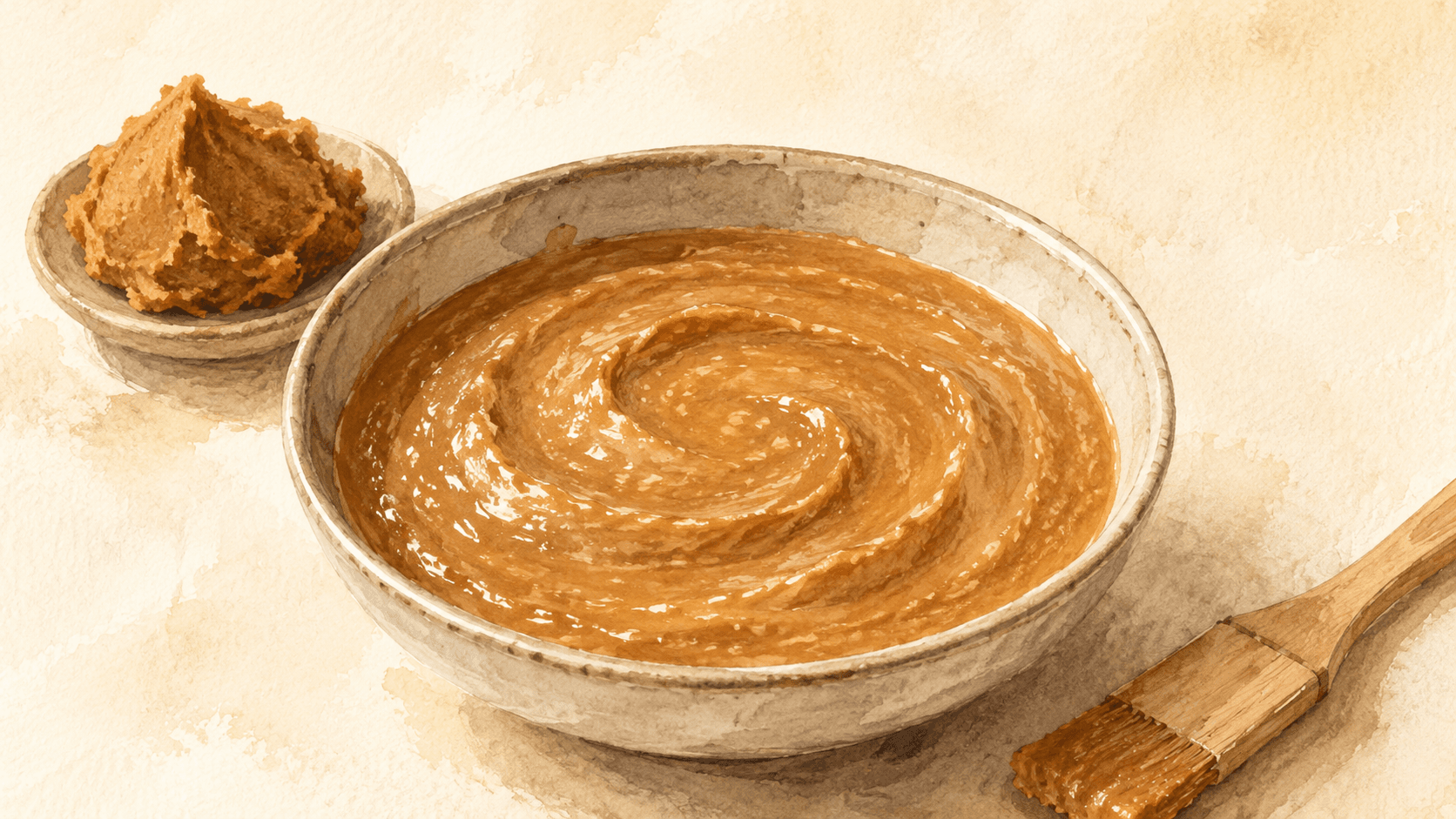
Combine the miso, mirin, and sake in a small bowl and whisk until smooth. If the miso is stiff, warming the mirin slightly before mixing makes it easier to blend. The mixture should be pourable and even.
Pat the protein completely dry with paper towels. Any surface moisture dilutes the marinade at the point of contact and slows penetration. Lay the protein in a shallow container or zip-lock bag and spread the miso mixture over all surfaces. Seal and refrigerate.
Marinate for the appropriate time: black cod / sablefish 24–72 hours (longer is better here, as black cod's high fat content takes more time to penetrate); salmon fillet 12–24 hours; chicken thigh 8–16 hours; white fish 4–8 hours. The miso's proteases work slowly in the refrigerator, and a longer marinate produces more noticeable tenderizing.
When ready to cook, wipe off the majority of the miso from the surface — a thin residue is desirable, a thick coating will burn. The miso contains free sugars and amino acids that will produce very rapid, very dark Maillard browning. For oven cooking: roast at 200°C for 10–15 minutes (fish) or 25–30 minutes (chicken). For broiling: place about 10 cm from the heat source and watch closely — color develops in 4–6 minutes.
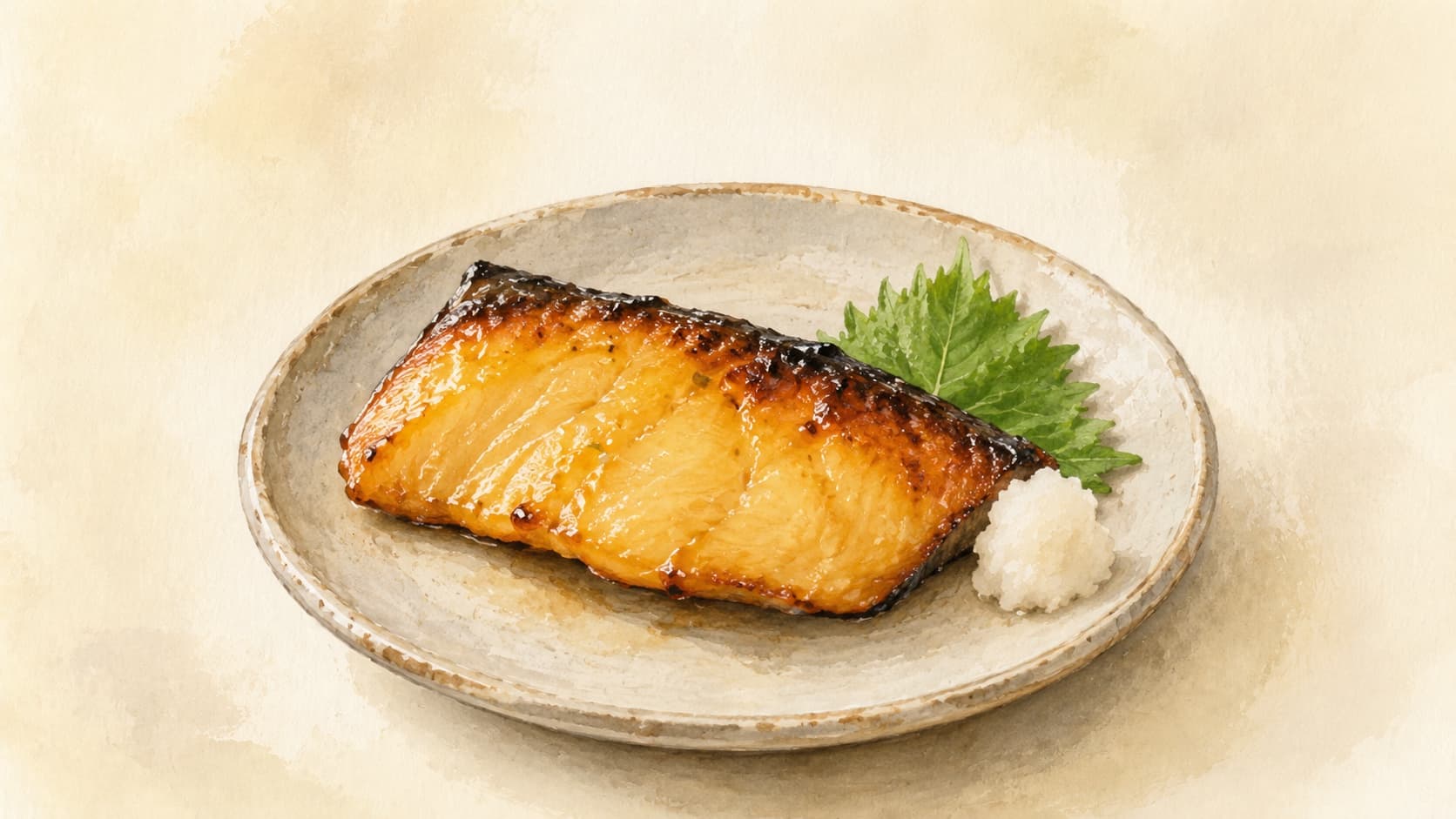
The surface should reach a deep amber-brown, almost lacquered appearance. For a safely cooked result, take the fish to 63 °C / 145 °F at the thickest part on a probe thermometer — cooked through and opaque — and chicken thigh to 74 °C / 165 °F. The silky, barely-set textures often prized for these fish — black cod around 55–60 °C, salmon around 50–55 °C — sit below that standard safe endpoint: they are an intentionally undercooked culinary choice, not a safe minimum, and neither the miso, the marination, nor the seared surface makes an under-set centre safe. Pregnant people, young children, older adults, and anyone immunocompromised should always take the fish fully to 63 °C. Serve immediately.
Tools you'll want
- · Digital kitchen scale (gram precision)
- · Instant-read digital thermometer
Why this works
Miso marinade belongs to the category of Japanese tsukemono (pickled or salt-cured foods, often using rice bran, miso, or salt as the curing medium) and nitsuke (foods simmered in a seasoned liquid) preparations — using fermented ingredients to transform protein both texturally and in flavor. The mechanism operates through two parallel pathways: enzymatic tenderizing and Maillard browning enhancement (the chemical reaction between amino acids and sugars under heat that produces deep brown color and savory aromas).
White miso (shiro miso) is produced by fermenting soybeans and rice with Aspergillus oryzae (the koji mold), salt, and water. During fermentation, the mold's proteases break down soybean proteins into shorter peptides and free amino acids, and amylases break down starch into free sugars. When this miso is applied to a protein and refrigerated, the residual enzyme activity continues, progressively breaking down the surface layers of the protein's structure. Over 24–72 hours on black cod, the effect is dramatic — the flesh takes on a silky, yielding texture that is distinct from plain poached cod.
The Maillard browning is the visual signature of the technique. Free amino acids from the miso's fermentation, combined with the free sugars from the mirin and the miso itself, create an unusually reactive surface. At oven temperatures around 200°C, this surface undergoes Maillard reactions very rapidly — producing a deep amber-brown lacquer finish in the time it takes a plain fish fillet to barely color. The resulting browning is not just visual: the Maillard products themselves have complex aromatic compounds that contribute a nutty, savory depth to the flavor.
The mirin is not merely a sweetener. Mirin is a fermented rice wine with residual amino acids and a particular polysaccharide structure that contributes viscosity — this is what makes the miso mixture cling to the fish surface rather than sliding off during marination. Sake adds alcohol, which has a mild antimicrobial function (relevant in extended marination) and contributes esters to the flavor.
White miso is used in preference to red miso for most fish preparations because its flavor is gentler, its color lighter, and its salt content lower. Red miso's more intense fermentation would dominate the fish's flavor rather than complement it.
Common mistakes
Not wiping off miso before cooking.
Target: Wipe off most of the coating — leave only a thin residue (1-2 mm).
Why it matters: Miso's free sugars are highly reactive at Maillard temperatures. Thick coating = burns to black before fish is cooked through. Thin residue = beautiful amber lacquer.
What to do: Paper towel sweep to remove excess. Should still see miso color on the fish, but no thick paste.
Workarounds:
- Worried about losing flavor → the marinade has already penetrated; surface coating is no longer the source.
Under-marinating.
Target: Black cod 24-72 hours; salmon 12-24 hours; chicken thigh 8-16 hours; white fish 4-8 hours.
Why it matters: The enzymatic tenderizing is slow in the fridge — short marination only seasons the surface. The signature silky texture requires time for koji-derived proteases to work into the muscle.
What to do: Plan ahead — set the marinade 2-3 days before serving for best results.
Workarounds:
- Time-short → minimum 4 hours seasons the surface acceptably; expect normal (not silky) texture.
Over-marinating delicate fish.
Target: White fish (sole, flounder, tilapia) max 8 hours. Past that, texture turns mealy.
Why it matters: Thin/delicate fish has less protein structure to tenderize — too long, the enzymes break down too much, ruining the texture.
What to do: Set a timer when starting the marinade. Pull at the marker even if convenient.
Workarounds:
- Accidentally over-marinated → rinse thoroughly and cook quickly at high heat to firm the exterior.
Cooking at too high a heat without watching.
Target: Broil 10 cm from heat source, watch every 30 seconds. Or roast at 200°C, check at the 8-minute mark.
Why it matters: Miso marinade browns extraordinarily fast — full broiler heat takes color from gold to black in 60 seconds. Vigilance is the technique.
What to do: Stay in the kitchen. Don't multitask once the protein is under the broiler.
Workarounds:
- Want hands-off cooking → roast at 180°C (not 200°C); slower color development, more forgiving.
Using red miso instead of white.
Target: White miso (shiro miso) for most preparations; saikyo miso ideal for black cod.
Why it matters: Red miso is more intensely fermented, saltier, and more aggressive. Overwhelms delicate fish; works only for assertive proteins.
What to do: Check the label — shiro miso (white) or saikyo miso for fish marinade. Save red miso for hearty proteins (pork belly, dark fish).
Workarounds:
- Only red miso available → use half the amount + 1 tbsp extra mirin to soften flavor.
Skipping the alcohol component (sake/mirin).
Target: Mirin + sake as part of the marinade, never miso alone.
Why it matters: Mirin contributes viscosity (helps coating cling) and amino acids that boost Maillard depth. Sake adds mild antimicrobial protection during long marination + esters for flavor. Miso alone is too thick to coat evenly.
What to do: Whisk all three together — should be spreadable but pourable.
Workarounds:
- No sake → omit; add 1 tbsp extra mirin. Slightly different flavor but still works.
What to look for
- Miso mixture: smooth, pourable, evenly combined. No miso lumps — they create uneven color on cooking.
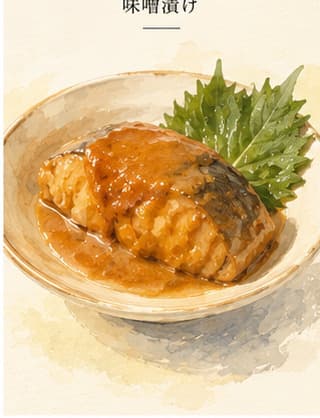
- After marinating: protein surface has a matte, slightly tacky appearance. The miso has begun to penetrate.
- Before cooking: thin residue of miso visible after wiping. Not clean-wiped; not heavily coated.
- During cooking: rapid color development, deep amber. Watch closely under the broiler.
- Done: lacquered amber-brown surface, cooked through to 63 °C / 145 °F (chicken thigh 74 °C / 165 °F). Black cod held at the lower 55–60 °C is silkier but below the standard safe endpoint — an intentionally undercooked culinary choice, not a safe minimum (see the cooking step); high-risk diners should always take fish fully to 63 °C.
Chef's view
The most celebrated application of miso marinade in Western restaurant culture is the black cod with miso made famous by Nobu Matsuhisa at his restaurants from the 1990s onward. The preparation Nobu used was saikyo-yaki — specifically, marinating black cod in white Kyoto miso (西京味噌 — saikyo miso, a sweeter, lower-salt white miso from Kyoto) for 2–3 days. The technique is not modern at all: saikyo-yaki has been practiced in the Kyoto culinary tradition, with fish and vegetables preserved in the local white miso. Nobu's contribution was making it visible to Western dining culture.
This recipe uses standard white miso, which is widely available. If saikyo miso (sweeter, lower-salt) is available, use it with slightly less mirin — the finished dish will be more delicate and its browning slightly less intense.
Chef Test Notes
Tested black cod at 24, 48, and 72 hours. At 24 hours, flavor penetration was excellent but interior texture was similar to plain cod. At 48 hours, a distinct silky quality appeared in the flesh, which could be compressed with the finger and spring back more gently than unmarinated fish. At 72 hours, the effect was at its peak — the texture was noticeably different throughout the fillet, not just near the surface. The 48–72 hour range is clearly superior for black cod's thick, fatty flesh.
Related glossary terms
- Miso — the fermented soybean paste whose enzyme content and amino acid profile defines this marinade
- Saikyo-yaki — the traditional Kyoto preparation this technique belongs to
- Maillard reaction — the amino-acid-and-sugar browning that the miso's free compounds trigger
- Koji — the Aspergillus oryzae mold whose enzymes tenderize both miso and shio koji marinades
Get the essays in your inbox — free
Weekly notes on flavor, fermentation, and food history — the writing behind the Atlas of Flavor. No spam; unsubscribe anytime.