
Kimchi Bokkeumbap
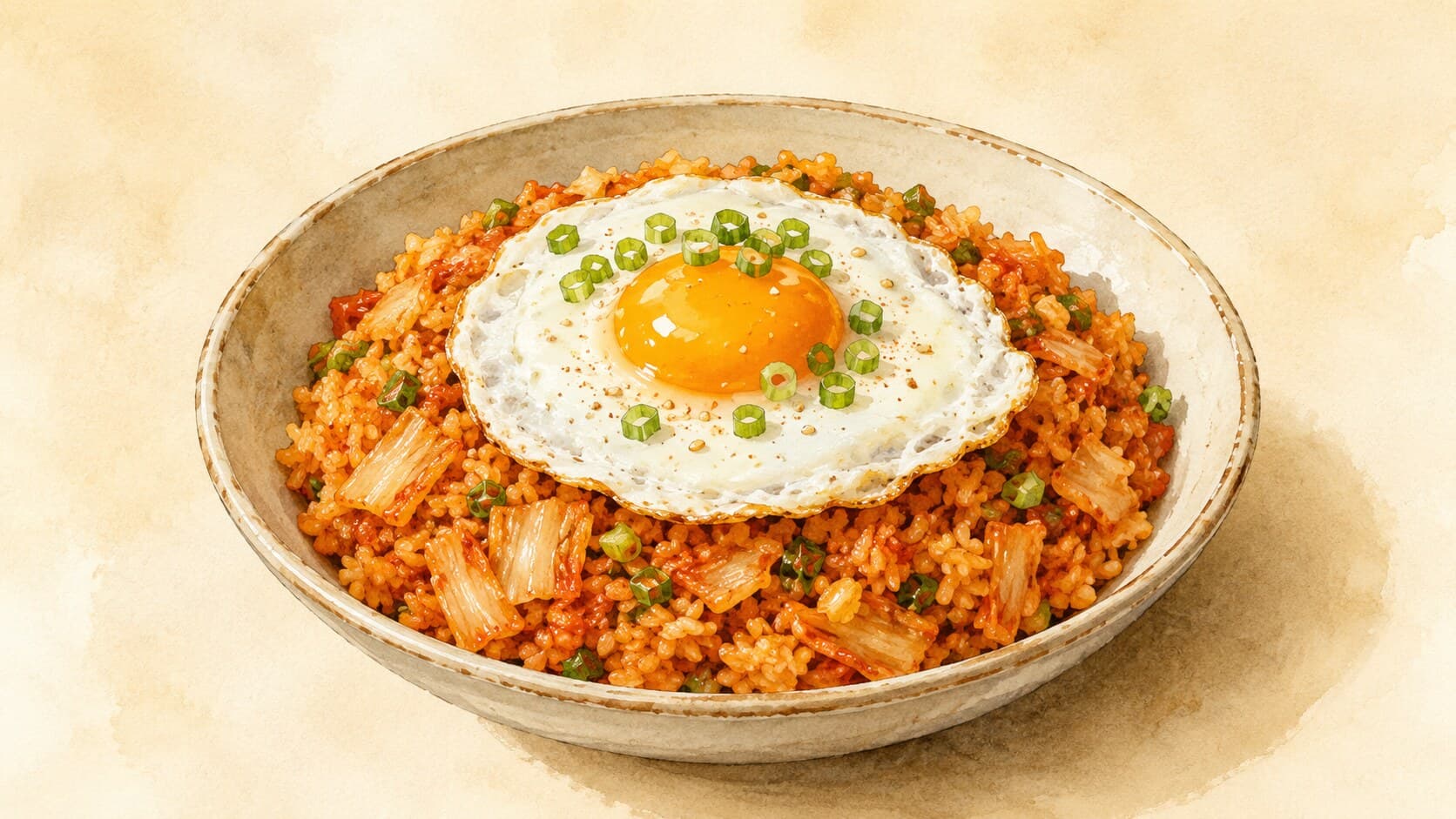
Kimchi Bokkeumbap is a flavorful Korean fried rice made with day-old rice, aged kimchi, and topped with a fried egg.
Contents (5 sections)▾
Ingredients
- 2 cups day-old cooked rice
- 1 cup aged kimchi, chopped
- 2 tablespoons kimchi juice
- 1 tablespoon gochujang
- 100 grams pork belly or Spam, diced
- 2 tablespoons vegetable oil
- 2 eggs (optional)
- 1 tablespoon sesame seeds, for garnish
- 2 scallions, chopped, for garnish
- salt, to taste
Steps
Heat 2 tablespoons of vegetable oil in a large skillet over medium-high heat.
Add 100 grams of diced pork belly or Spam and cook for about 5-7 minutes until browned.
Stir in the chopped aged kimchi and cook for another 3-4 minutes to release its flavors.
Add the day-old rice, 2 tablespoons of kimchi juice, and 1 tablespoon of gochujang; mix well.
Stir-fry for about 5 minutes until everything is heated through and slightly crispy.
If using, fry 2 eggs in a separate pan. For ordinary (non-pasteurized) eggs, cook until the yolks are fully set; for runny yolks, use eggs pasteurized in the shell (through to the contents) — for everyone, not only high-risk diners.
Serve the fried rice in bowls, topped with a fried egg, sesame seeds, and chopped scallions.
Why this works
The key to a great Kimchi Bokkeumbap (Korean stir-fried rice built around aged, sour kimchi and chilled rice) lies in using day-old rice. Freshly cooked rice is too moist and sticky, which can lead to clumping; day-old rice, on the other hand, has dried slightly, providing the perfect texture for stir-frying. Aged kimchi enhances the dish with its robust flavor, while the gochujang (Korean fermented chili paste, savory-sweet with mild heat) adds a necessary kick and depth. If the stir-fry seems too dry, adding a little more kimchi juice can help rehydrate and brighten the flavors without making it soggy. Adequate cooking time allows the ingredients to caramelize, creating a delightful contrast between the crispy rice and the tender kimchi. This balance of textures is essential for achieving that satisfying bite that makes this dish so enjoyable.
Safety note. The fried-egg topping is optional. A soft or runny yolk is undercooked egg with no validated Salmonella kill step: to keep it runny, use an egg pasteurized in the shell (through to the contents); otherwise cook the yolk through. High-risk diners (pregnancy, immunocompromised, very young or old) should use a pasteurized egg, cook the yolk through, or omit the egg entirely. The dish is complete without it.
Common mistakes
Cooking fresh rice instead of day-old rice.
Target: Cooked short-grain rice that has been cooled and refrigerated overnight (or at minimum spread thin and chilled in the fridge for 1–2 hours).
Why it matters: Freshly cooked rice carries 60–65% moisture and the starches on each grain's surface are still hydrated and tacky. In the hot pan it releases steam and the grains stick together into clumps — the result is a gummy stir-fry, not bokkeumbap (Korean stir-fried rice). Refrigeration triggers starch retrogradation (cooked starch molecules recrystallize, the grain surface dries out), which is exactly what lets each grain sear separately.
What to do: Cook rice the day before and chill uncovered, or in a pinch spread hot rice on a sheet pan to dry-cool in the fridge before frying. If clumps remain, break them apart with your fingers before they hit the pan.
Soft, sweet kimchi instead of aged kimchi.
Target: Sour, deeply colored mukeunji or shin-kimchi (aged kimchi, fermented 3+ weeks until distinctly sour and slightly fizzy).
Why it matters: Young, sweet kimchi tastes one-dimensional in a stir-fry — the acidity hasn't built up yet, and the cabbage stays crunchy without releasing the savory depth that makes this dish. Aged kimchi has converted sugars to lactic acid through lactic-acid fermentation; that acid balances gochujang's (Korean fermented chili paste) sweetness and the pork's fat, and the softened cabbage takes on the rice's texture as it cooks down.
What to do: If your kimchi is still young, leave it on the counter for 2–3 days to accelerate fermentation, or buy a jar labeled "신김치" / shin-kimchi. The slightly funky smell when you open the lid is the cue that it's ready.
Adding kimchi too early or too late.
Target: Render the pork fat first (about 5–7 minutes until the pork pieces show real browning), then add chopped kimchi and cook it 3–4 minutes in that hot fat before any rice goes in.
Why it matters: Kimchi cooked in pork fat builds the dish's flavor base — the fat carries the kimchi's aromatics (gochugaru, garlic, ginger, fermented anchovy) through the rice. Add kimchi at the end and it tastes raw and sharp; the pork stays mild and disconnected. Skipping the pork-fat render means you're stir-frying in neutral oil, which can't carry those aromatics.
What to do: Pork first, until properly browned and the fat has rendered. Then kimchi, until it shifts from pink-red to a deeper red-orange. Only then add rice, juice, and gochujang.
Stirring instead of pressing the rice.
Target: After mixing rice with kimchi and seasonings, leave it untouched for 1–2 minutes against the hot pan to build the slight crisp on the bottom, then fold rather than stir constantly.
Why it matters: Constant stirring keeps the rice from making contact with the pan long enough to develop the toasted bottom layer that fried rice depends on — the dry-heat browning on rice grains is what separates fried rice from "rice in sauce." A heavy skillet or carbon-steel wok holds the heat for this; a thin pan does not.
What to do: Spread the rice flat in the pan, press it gently with the spatula, count to 60–90 seconds, then fold once. Repeat 2–3 times. Listen for the dry crackle — that's the sound of contact, not steam.
What to look for
- Pork at the right moment to add kimchi: pieces have brown edges, clear fat pooling in the pan, no raw pink. If still pale, give it another minute. Pork must be cooked through before kimchi joins it.
- Kimchi after its solo cook: color deepens from pink-red to red-orange, edges curl slightly, fat in the pan turns brick-red. This is the flavor-base milestone.
- Rice after pressing and folding: individual grains visible, glossy with kimchi juice but not wet, faint toasted-rice smell. If the rice is wet or steamy, the pan is too cool or the heat too low.
- Optional fried egg (if cooking through): whites fully set and opaque, yolk firm or visibly cooked. The runny-yolk version is a stylistic choice; for high-risk diners it should be cooked through.
A note on history
Kimchi has roots in Korean cuisine going back to the Three Kingdoms period, but kimchi bokkeumbap as a specific dish emerged much more recently. Most food historians place its origin in the post-Korean War years after 1953, when household frugality combined ripe leftover kimchi with cold rice and whatever protein was on hand — often canned Spam or pork scraps from U.S. military rations that circulated through markets near American bases (Wikipedia: Kimchi fried rice, Food History (OpenEd)). What began as a way to use overripe kimchi before it spoiled became one of the most-cooked home dishes in Korea, and the Spam version (스팸 김치볶음밥) remains a particularly affectionate trace of that wartime improvisation.
Get the essays in your inbox — free
Weekly notes on flavor, fermentation, and food history — the writing behind the Atlas of Flavor. No spam; unsubscribe anytime.