
Jamón Ibérico con Pan con Tomate
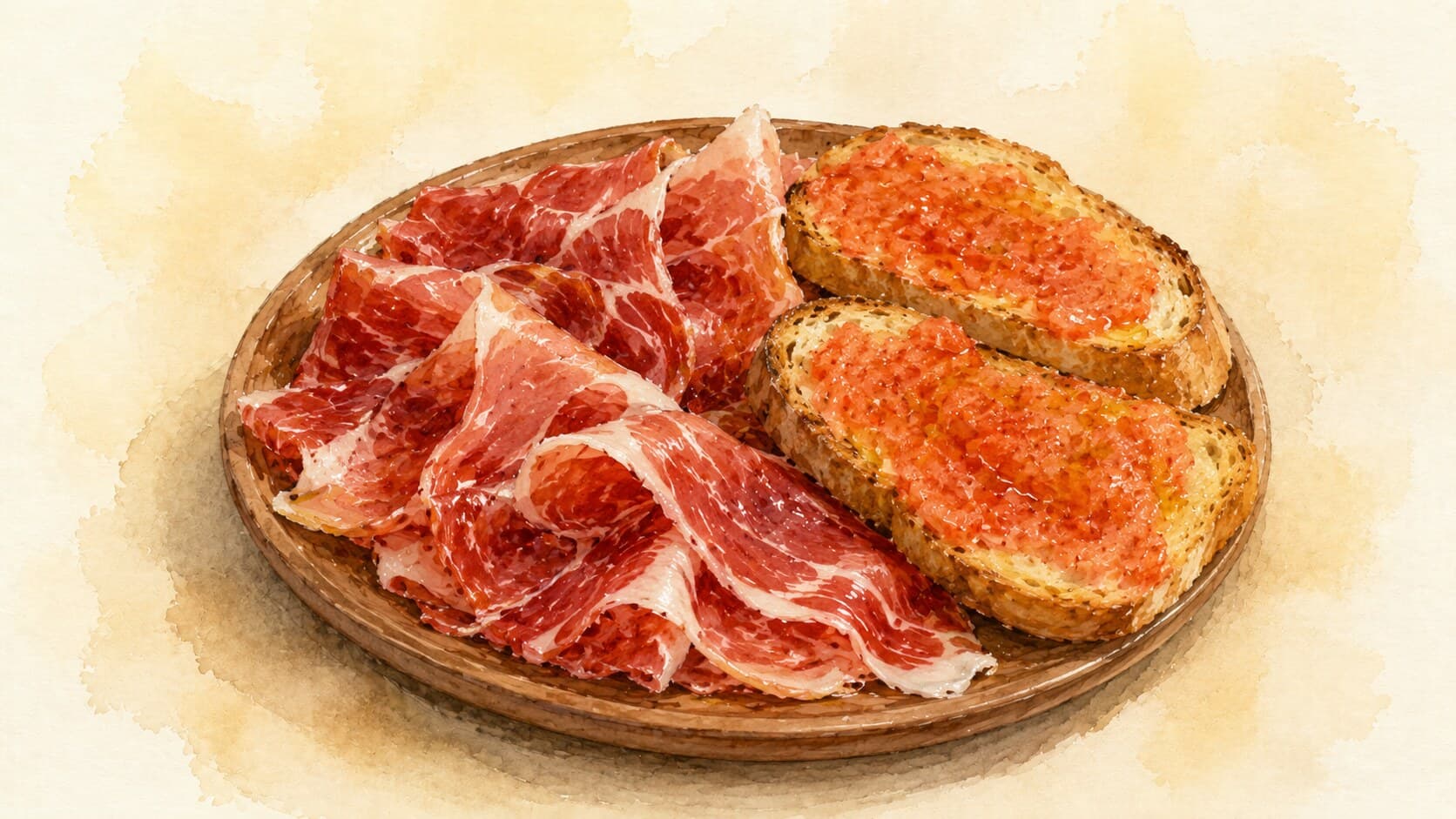
Experience the harmony of rich Jamón Ibérico paired with rustic Pan con Tomate for a delightful Spanish appetizer.
Contents (5 sections)▾
Ingredients
- 200 g Jamón Ibérico, thinly sliced
- 2 ripe tomatoes
- 4 slices of rustic bread
- 60 ml extra virgin olive oil
- Salt, to taste
Steps
Toast the slices of bread in a preheated oven at 200°C for about 5 minutes until golden brown and crisp.
While the bread is toasting, cut the tomatoes in half and grate the pulp into a bowl, discarding the skins.
Once the bread is toasted, rub the cut side of the tomato halves onto each slice, ensuring even coverage.
Drizzle the toasted bread with extra virgin olive oil and sprinkle with salt to taste.
Arrange the hand-sliced Jamón Ibérico on a plate at room temperature, and serve alongside the prepared bread.
Why this works
The beauty of Jamón Ibérico con Pan con Tomate lies in its simplicity, showcasing high-quality ingredients with minimal preparation. The toasted bread acts as a canvas, its crunch providing a delightful contrast to the juicy, ripe tomatoes. Rubbing the bread with fresh tomato pulp allows the natural sweetness and acidity of the tomatoes to seep into the bread, enriching each bite. The olive oil adds a luscious smoothness that balances the saltiness of the ham. If the bread seems too dry after rubbing, simply add more olive oil for moisture. This dish highlights the ingredient-first principle; when elements are of such high quality, the technique should focus on enhancing their natural flavors rather than complicating them.
Common mistakes
Using under-ripe, watery, or refrigerator-cold tomatoes.
Target: Vine-ripened tomatoes that yield slightly to gentle pressure, with deep red flesh all the way through and a sweet, fragrant smell at the stem end. Room temperature, never straight from the fridge.
Why it matters: Pan con tomate (a Catalan toast-and-rubbed-tomato dish) is more than half tomato by experience. A pale, mealy supermarket tomato gives you sour water; a refrigerator-cold one tastes muted and dull because cold suppresses the aromatic compounds. The whole point of the dish is concentrated, ripe-tomato flavor migrating into bread.
What to do: Buy tomatoes a few days before. Ripen on the counter, stem up, away from direct sun. If you can only find under-ripe ones, give them 2–3 days at room temperature; never refrigerate.
Toast that's too dark, or too soft.
Target: Bread that is golden brown, audibly crisp at the edges, but still gives a little at the centre when pressed. Around 5 minutes at 200°C / 390°F.
Why it matters: Burnt toast tastes bitter and rejects the tomato pulp — the rubbed surface skitters off the carbonized crust. Under-toasted bread goes soggy the moment it meets juice, collapsing into wet bread. The toast needs to be dry and rough enough to grate the tomato as you rub it.
What to do: Watch the toast in the last minute. Pull it just as it goes from pale gold to deep gold. Let it sit 30 seconds before rubbing — that brief rest dries the surface and improves grip.
Slicing the jamón thick or pre-arranging it cold.
Target: Hand-sliced as thin as you can — nearly translucent — and brought to room temperature before serving (about 10–15 minutes out of the package).
Why it matters: Jamón Ibérico is a dry-cured ham; the fat is high in oleic acid and at fridge temperature it stays waxy and dense, masking the nutty, almost-buttery quality the ham is prized for. Warmth and thinness let the fat begin to melt at the moment of eating — that's where the mouthfeel lives.
What to do: Take the ham out of the fridge 10–15 minutes before serving so the fat softens slightly. Slice as thin as your knife allows, or buy pre-sliced packets and lay them out flat (not stacked) on a plate.
Drowning the toast in olive oil.
Target: A thin, even drizzle — roughly 1 teaspoon per slice — applied AFTER the tomato rub.
Why it matters: Too much oil floods the bread, breaks the texture contrast, and dilutes the tomato. Olive oil here is a finishing seasoning, not a soaking medium. A good fruity, slightly peppery EVOO at the right amount tightens the flavors; an excess slackens them.
What to do: Drizzle in a thin zigzag across the slice and stop. If you want more oil presence, serve a small pour-bowl alongside instead of pre-soaking the toast.
What to look for
- Ripe tomato: heavy in the hand for its size, slight give under thumb pressure, a sweet floral smell at the stem when warmed by your hand. A tomato that smells of nothing will taste of nothing.
- Toast at the right point: deep gold not brown, edges visibly crisp, surface still showing the open texture of the crumb. When you rub the tomato, the surface acts like a grater, pulling pulp into the crumb.
- Jamón sliced and tempered correctly: slices nearly translucent, the fat looking soft and slightly glossy rather than waxy white. If you press a slice gently, the fat should yield, not feel firm.
- Final bite: bread crisp at the edge and soaked through with tomato in the centre, ham releasing fat as it warms in your mouth, olive oil and salt sitting in the background — not in the foreground.
Food safety note: Jamón Ibérico is a fully cured, ready-to-eat product, but it is still raw meat protein. Keep it refrigerated until 10–15 minutes before serving, and use it within the package's printed date. If you assemble plates ahead of time, refrigerate the assembled plate (covered) and bring it out shortly before serving rather than leaving cured ham, ripe tomato, and toast sitting at room temperature for hours.
A note on history
Pan con tomate (Catalan: pa amb tomàquet) originated in rural Catalonia, where the earliest written reference dates to 1884 — bread that had gone stale was rubbed with tomato and drizzled with olive oil to soften it and bring it back to the table (Barcelona Tourism). Bread with olive oil and salt is a much older Mediterranean idea going back to the ancient Greeks, but tomatoes only arrived from the Americas in the 16th century and were not widely accepted in European kitchens until the 18th century — which is why this tomato-on-bread version is, in food-history terms, relatively recent (Gimme Some Oven). Pairing it with thinly sliced Jamón Ibérico — a dry-cured ham from the Ibérico pig of southwestern Spain and Portugal — turns a humble Catalan everyday slice into the canonical Spanish tapa.
Get the essays in your inbox — free
Weekly notes on flavor, fermentation, and food history — the writing behind the Atlas of Flavor. No spam; unsubscribe anytime.