
Hot and Sour Soup
This recipe balances heat and acidity through precise ingredient ratios and techniques.
Contents (5 sections)▾
Ingredients
- 4 cups chicken or vegetable broth
- 1 cup sliced mushrooms
- 1/2 cup bamboo shoots, julienned
- 1/2 cup firm tofu, cubed
- 1/4 cup white vinegar
- 2 tablespoons soy sauce
- 1 tablespoon cornstarch mixed with 2 tablespoons water
- 1 teaspoon white pepper
- 2 eggs, beaten
- 2 green onions, sliced
- 1 tablespoon sesame oil
- 1 tablespoon chili oil (optional)
Steps
Bring broth to a simmer in a large pot.
Add mushrooms, bamboo shoots, and tofu; cook for 5 minutes.
Stir in vinegar, soy sauce, white pepper, and sesame oil.
Thicken with cornstarch slurry; stir until soup is slightly thickened.
Slowly drizzle in beaten eggs while stirring the soup.
Garnish with green onions and chili oil; serve hot.
Tools you'll want
Why this works
Hot and Sour Soup relies on the balance of acidic and spicy flavors. Vinegar provides the sourness while white pepper adds heat. The broth must simmer to fully integrate these flavors. Tofu adds texture, while mushrooms contribute umami depth. The cornstarch creates a velvety consistency, binding the ingredients.
The temperature is crucial. Simmering the broth at a steady heat ensures that the ingredients cook without losing their structure. Adding the beaten eggs slowly creates delicate ribbons, enriching the soup.
By incorporating bamboo shoots, the soup gains a satisfying crunch. The ratio of broth to solids should be carefully maintained, ensuring a harmonious mouthfeel.
Common mistakes
Wrong vinegar.
Target: Chinese black vinegar (Chinkiang vinegar) — NOT distilled white vinegar.
Why it matters: Chinkiang vinegar provides the complex, slightly sweet, fermented sourness that defines hot-and-sour soup. Distilled vinegar is just acid — produces "vinegary soup" without the depth.
What to do: Source from a Chinese grocery (look for "Chinkiang" or "镇江"). Add at the end so the acid doesn't volatilize.
Workarounds:
- No Chinkiang vinegar? Balsamic vinegar is the closest substitute (similar aged complexity).
Wrong pepper.
Target: White pepper, freshly ground. Substantial amount — about 1 tsp per liter of broth.
Why it matters: Hot-and-sour soup's "hot" is white pepper, NOT chili. White pepper provides the burning, slightly funky heat that distinguishes the soup. Black pepper has wrong flavor.
What to do: Grind white peppercorns fresh. Add generously.
Workarounds:
- For more dimension, add a small amount of chili oil at the end — but white pepper does the main work.
Skipping the wood ear mushrooms.
Target: Wood ear mushrooms (kikurage / 黑木耳) — rehydrated from dried, sliced thin.
Why it matters: Wood ears provide the signature crunchy-gelatinous texture. Without them, the soup feels flat texturally — they're not optional.
What to do: Rehydrate dried wood ears in warm water for 20 minutes. Slice thin.
Workarounds:
- For shortcut, canned wood ears work — slightly different texture but acceptable.
Adding eggs too fast.
Target: Drizzle beaten eggs SLOWLY in a thin stream over the BACK of a moving spoon. Soup should be at a gentle simmer.
Why it matters: Eggs added all at once form a single mass. Slow drizzle + moving spoon creates the characteristic egg ribbons.
What to do: Beat eggs lightly. Stir the soup in one direction with a chopstick. Pour egg over the chopstick in a thin stream.
Workarounds:
- For chunky egg style, pour faster — different but valid texture.
Skipping cornstarch slurry timing.
Target: Add cornstarch slurry to bring the soup to slight thickness BEFORE adding eggs.
Why it matters: Eggs need a slightly thickened liquid to form proper ribbons. In thin broth, eggs sink and clump.
What to do: Mix 1 tbsp cornstarch + 2 tbsp cold water. Add to simmering soup, stir, then add eggs.
Workarounds:
- For gluten-free thickening, use potato starch — produces glossier result.
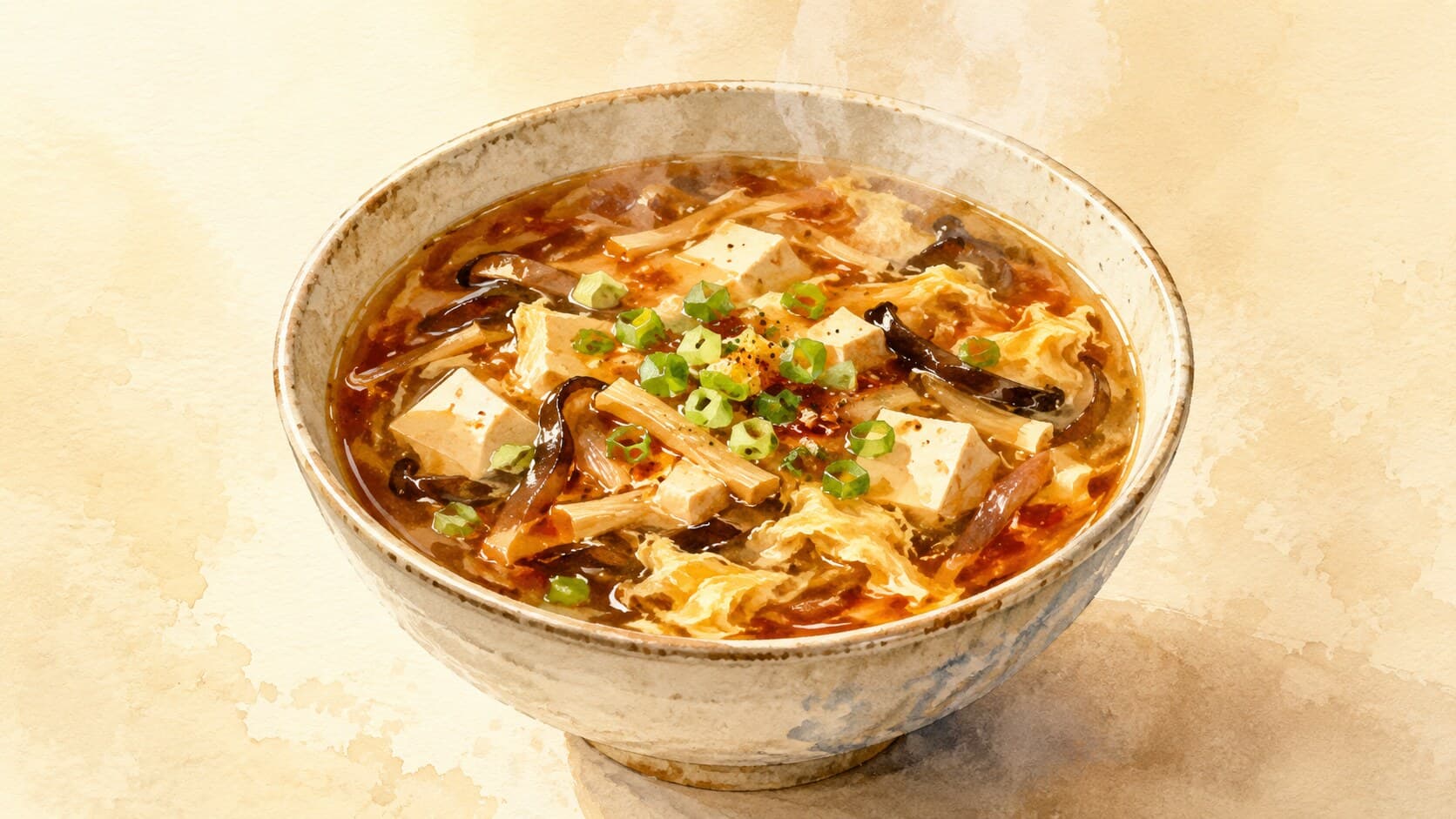
What to look for
- A rich, dark broth with a glossy sheen.
- Ribbons of egg throughout the soup.
- Visible chunks of tofu and mushrooms.
- A balanced aroma of spice and tanginess.
- Vibrant green onions on top for contrast.
Chef's view
Hot and Sour Soup is a staple in Chinese cuisine, often enjoyed for its comforting properties. It embodies the yin-yang philosophy, combining opposing flavors to create harmony. Traditionally, it is served during cold weather or as a restorative dish.
The technique reflects a deep understanding of flavor layering. Each ingredient plays a role, contributing to the overall experience. This soup is not just a meal; it represents cultural traditions and the art of balance in cooking.
<!-- beginner-glossed v1 -->Get the essays in your inbox — free
Weekly notes on flavor, fermentation, and food history — the writing behind the Atlas of Flavor. No spam; unsubscribe anytime.