
Gyudon
Gyudon is a Japanese dish consisting of thinly sliced beef and onions simmered in a dashi-soy sauce served over rice.
Contents (6 sections)▾
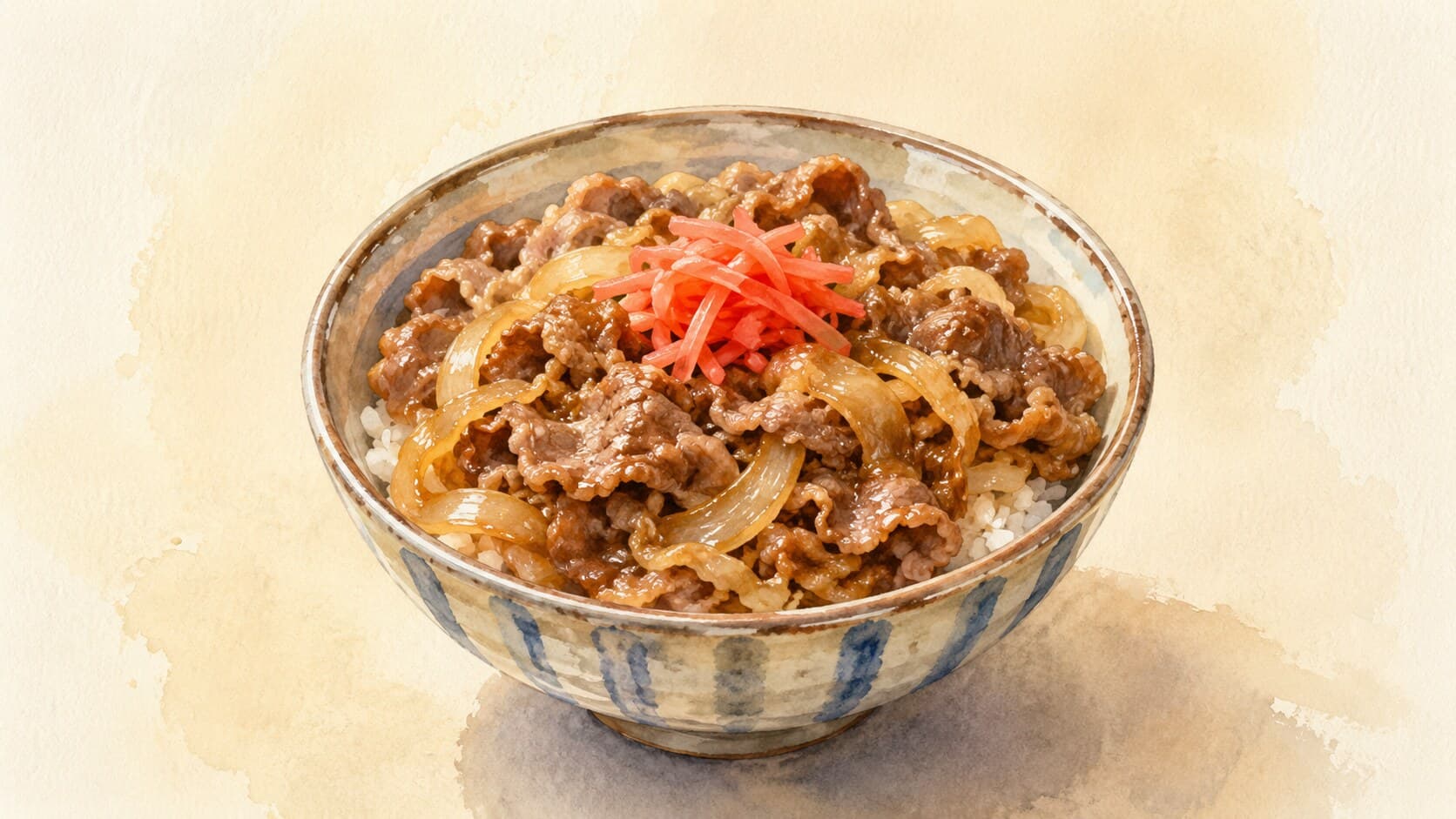
Ingredients
- 300 g thin-sliced beef
- 1 medium onion, thinly sliced
- 200 ml dashi broth
- 4 tbsp soy sauce
- 2 tbsp mirin
- 1 tbsp sugar
- 2 bowls of cooked rice
- chopped green onions, to taste
- shichimi togarashi, to taste
Steps
In a pan over medium heat, add the sliced onions and sauté for about 5 minutes until translucent; this enhances their sweetness.
Add the thin-sliced beef to the pan and cook for 3-4 minutes, stirring until just browned; it’s important to avoid overcooking the beef.
Pour in the dashi broth, soy sauce, mirin, and sugar. Stir to combine and bring to a simmer; let it cook for 5-7 minutes to allow the flavors to meld.
Serve the beef and onion mixture over bowls of warm rice, garnishing with chopped green onions and a sprinkle of shichimi togarashi.
Why this works
The technique of simmering thin-sliced beef with onions in a soy-dashi mixture creates a rich umami flavor that is both satisfying and easy to prepare. The dashi, a fundamental broth in Japanese cuisine, adds depth and enhances the beef's natural flavors while the onions caramelize slightly, contributing sweetness. If the mixture seems too salty, adding a touch more sugar can balance the flavors; conversely, if it becomes too sweet, a dash of soy sauce can restore the savory aspect. This balance is crucial to achieving the perfect gyudon. Additionally, the quick cooking time keeps the beef tender; overcooking will toughen it, so monitor closely. This dish is a staple for its simplicity and comforting qualities, making it a go-to for busy weeknights.
Common mistakes
- Beef sliced too thick. Gyudon meat should be paper-thin (1.5 mm). Anything thicker requires longer cooking and the meat goes tough. Buy pre-sliced "shabu-shabu" cut from a Japanese grocer.
- Onion underdone. Half-cooked onion stays sharp and crunchy — wrong texture. Cook the onion first in the simmer until almost translucent before the meat goes in.
- Simmer too long after the meat is in. Beef goes leathery after 3 minutes in the simmer. Add meat last, cook 90 seconds–2 minutes, then off heat.
- Sauce too thin. A weak sauce doesn't bind to the rice. The simmer should be aromatic and slightly syrupy by the time the meat is finished.
What to look for
- The simmer: small bubbles around the edge, slightly syrupy, fragrant with soy and ginger.
- Onion: almost translucent, just starting to soften — about 4 minutes in.
- Meat at finish: off the bright pink raw shade, no longer red — gray-brown is right. Slightly pink at the very center is fine for properly handled, freshly sliced beef.
- Plating: the meat sits on top of the rice and the sauce soaks down — not the other way around.
Substitutions
- Pre-sliced shabu beef → home-frozen ribeye (firm, then slice 1.5 mm). Workable substitute if no Japanese grocer is reachable.
- Dashi → 1 tsp dashi powder + water. Direct swap, slightly saltier; reduce soy by 1 tsp.
- Mirin + sugar → mirin only (1.5× the volume). Cleaner, less sweet edge.
- Beni-shoga (red pickled ginger) → ginger-pickle slices or a 1 tsp drained rakkyo. Onsen tamago (a slow-poached egg with a barely-set white and creamy yolk) can replace beni-shoga as a topping for a richer bowl — its low-temperature cook is not a validated Salmonella kill step, so use an egg pasteurized in the shell (or a pasteurized egg product) for it. Pregnant people, infants and young children, older adults, and anyone immunocompromised should skip the soft egg or use a pasteurized one.
Make-ahead and storage
- The dashi-soy simmer holds well. Make it ahead, refrigerate up to 5 days; reheat at service and finish the meat fresh.
- Cooked gyudon refrigerates for 1–2 days. Reheat in a covered pan over low heat with a splash of water; never in the microwave alone — the beef toughens unevenly.
- Do not freeze the cooked bowl. Onion turns to mush; beef texture suffers.
- Beef-safety note: Cooked beef should not sit at room temperature longer than 2 hours (1 hour above 30 °C). Discard rather than judging by smell.
Get the essays in your inbox — free
Weekly notes on flavor, fermentation, and food history — the writing behind the Atlas of Flavor. No spam; unsubscribe anytime.