
Eggs En Cocotte
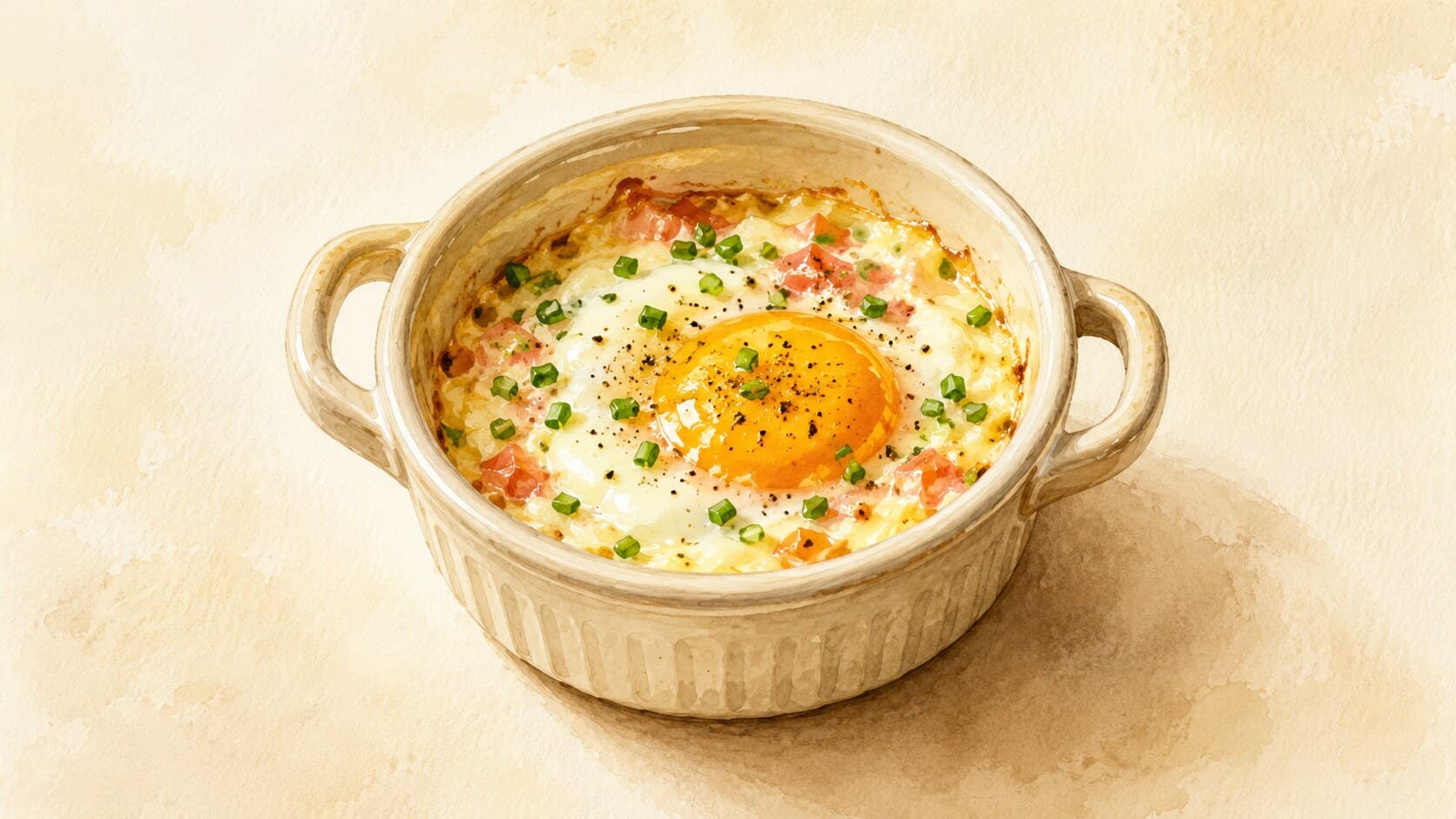
Delight in the simplicity of Eggs En Cocotte, a classic dish combining eggs and vegetables baked to perfection.
Contents (6 sections)▾
Ingredients
- 4 large eggs
- 100 g spinach, chopped
- 50 g cherry tomatoes, halved
- 50 g cream cheese, cubed
- 2 tbsp milk
- 1 tbsp olive oil
- Salt to taste
- Pepper to taste
- Fresh herbs for garnish (e.g., chives or parsley)
Steps
Preheat your oven to 180°C (350°F). This will ensure even cooking and help the eggs set properly.
In a skillet, heat olive oil over medium heat and sauté the chopped spinach and halved cherry tomatoes for about 3-4 minutes until softened.
In a mixing bowl, whisk together the eggs, milk, salt, and pepper. Add the sautéed vegetables and cream cheese, and gently mix.
Grease two ramekins with a bit of olive oil, then divide the egg mixture evenly between them.
Place the ramekins in a baking dish and fill the dish with hot water until it reaches halfway up the sides of the ramekins, creating a water bath.
Bake in the preheated oven for about 15 minutes. With ordinary (non-pasteurized) eggs, extend the bake until the yolks are fully set (no longer runny) — that is the safe endpoint. For a soft, creamy just-set yolk, use eggs pasteurized in the shell (through to the contents) — for everyone, not only high-risk diners.
Remove from the oven, carefully take the ramekins out of the water bath, and let cool slightly before garnishing with fresh herbs.
Why this works
The technique of cooking eggs en cocotte (baked gently in a small individual dish) relies on gentle heat from the water bath (a tray of hot water around the dish that keeps the heat soft and even), which ensures that the eggs cook evenly and remain tender without curdling. The combination of cream cheese and milk creates a rich, creamy texture that enhances the dish's overall mouthfeel. Sautéing the spinach and tomatoes beforehand not only brings out their natural sweetness, but it also prevents excess moisture from diluting the egg mixture. If the eggs seem too runny after baking, you can return them to the oven for a few more minutes; just be cautious not to overcook them, as they can become rubbery. By maintaining control over the temperature and cooking time, you can achieve the perfect custard-like consistency that makes this dish a delight to experience.
Safety note. Eggs en cocotte canonically finish with set whites and a creamy, just-flowing yolk — a just-flowing yolk is undercooked egg with no validated Salmonella kill step. To keep it soft, use an egg pasteurized in the shell (through to the contents); otherwise extend the bake until the yolk is fully set. High-risk diners (pregnancy, immunocompromised, very young or old) should use a pasteurized egg, or extend the bake by 3-5 minutes until the yolk is fully set — the cocotte still works, the texture just shifts from creamy to custard-firm.
Common mistakes
- Oven too hot. Yolk overshoots set before the white has cooked through. Target 160 °C / 325 °F with a water bath, never higher.
- Skipping the water bath. Direct heat sets the yolk hard within 6 minutes. The bain-marie (the French name for that same hot-water tray) holds the ramekin in the gentle 80–90 °C range the egg actually wants.
- Cream too cold. Cold cream drops the cooking temperature in the ramekin and adds 3–4 minutes to the time. Warm the cream to body temperature first.
- Pulling too late. A perfect en cocotte comes out when the white is just set and the yolk still ripples under a tap. Carry-over heat continues setting for 60 seconds after the ramekin leaves the oven.
What to look for
- Water bath: water reaches halfway up the ramekin side, water is hot but not simmering when the ramekin goes in.
- Surface white: opaque, no transparent zones around the yolk.
- Yolk on tap: tap the side of the ramekin — the yolk should ripple, not jiggle as a solid disc.
- Done at the table: the yolk breaks open under a piece of toast with no visible firmness inside.
Substitutions
- Heavy cream → crème fraîche (same volume). Sharper, less round. Suits a herbal version (chives, tarragon).
- Heavy cream → whole milk + 1 tsp butter melted in. Lighter result, slightly less stable on the spoon.
- Gruyère → comté, raclette, or aged cheddar. Any aged hard cheese that melts cleanly. Avoid mozzarella — too wet.
- Plain version → cocotte with cooked mushrooms, ham, or wilted spinach added at the bottom. Add cooked-and-cooled additions only; raw ingredients release water.
Make-ahead and storage
- Best within 5 minutes of leaving the oven. Carry-over heat continues setting the yolk; serving cold defeats the dish.
- Set up the ramekins ahead. Cream + cheese + seasoning can sit in the ramekin (covered, refrigerated) for up to 4 hours before adding the egg and baking.
- Do not refrigerate a finished cocotte and reheat. The yolk overcooks on the second pass and the cream breaks.
- Egg-safety note: Refrigerate any unfinished cocottes within 1 hour of cooking. Discard rather than judge a refrigerated egg dish by smell alone.
Get the essays in your inbox — free
Weekly notes on flavor, fermentation, and food history — the writing behind the Atlas of Flavor. No spam; unsubscribe anytime.