
Dolma
Dolma entails a method of stuffing vegetables, particularly grape leaves, with a savory filling.
Contents (5 sections)▾
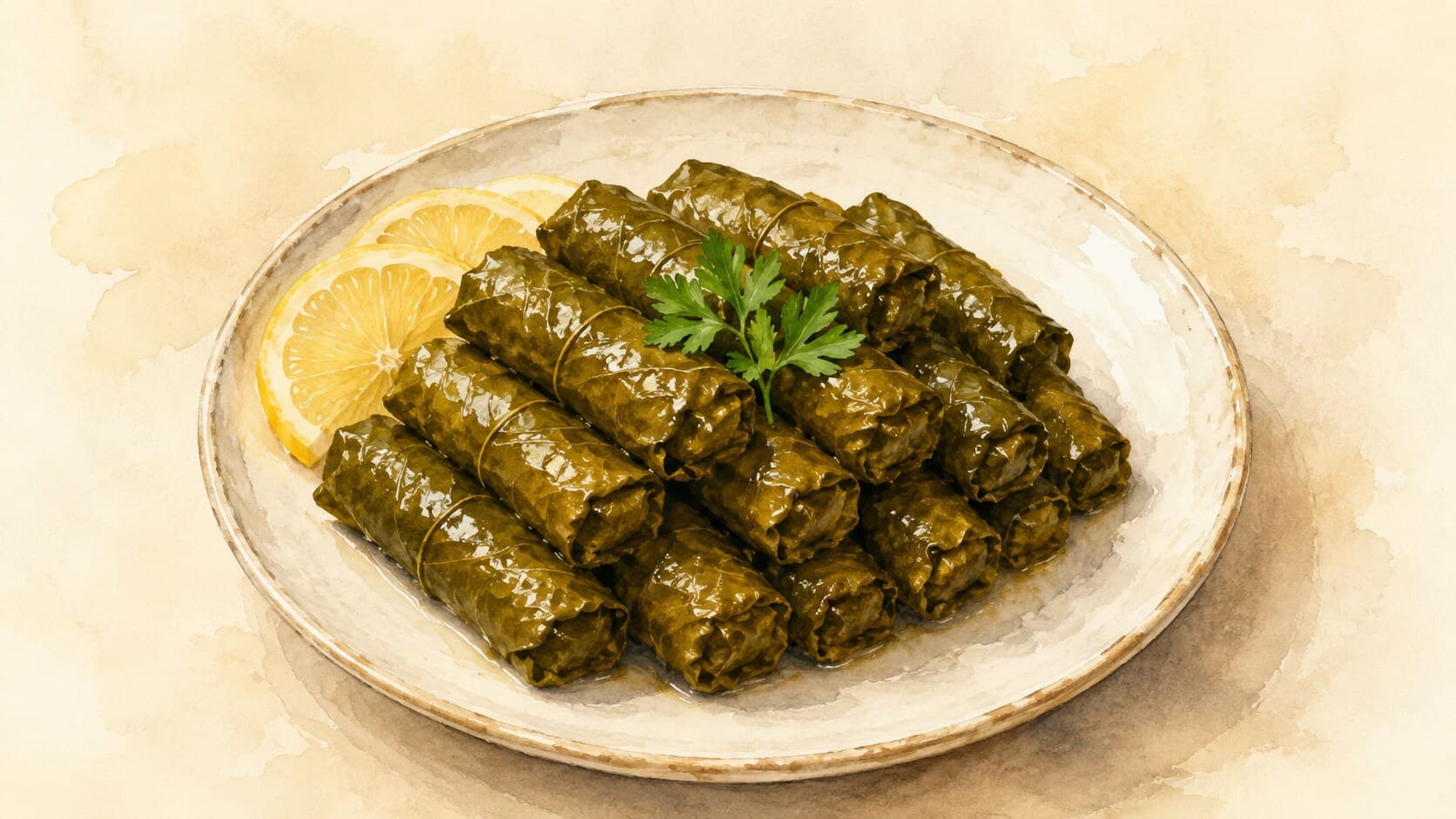
Ingredients
- 20 grape leaves, jarred or fresh
- 1 cup long-grain rice
- 1 medium onion, finely chopped
- 2 tablespoons olive oil
- 1 teaspoon salt
- 1/2 teaspoon black pepper
- 1 tablespoon fresh dill, chopped
- 1 tablespoon fresh parsley, chopped
- 1/2 teaspoon allspice
- 1 lemon, juiced
- 2 cups vegetable broth
Steps
Rinse rice under cold water until water runs clear.
In a skillet, heat olive oil, sauté onion until translucent.
Add rice, salt, pepper, dill, parsley, and allspice; stir to combine.
Add 1 cup of vegetable broth; simmer until liquid is absorbed.
Stuff grape leaves with rice mixture, roll tightly.
Place rolled leaves in a pot, cover with remaining broth and lemon juice; cook for 20 minutes.
Tools you'll want
Why this works
Dolma (vegetables, most often grape leaves, wrapped around a savory rice filling) relies on the balance of flavors and textures. The rice absorbs moisture from the broth, expanding and creating a tender filling. Grape leaves provide a slightly tangy flavor and a firm structure. Properly rinsing the rice ensures no excess starch, preventing clumping. Simmering in broth infuses the leaves with flavor while preventing drying.
Common mistakes
Using grape leaves straight from the jar.
Target: Rinse jarred grape leaves thoroughly + blanch in boiling water for 30 seconds to remove brine, then drain.
Why it matters: Jarred grape leaves are stored in heavily salted brine — rolling dolma without rinsing produces over-salted, slightly metallic results. Quick blanching also makes leaves more pliable.
What to do: Drain, unfold, rinse in cool water, then blanch briefly. Pat dry.
Workarounds:
- Fresh grape leaves? Blanch 90 seconds in salted water to soften and remove tannins.
Wrong rice.
Target: Short-grain or medium-grain rice (Calrose, Egyptian) — par-cook to 50% before stuffing.
Why it matters: Long-grain rice doesn't bind the filling and grains stay separate. Par-cooking is essential because the rice continues cooking inside the leaves but won't finish from raw in the time the leaves take.
What to do: Rinse rice, par-boil 8 minutes, drain. Mix with herbs and spices before stuffing.
Workarounds:
- For shortcuts, par-cook the rice with the herbs IN — flavor goes in early.
Rolling too loose or too tight.
Target: Cigar-shaped rolls — tight enough to hold shape, loose enough for rice to expand.
Why it matters: Too tight and the rolls burst as rice expands. Too loose and filling falls out during cooking.
What to do: Place 1 tbsp of filling at the leaf stem end, fold sides in, roll up tightly but not crushing.
Workarounds:
- For beginners, use larger filling amounts and more leaf area to make rolling easier.
Not weighting during cooking.
Target: Place a heavy plate on top of the dolma in the pot to keep them submerged in the cooking liquid.
Why it matters: Dolma float as they cook — without weighting, they rise above the liquid and cook unevenly. Some are cooked, others are raw.
What to do: After arranging dolma in a single layer + adding cooking liquid (lemon water + olive oil), place an inverted plate on top to weight them down.
Workarounds:
- For tall pots, stack dolma in 2 layers — bottom layer protects top from over-cooking.
Skipping the lemon.
Target: Generous lemon juice in the cooking liquid (1/2 cup per pot) + lemon wedges to serve.
Why it matters: The acidity is structural — balances the rice and oil. Without it, dolma reads as heavy and one-note. Greek and Lebanese versions both depend on lemon brightness.
What to do: Add lemon to the simmering liquid. Serve with extra wedges.
Workarounds:
- For variety, use preserved lemon as a topping at the end — different but valid.
What to look for
- Grape leaves should be pliable and bright green.
- Rice filling should be tender but not mushy.
- A pleasant aroma of herbs and spices should emanate from the pot.
- The broth should be mostly absorbed but not dry.
- Leaves should hold their shape without tearing.
Chef's view
Dolma is a storied dish across the Middle East, symbolizing hospitality and tradition. Each family has its unique recipe, reflecting regional ingredients and flavors. The technique of stuffing vegetables preserves the harvest, a method passed down through generations. The art of rolling dolma is a cherished skill, often shared during gatherings, reinforcing bonds and cultural identity.
<!-- beginner-glossed v1 -->Get the essays in your inbox — free
Weekly notes on flavor, fermentation, and food history — the writing behind the Atlas of Flavor. No spam; unsubscribe anytime.