
Cong You Bing
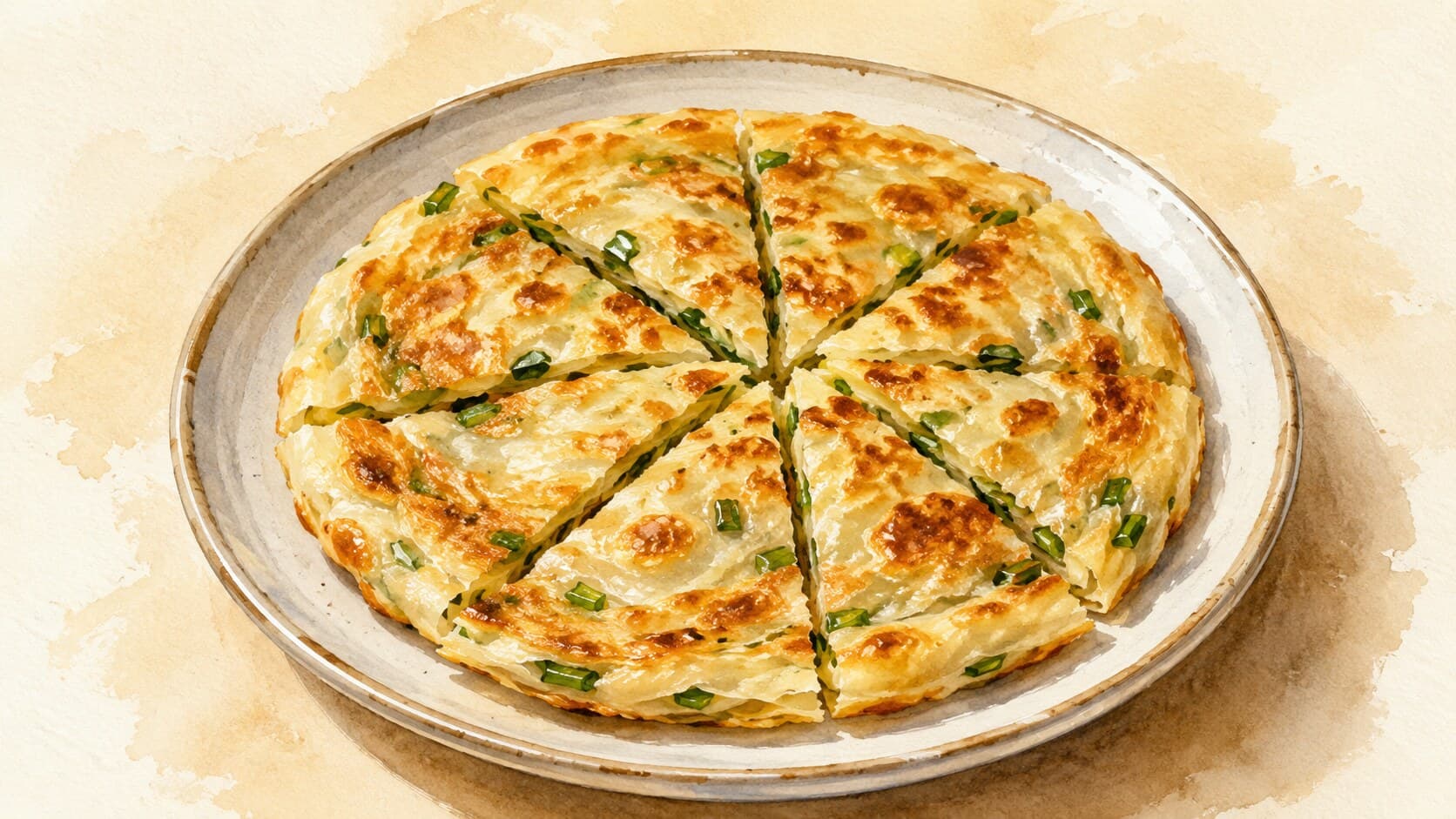
Cong You Bing is a layered scallion pancake made with hot-water dough, known for its flaky texture and distinct scallion flavor.
Contents (5 sections)▾
Ingredients
- 250 g all-purpose flour
- 150 ml hot water
- 2 tbsp vegetable oil
- 4 scallions, finely chopped
- 1 tsp salt
- additional oil for frying, to taste
Steps
In a mixing bowl, combine the flour and salt. Gradually add hot water while stirring with chopsticks or a fork until the dough starts to come together.
Knead the dough on a lightly floured surface for about 5 minutes until smooth. Cover with a damp cloth and let it rest for 20 minutes.
Roll the rested dough into a rectangle, about 1 cm thick. Brush the surface with 2 tbsp of vegetable oil and sprinkle evenly with chopped scallions.
Starting from one end, roll the dough tightly into a log, then coil the log into a spiral shape. Flatten gently with your hand.
Using a rolling pin, roll the coiled dough into a flat round pancake, about 0.5 cm thick.
Heat a non-stick skillet over medium heat and add enough oil to coat the bottom. Fry the pancake for about 3-4 minutes on each side until golden brown and crispy.
Remove from heat, cut into wedges, and serve hot.
Why this works
Using hot-water dough is essential for creating a tender and pliable base, facilitating effective lamination (building up thin separate layers of dough and oil so it bakes flaky). The hot water aids gluten development, resulting in a manageable dough that resists tearing. The scallion-oil paste contributes flavor and forms the characteristic layers of Cong You Bing. If the dough feels dry while rolling, lightly sprinkle it with water to aid stretching. Frying at medium heat ensures a crispy exterior while keeping the inside tender. If the pancake breaks during frying, gently press it back together and continue cooking; it will still be acceptable. This technique serves as an introduction to lamination in dough making.
Common mistakes
Mixing the dough with water that isn't hot enough.
Target: Water just off the boil, around 85–95°C (185–203°F), stirred in while the dough is shaggy.
Why it matters: This is a hot-water dough, and the heat is the whole point. Hot water partly scalds the flour's gluten (the stretchy protein network that gives dough its structure), so the dough turns soft and pliable instead of springy and tight. A soft dough rolls thin without snapping back — exactly what you need to build layers. Cold-water dough fights you and tears.
What to do: Use water hot enough to need chopsticks, not your hand, to mix. Bring it together into a rough mass, then knead once it is cool enough to touch.
Rolling and shaping a dough that hasn't rested.
Target: Rest the kneaded dough, covered, at least 15–20 minutes before shaping.
Why it matters: Right after kneading, the gluten is tense and the dough springs back the moment you roll it. Resting lets that gluten relax, so the dough stays where you stretch it. Skip the rest and the pancake shrinks back thick and refuses to thin out.
What to do: Cover with a damp cloth so the surface doesn't dry, walk away, then come back. The dough should feel slack and easy to push out.
Coiling the layers too loosely — or pressing out the oil.
Target: Brush a thin, even film of oil, roll into a tight log, then coil into a snug spiral.
Why it matters: The flakiness is lamination: the brushed oil keeps each turn of dough from fusing to the next, so they bake into separate leaves. Roll loosely and the layers collapse into one dense bread; press too hard and you squeeze the oil out, gluing them together. The oil film is the boundary that makes the flakes.
What to do: Spread oil right to the edges, roll firmly but without crushing, coil tight, and flatten gently with your palm — let the rolling pin do the thinning, not heavy pressure.
Frying too hot or in a dry pan.
Target: Medium heat, enough oil to film the pan, about 3–4 minutes a side to deep gold.
Why it matters: The crisp gold surface is the Maillard reaction (the browning chemistry that builds toasty, savory flavor); it needs steady contact with hot oil and a little patience. Too hot and the outside scorches before the inside cooks; a dry pan steams the surface pale and leathery instead of crisping it.
What to do: Heat the pan first, add the oil, then the pancake. Listen for a gentle, steady sizzle — not a violent crackle — and flip once each side is set and browned.
What to look for
- The dough after resting: soft, slack, and easy to push thin without springing back. If it fights you and shrinks, it needs more rest, not more flour.
- The coil before the final roll: a tight spiral with visible turns and a faint sheen of oil between them. Those distinct turns are the layers that will separate into flakes.
- The surface in the pan: an even, deep gold with crisp blistered patches, sizzling steadily. Pale and limp means the heat or the oil is too low.
- The inside when you cut it: open, leafy layers that pull apart, tender rather than doughy. Dense and bready signals lost lamination — usually a loose coil or crushed-out oil.
A note on history
Cong you bing (葱油餅, "scallion-oil pancake") is a savory wheat flatbread from the Chinese cooking tradition, layered with chopped scallions and oil and pan-fried until flaky. Wheat flatbreads of this family are very old in northern China — the wheat-and-griddle culture of regions such as Shandong — and the scallion pancake is one of its enduring, everyday forms. A popular story credits Marco Polo with carrying it back to Italy as an ancestor of pizza, but that tale is folklore rather than documented history. (Wikipedia: Cong you bing; 196 Flavors: Cong You Bing)
Get the essays in your inbox — free
Weekly notes on flavor, fermentation, and food history — the writing behind the Atlas of Flavor. No spam; unsubscribe anytime.