
New England Clam Chowder
This recipe combines clams, cream, and potatoes to create a rich, hearty soup.
Contents (5 sections)▾
Ingredients
- 2 cans (6.5 oz) chopped clams, drained
- 4 slices bacon, diced
- 1 medium onion, chopped
- 2 stalks celery, diced
- 2 medium potatoes, peeled and diced
- 2 cups clam juice
- 1 cup heavy cream
- 1 teaspoon thyme
- Salt and pepper to taste
- Chopped parsley for garnish
Steps
In a large pot, cook bacon over medium heat until crisp.
Add onion and celery; sauté until softened.
Stir in potatoes, clam juice, and thyme; bring to a boil.
Reduce heat and simmer until potatoes are tender.
Add clams and heavy cream; heat through.
Season with salt, pepper, and garnish with parsley before serving.
Tools you'll want
Why this works
Clam chowder achieves its creamy texture primarily through emulsification (fat and liquid beaten together into one smooth mixture). The fat from bacon and cream blends with the clam juice, creating a rich mouthfeel. Potatoes break down during cooking, thickening the soup naturally. Cooking at a simmer prevents the cream from curdling while maintaining a flavorful broth.
The balance of ingredients is crucial. Clams provide a briny depth, while the cream adds richness. Using fresh clams enhances the umami notes. The timing of adding each ingredient ensures a harmonious blend without overcooking, particularly the delicate clams.
Common mistakes
Overcooking the clams.
Target: Clams added in the FINAL 2–3 minutes only — pull from heat as soon as the shells open.
Why it matters: Clam meat goes from tender to rubbery in 60 seconds of overcooking. The classic restaurant chowder is built on the principle of "cook everything else, then add clams last." Many recipes incorrectly simmer clams with the broth from the start.
What to do: Steam clams separately (or use the clam juice from canned clams for the broth), then add the cooked clam meat at the end just to warm through.
Workarounds:
- Canned clams: drain (save juice for broth), warm gently in the soup for 60 seconds before serving.
- For fresh clams: steam in white wine + aromatics, strain the cooking liquid through cheesecloth (catches sand), use as broth.
Skipping the bacon or salt pork base.
Target: Render diced bacon or salt pork as the cooking fat for the aromatics. About 100 g per 4 servings.
Why it matters: The smoky, salty rendered pork fat is what gives New England clam chowder its signature depth. Cooking aromatics in plain butter produces a flat, milk-soup result that lacks the foundational chowder character.
What to do: Dice bacon small, render slowly until fat releases and bits crisp. Cook onions + celery in that fat.
Workarounds:
- Pork-free? Use 2 tbsp butter + 1 tsp smoked paprika to mimic the smoky character.
- For maximum flavor, use smoked salt instead of regular salt in the dish.
Using the wrong potato.
Target: Waxy potatoes (Yukon Gold, red potato) — NOT russets.
Why it matters: Russet potatoes have high starch and disintegrate during simmering — they thicken the chowder unintentionally and make a mushy result. Waxy potatoes hold their cubes intact, giving the soup textural integrity.
What to do: Cut into 1.5 cm cubes. Add to the simmering chowder with enough time to cook through (about 12 minutes) but not so long they break down.
Workarounds:
- Only russets available? Cut LARGER (2.5 cm cubes) and parboil separately, drain, add at the end.
Curdling the cream by boiling.
Target: Cream added in the final 5 minutes, brought to a gentle simmer ONLY — never a full boil.
Why it matters: Cream's proteins curdle when boiled, producing a broken, grainy texture. Once curdled, the chowder cannot be salvaged.
What to do: Add cream after the potatoes are tender. Heat gently. Hold below 85 °C.
Workarounds:
- Already curdled? Strain the chowder through a fine sieve, blend the strained solids smooth, return to the broth. Not perfect but salvages dinner.
- For extra insurance, temper cold cream with a bit of hot broth before adding to the pot.
Thickening with raw flour.
Target: Cook the flour with the rendered fat (creating a roux) for 2 minutes BEFORE adding any liquid.
Why it matters: Raw flour added to liquid creates lumps and tastes pasty. A proper roux is cooked just long enough to lose its raw flour taste but not so long it turns brown (this is a white roux for chowder).
What to do: Add flour to the bacon fat + sautéed aromatics, stir for 2 minutes, then slowly whisk in the clam broth.
Workarounds:
- For gluten-free, thicken with mashed potato or rice flour (slurry mixed with cold broth) added at the end.
- For an even silkier finish, blend half the cooked potatoes into the broth — natural thickening.
Using all milk, no cream.
Target: 60 % heavy cream + 40 % whole milk for richness without heaviness.
Why it matters: Pure milk chowder is thin and tastes like "soup with milk in it." Pure cream is too rich. The combination delivers body without becoming claggy.
What to do: Measure both. The ratio is a known sweet spot.
Workarounds:
- Lactose-light: half cream, half coconut cream (the dairy fat replacement). Different but defensible.
- For Manhattan-style clam chowder (red, no dairy), substitute the cream with tomato + extra clam broth.
What to look for
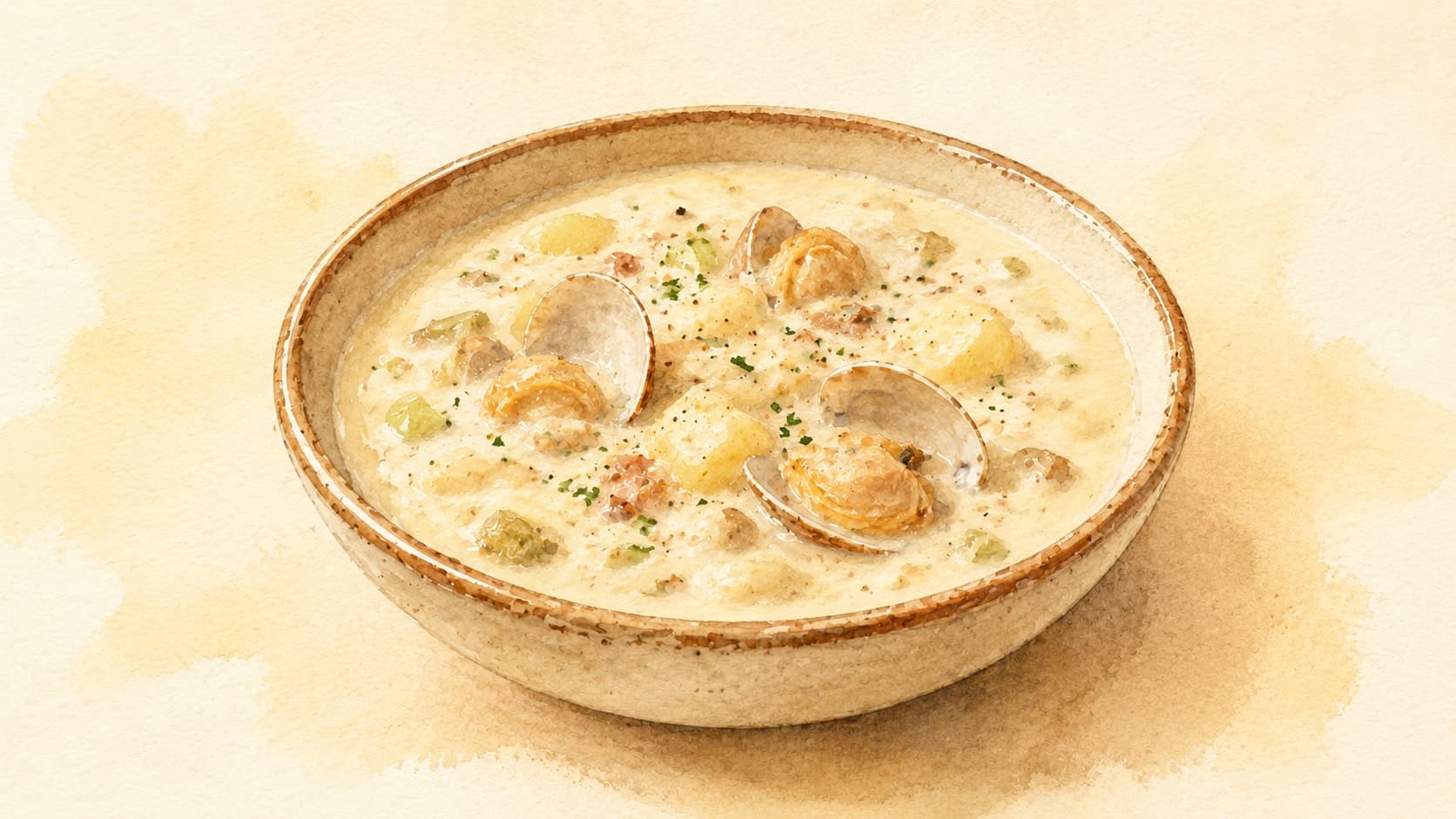
- A creamy, light tan color.
- Chunky vegetables visible throughout the soup.
- Clams floating on the surface, glistening with broth.
- A pleasant aroma of bacon and thyme wafting from the pot.
Chef's view
New England clam chowder has roots in coastal communities where clams were abundant. Traditionally, it reflects the region's reliance on local seafood. The use of cream distinguishes it from Manhattan-style chowder, which is tomato-based.
This chowder embodies comfort, often served in homes during colder months. The technique emphasizes simplicity, allowing the natural flavors of the clams and bacon to shine through. The recipe invites variations, such as the addition of corn or herbs, showcasing its adaptability in American cuisine.
<!-- beginner-glossed v1 -->Get the essays in your inbox — free
Weekly notes on flavor, fermentation, and food history — the writing behind the Atlas of Flavor. No spam; unsubscribe anytime.