
Chikuzenni
Chikuzenni is a Japanese simmered dish made with chicken and root vegetables, seasoned with dashi and soy sauce for enhanced flavor.
Contents (6 sections)▾
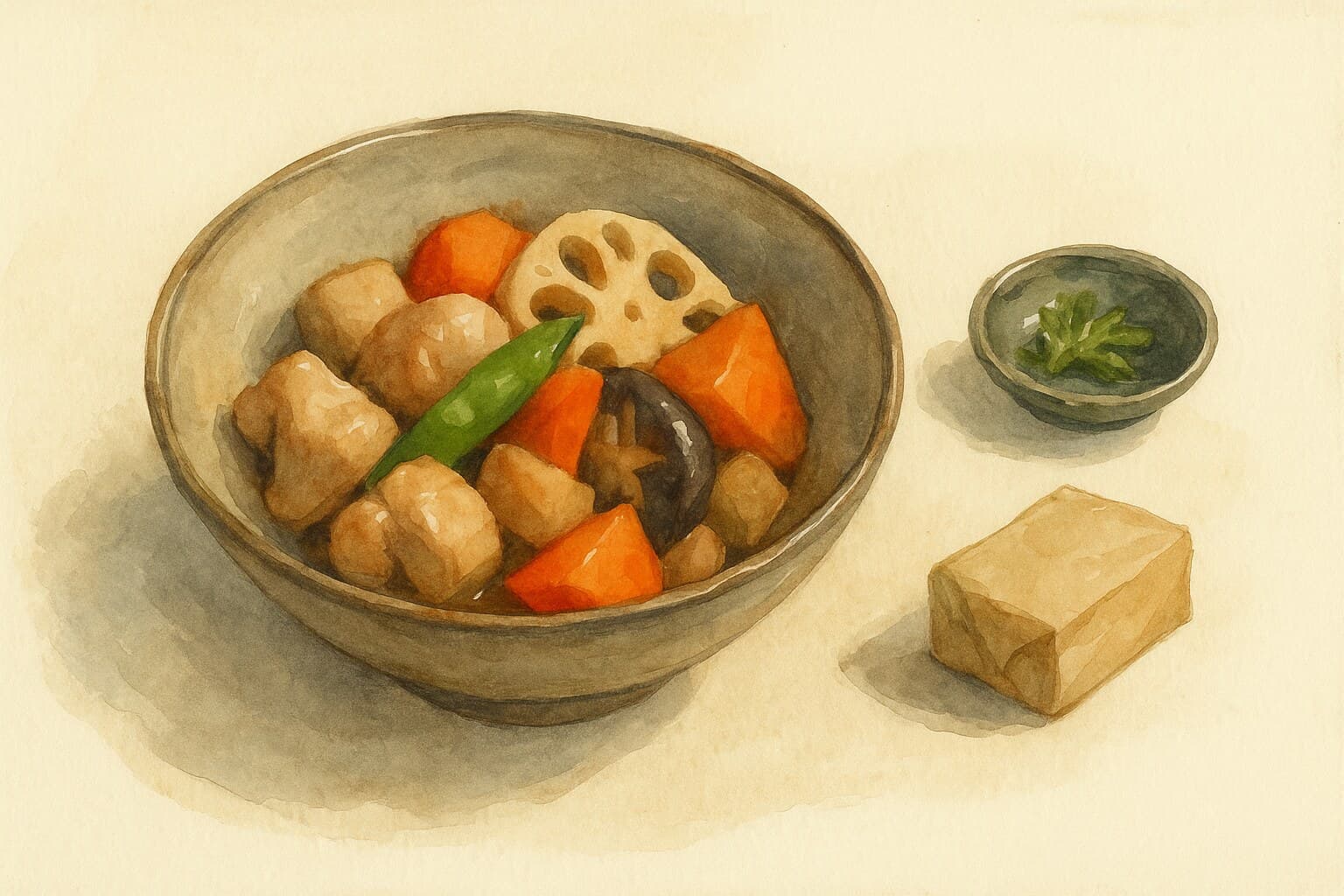
Ingredients
- 400 g chicken thigh, cut into bite-sized pieces
- 100 g lotus root, sliced diagonally
- 100 g gobo (burdock root), cut into matchsticks
- 150 g taro, peeled and cubed
- 100 g carrot, sliced
- 100 g konnyaku, cut into bite-sized pieces
- 500 ml dashi stock
- 50 ml dark soy sauce
- 30 ml sake
- 30 ml mirin
- 1 tbsp vegetable oil
- to taste salt
- to taste black pepper
Steps
In a large pot, heat the vegetable oil over medium-high heat. Sear the chicken pieces until golden brown, about 5 minutes. This helps develop a rich flavor through the Maillard reaction.
Add the lotus root, gobo, taro, carrot, and konnyaku to the pot, stirring for another 5 minutes to slightly caramelize the vegetables.
Pour in the dashi stock, soy sauce, sake, and mirin. Bring the mixture to a boil, then reduce the heat to low, cover, and simmer for 15 minutes. This allows the flavors to meld beautifully. Cook until the thickest part reaches 74 °C / 165 °F on an instant-read thermometer — colour, juices and time are guides, not the safety test.
Taste and adjust seasoning with salt and black pepper as needed before serving. If the dish seems too salty, add a splash of water to dilute.
Why this works
The sear-then-simmer technique used in Chikuzenni is essential for building depth of flavor. Searing the chicken first creates a delicious crust that enhances the umami profile of the dish. The subsequent simmering (cooking gently in liquid just below a boil) process allows the chicken and root vegetables to absorb the rich flavors of the dashi (a savory Japanese stock, usually from kelp and dried fish) and soy sauce, creating a harmonious balance. If the sauce seems too thick, you can always add a little water to reach your desired consistency. Conversely, if the dish lacks flavor, a touch more soy sauce or a splash of dashi can enhance the overall taste. The variety of root vegetables adds texture and visual appeal, making it a perfect centerpiece for family-style dining during celebrations such as the Japanese New Year. The combination of umami from the dashi and the sweetness from the vegetables ensures that each bite is satisfying and full of flavor.
Common mistakes
- Skipping the dry-sear on the chicken. A 90-second pan-sear (skin-side down) renders fat and adds aroma. Skipped chicken makes a watery, pale braise.
- Vegetables added at the same time. Lotus root (renkon) needs 12 minutes, taro (satoimo) 15, carrot 10, bamboo shoot 3. Stage by hardness or stagger entry points.
- Cooking through to perfection in one pass. Chikuzenni is a simmer-rest dish — the flavor enters as it cools, not while it boils. Pull the pot just-tender, cool, reheat at service.
- Too much liquid. This is a braise, not a soup. Liquid should just barely cover the vegetables; reduce as it cooks.
What to look for
- Chicken sear: skin is golden brown and crisp; the rendered fat in the pan is clear, not smoking.
- Mid-simmer: a chopstick goes into lotus root with slight resistance still — pull from heat at this point and let cooling do the rest.
- Final liquid: glossy, lightly syrupy, coating each piece. Not pooling on the plate.
- Color: a uniform medium-brown, not patchy; aroma is sweet-soy and woody from the carrots.
Substitutions
- Renkon (lotus root) → potato + 1 tsp rice vinegar in soak. No real substitute for texture, but a similar starchy presence.
- Satoimo (taro) → small new potato or chestnut. Chestnut for a New Year register; potato for everyday.
- Konnyaku → skip. Texture-only ingredient; leaving it out doesn't break the dish.
- Bamboo shoot (canned) → fresh bamboo shoot in spring, or omit. Fresh requires longer cook; canned is standard.
Make-ahead and storage
- Chikuzenni is a make-ahead dish by design. Best on day 2 — the simmer-cool-rest cycle is the technique.
- Refrigerate within 2 hours of cooking. Keeps 3 days; reheat in a covered pan with 1 tbsp water added on low heat.
- Freezes acceptably in 500 ml portions for 1 month. Texture of taro and lotus root softens slightly on thaw; not a deal-breaker for a homestyle braise.
- Safety note: Cooked chicken and root vegetables should not sit at room temperature longer than 2 hours (1 hour above 30 °C). Refrigerate or freeze; discard rather than relying on smell.
Get the essays in your inbox — free
Weekly notes on flavor, fermentation, and food history — the writing behind the Atlas of Flavor. No spam; unsubscribe anytime.