
Calamares a la Romana
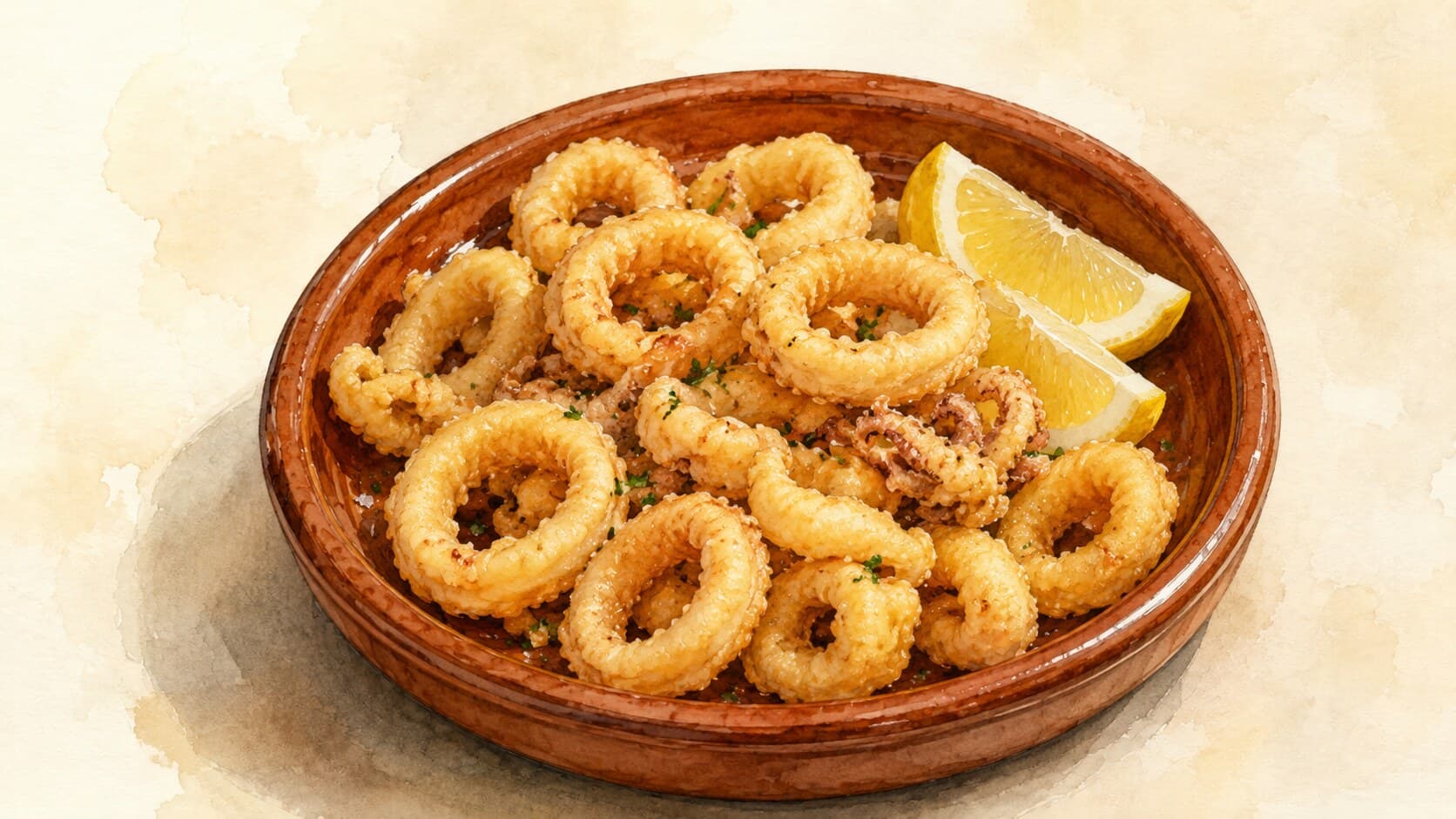
Delight in perfectly cooked calamares a la romana, featuring tender squid rings coated and fried to golden perfection.
Contents (5 sections)▾
Ingredients
- 400 g squid, cleaned and cut into rings
- 100 g all-purpose flour
- 2 large eggs
- 1 tsp salt
- 1 tsp black pepper
- Oil for deep frying
- Lemon wedges, for serving
- Fresh parsley, for garnish
Steps
In a bowl, whisk together the eggs, salt, and pepper until well combined.
Place the flour in a separate shallow dish. Dredge each squid ring in the flour, then dip into the egg mixture, allowing excess to drip off.
Heat oil in a deep fryer or heavy pot to 180°C (350°F). Ensure the oil is hot enough to create a bubbling effect when the squid is added.
Fry the squid rings in batches for 30-60 seconds until they are golden brown. Do not overcrowd the pan, as it can reduce the oil temperature.
Once cooked, remove the squid with a slotted spoon and drain on paper towels for at least 1 minute. Serve immediately with lemon wedges and parsley garnish.
Tools you'll want
Why this works
Achieving the perfect texture in calamares a la romana hinges on the squid's cooking time. Squid is best cooked either very briefly (under 90 seconds) or for an extended period (over 30 minutes). This recipe employs a quick fry method that keeps the squid tender, with a recommended frying time of 30-60 seconds to ensure optimal results. The egg-and-flour coating creates a barrier that protects the squid during frying, ensuring a crispy exterior while the interior remains moist. If the squid seems too rubbery, it may have been overcooked; in that case, adjust the frying time and ensure the oil is sufficiently hot. If the oil isn't hot enough, the squid will absorb excess oil and become soggy. Thus, maintaining the right temperature and timing is crucial for achieving the ideal texture in this dish. The combination of precise cooking times and temperatures ensures that each ring of squid is perfectly cooked, enhancing the overall dining experience.
Common mistakes
Frying in the no-man's-land between fast and slow.
Target: 30–60 seconds in the oil — and never the 2–10 minute middle zone.
Why it matters: Squid is mostly muscle wrapped in collagen (the connective protein that turns to gelatin with long cooking). Cooked very briefly, the proteins barely tighten and the squid stays tender. Cooked long and low (a braise), the collagen melts and it turns silky again. But the in-between — a few minutes of frying because the rings looked pale — is exactly where the proteins seize and squeeze out moisture, giving you the rubber-band texture everyone fears.
What to do: Commit to the fast lane. Get the oil properly hot, fry in 30–60 second bursts, and pull the rings the moment the coating is gold. If they are not coloring fast enough, your oil is too cool — fix the heat, do not extend the time.
Oil too cool, so the coating drinks oil instead of crisping.
Target: 180°C (350°F), recovered between batches.
Why it matters: Hot oil flash-fries the egg-and-flour layer into a dry, sealed crust and drives off surface water as steam — that outward push of steam is what keeps oil out. Below about 160°C the coating sets too slowly, oil seeps in, and the squid turns greasy and limp instead of crisp.
What to do: Use a thermometer if you have one. No thermometer? Drop in a cube of bread — it should sizzle steadily and brown in about 30 seconds. Let the oil climb back to temperature before the next batch.
Overcrowding the pan.
Target: A single uncrowded layer — a handful of rings per batch, freely floating.
Why it matters: Every ring you add is cold and wet; it dumps heat into the oil and releases steam. Pile in too many and the temperature crashes, the bubbling stops, and you slide straight into the soggy, oil-logged failure mode. Crowded rings also clump and fuse.
What to do: Fry in several small batches. Wait for the oil to come back to 180°C between them. The oil should bubble vigorously the whole time each batch is in.
Wet squid and a thin, runny coating.
Target: Squid patted thoroughly dry; flour-then-egg coating thick enough to cling without dripping off.
Why it matters: Surface water makes hot oil spit (a burn hazard) and prevents the coating from adhering, so it slides off and leaves bare, chewy squid. Dredging (coating by rolling the pieces in flour) in flour first gives the egg something to grip; the egg-and-flour layer then sets into the signature puffed, golden shell.
What to do: Pat the rings dry with paper towel. Dredge in flour, shake off the excess, then into the egg, letting the surplus drip back. Lower them into the oil gently, away from you, to keep spitting down.
What to look for
- The oil before the squid goes in: shimmering, with faint surface movement — a bread cube browns in ~30 seconds. That is roughly 180°C, hot enough to crisp rather than soak.
- The moment rings hit the oil: an immediate, vigorous halo of fine bubbles around each piece. Those bubbles are water escaping as steam — the engine that keeps the oil out and the crust dry.
- Ready to lift: pale gold, not deep brown, after 30–60 seconds. Squid cooks almost instantly; the color of the coating is your timer, and gold means stop.
- The drained rings: crisp and dry to the touch, the coating puffed and barely greasy. If they look wet or deflate quickly, the oil ran too cool.
A note on history
Squid has been eaten around the Mediterranean since antiquity, and frying small seafood in a coating is an old coastal habit (Amigofoods). The label a la romana — "Roman style" — points not to a single city but to an Italian-inspired way of frying in a batter, which historians contrast with the breadcrumb coating of dishes labeled alla milanese; this batter-frying convention reached Spain in roughly the first third of the 19th century (TodoAlicante). Today it is one of Spain's most universal tapas, found in bars from Madrid to the coast (Amigofoods).
Get the essays in your inbox — free
Weekly notes on flavor, fermentation, and food history — the writing behind the Atlas of Flavor. No spam; unsubscribe anytime.