
Buttermilk Pancakes
These pancakes leverage the acidity of buttermilk to create a tender, fluffy texture.
Contents (5 sections)▾
Ingredients
- 1 cup all-purpose flour
- 2 tablespoons sugar
- 1 teaspoon baking powder
- 1/2 teaspoon baking soda
- 1/4 teaspoon salt
- 1 cup buttermilk
- 1 large egg
- 2 tablespoons melted butter
- Additional butter for cooking
Steps
In a bowl, whisk together flour, sugar, baking powder, baking soda, and salt.
In another bowl, combine buttermilk, egg, and melted butter.
Pour wet ingredients into dry ingredients; mix until just combined.
Heat a skillet over medium heat and melt a small amount of butter.
Pour batter onto skillet; cook until bubbles form, then flip and cook until golden.
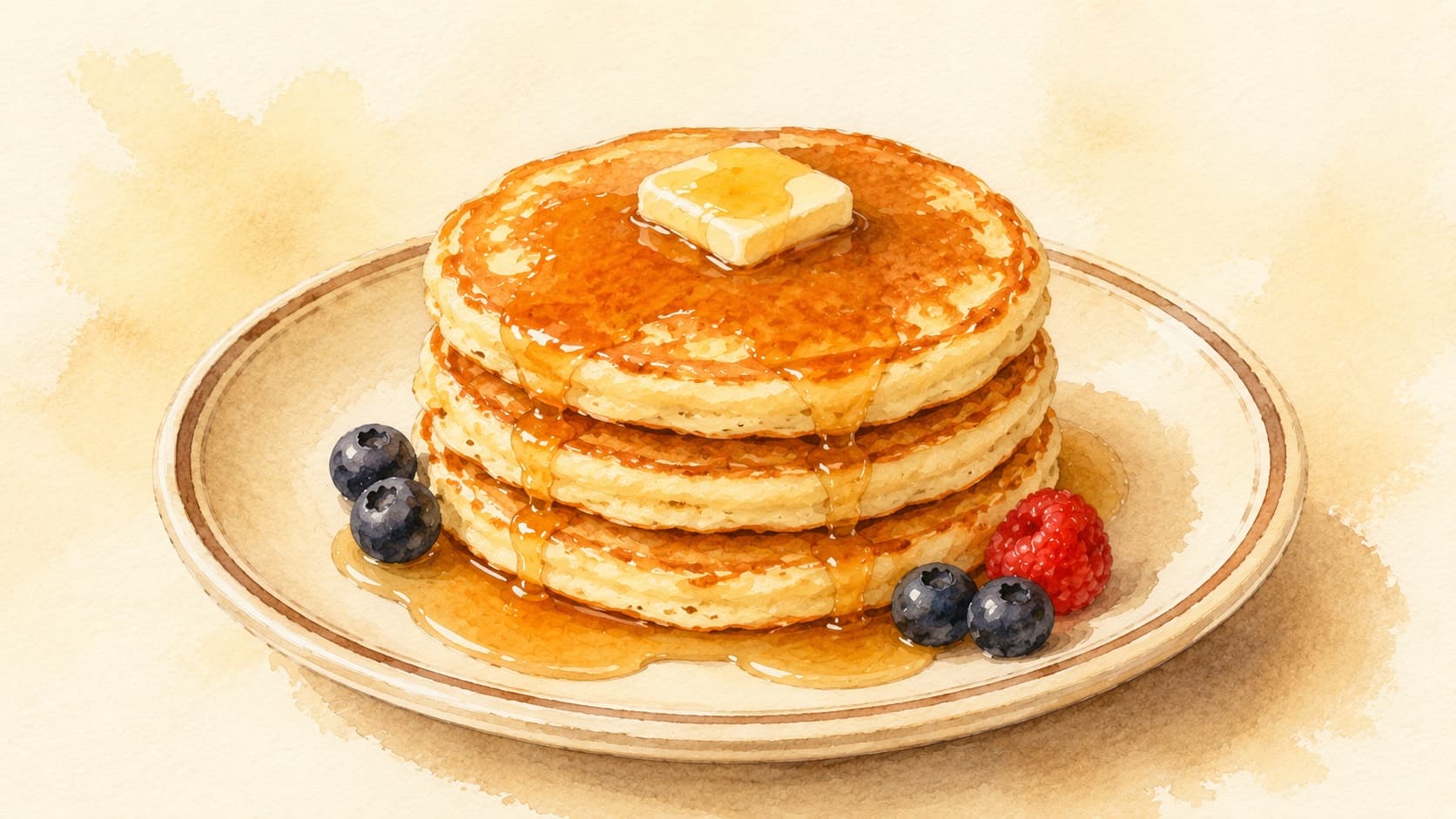
Serve warm with syrup or toppings of choice.
Tools you'll want
Why this works
The acidity in buttermilk reacts with baking soda to create bubbles, resulting in a light texture. Flour provides gluten structure (the stretchy protein network that forms when flour meets liquid and gets stirred); overmixing can lead to toughness. The ratio of liquid to dry ingredients is critical; it affects moisture levels. Cooking at medium heat ensures even browning without burning.
Common mistakes
Overmixing the batter.
Target: Mix just until ingredients combine — lumps are fine and desirable.
Why it matters: Mixing develops gluten in the flour, producing tough, dense pancakes. The lumps disappear during cooking; over-mixing produces rubbery results.
What to do: Whisk wet ingredients separately, dry ingredients separately, then fold together with a spatula until JUST combined. Stop while you can still see flour streaks — they'll disappear during the rest.
Workarounds:
- Over-mixed? Rest the batter 15 minutes — gluten relaxes slightly.
Using regular milk + vinegar substitute.
Target: Real cultured buttermilk. NOT "homemade buttermilk" (milk + vinegar).
Why it matters: Real buttermilk has cultured bacteria that produce specific lactic acid AND a complex flavor. Milk + vinegar gives only acidity — produces fine pancakes but missing the tang.
What to do: Buy real buttermilk from the dairy section.
Workarounds:
- No buttermilk available? Use kefir as a closer substitute than milk+vinegar.
- For the milk+vinegar version, accept the result is "pancakes" — fine but not buttermilk pancakes.
Wrong pan temperature.
Target: Medium heat (160 °C surface). Test: water droplet should dance and evaporate in 2–3 seconds.
Why it matters: Too hot — pancakes burn outside while staying raw inside. Too cool — pale pancakes that absorb butter without crisping.
What to do: Pre-heat pan thoroughly. Test with a small dollop before committing to full pancakes.
Workarounds:
- Use a non-stick or well-seasoned cast-iron pan for the most reliable results.
Flipping too early.
Target: Flip when bubbles form on the surface AND start to pop. Edges should look dry. About 2–3 minutes on the first side.
Why it matters: Premature flipping breaks the surface structure and lets steam escape — pancakes deflate. Wait for the proper visual cue.
What to do: Watch the surface. Don't peek by lifting an edge — just watch the bubbles.
Workarounds:
- If you flipped too early, the pancake will be fine — just slightly denser. Press gently to set.
Storing in a stack while making more.
Target: Keep finished pancakes on a wire rack in a 100 °C oven while you cook the rest.
Why it matters: Stacking traps steam between pancakes, turning them soggy. A wire rack lets steam escape and keeps the bottom crispy.
What to do: Set up the wire rack before you start cooking. Transfer each pancake immediately.
Workarounds:
- For ultimate texture, eat as you cook — true short-stack style.
What to look for
- Bubbles forming on the surface of the batter.
- Edges appearing set and slightly dry.
- A golden color on the underside when flipped.
- A light, fluffy texture when cut into.
- A pleasant aroma of cooked batter wafting through the kitchen.
Chef's view
Buttermilk pancakes have a rich history in American cuisine, often associated with breakfast traditions. They embody the comforting quality of home cooking, bridging generations. The method of using buttermilk is not just functional; it reflects a resourceful approach to using available ingredients. Each pancake becomes a canvas for personal expression, inviting creativity through toppings and flavors.
<!-- beginner-glossed v1 -->Get the essays in your inbox — free
Weekly notes on flavor, fermentation, and food history — the writing behind the Atlas of Flavor. No spam; unsubscribe anytime.