
Buri no Teriyaki
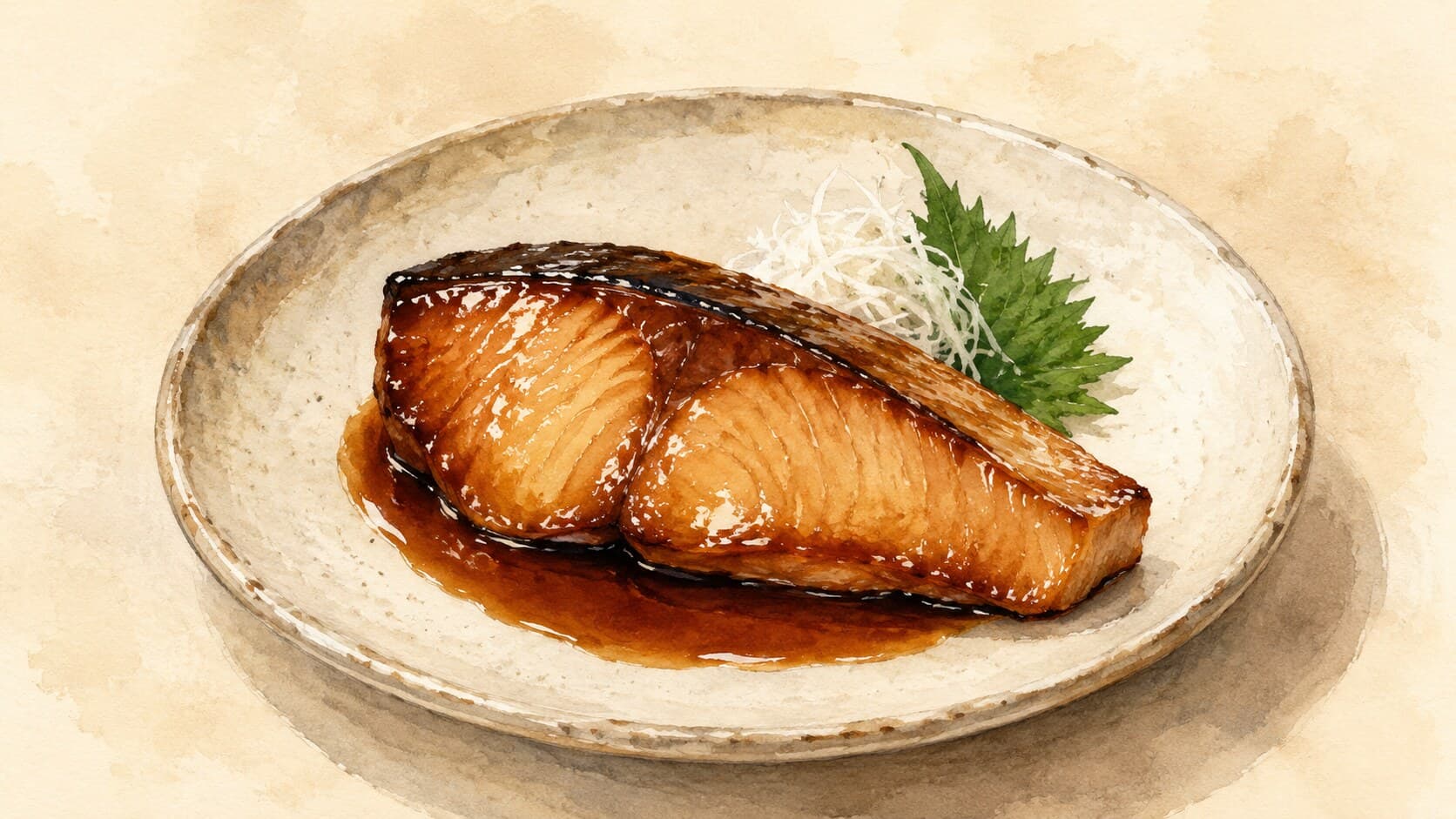
Buri no Teriyaki showcases pan-seared yellowtail fillets glazed in a rich tare for a delicious Japanese main dish.
Contents (5 sections)▾
Ingredients
- 2 yellowtail fillets (about 150g each)
- 2 tbsp soy sauce
- 1 tbsp mirin
- 1 tbsp sake
- 1 tbsp sugar
- 1 tbsp vegetable oil
- 100g daikon, grated
- shiso leaves, for garnish
- salt, to taste
Steps
Pat the yellowtail fillets dry with paper towels and season lightly with salt. This helps to improve the sear.
Heat a non-stick skillet over medium-high heat and add vegetable oil. Once hot, place the fillets skin-side down and sear for about 4-5 minutes until golden brown.
Flip the fillets and sear the flesh side for another 2-3 minutes. Cooking time may vary depending on thickness.
In a small bowl, combine soy sauce, mirin, sake, and sugar to create the tare. Pour this mixture into the skillet.
Reduce heat to medium-low and baste the fillets with the sauce for about 3-4 minutes, allowing it to thicken and glaze the fish.
Remove the yellowtail from the skillet and let it rest briefly. Serve it with the glaze spooned over and a generous mound of grated daikon on the side.
Garnish with shiso leaves for added flavor and presentation.
Why this works
The success of Buri no Teriyaki lies in the balancing act of flavors and technique. Yellowtail is a fatty fish, making it perfect for a glaze (a sauce simmered down until it coats the fish in a shiny layer) because it absorbs the rich tare made from soy sauce, mirin, sake, and sugar. The high heat from searing caramelizes (browns the sugars into a richer, deeper flavor) the sugars in the tare, creating a deep mahogany color and a glossy finish. If the glaze seems too runny, allow it to cook a bit longer in the pan, which will thicken the sauce as it reduces. This method enhances the fish's flavor and offers a visually appealing dish. Additionally, serving with grated daikon provides a refreshing contrast to the rich glaze, balancing the dish beautifully. Ensure you monitor the fish closely to avoid overcooking, as it can become dry. If the fish breaks apart during cooking, gently piece it back together on the plate before glazing and serving for an appealing presentation.
Common mistakes
Skipping the dry-off before searing.
Target: Surface visibly dry — pat each fillet with paper towel until no moisture beads up, then a light salt.
Why it matters: Yellowtail releases water as it cooks. A wet surface steams instead of browning, so you never get the Maillard reaction (the browning chemistry between protein and sugar that builds savory flavor) that gives the seared side its depth. Wet fish also makes the tare slide off instead of clinging.
What to do: Pat dry, salt lightly, and wait until the oil shimmers before the fish goes in. Listen for an immediate sizzle — silence means the pan is too cool.
Pouring the tare in too early.
Target: Add the soy-mirin-sake-sugar mixture only after the fish is seared on both sides.
Why it matters: The tare is loaded with sugar. Sugar over high heat for too long goes from glaze (a sauce reduced until it coats and shines) to scorched and bitter in well under a minute. Added early, it burns before the fish is cooked; added at the end, it reduces into a clean, glossy coat.
What to do: Sear first, lower the heat to medium-low, then add the tare and let it bubble down while you baste.
Overcooking the fish into dryness.
Target: Just cooked through — opaque all the way in, flakes when nudged, internal temperature 63°C / 145°F.
Why it matters: Yellowtail is lean-firm under its fat. Past the point where the protein sets, it keeps tightening and squeezing out moisture, turning chalky. The window between done and overdone is short.
What to do: Pull it once the center is opaque all the way through and flakes when nudged (about 63°C / 145°F). Residual heat after removal is small, so cook to that point rather than stopping short and relying on it. Never serve yellowtail translucent in the center for a hot dish like this.
Letting the glaze stay thin and watery.
Target: Tare thick enough to coat the back of a spoon and leave a clear trail when you drag a finger through it.
Why it matters: A thin tare runs off the fish and pools on the plate, so the "teri" (the glossy sheen the dish is named for) never forms. The shine comes from reduced sugar, not from quantity of sauce.
What to do: If it stays runny, lift the fish out, raise the heat, and reduce the tare alone for another minute, then return the fish and coat it. Spoon the tare over repeatedly — each pass builds another thin layer of gloss.
What to look for
- Searing the skin side: the edges lift and curl, the surface turns deep golden-brown. That color is rendered (melted out of the fish as it cooks) fat plus Maillard browning — it is where the savory, slightly crisp character lives.
- The fish flipped: flesh turned from glassy to matte white, firm but not stiff to a gentle press. Glassy means raw inside; chalky-hard means overdone. You want the moment in between.
- The tare reducing: large lazy bubbles replace fast small ones, and the sauce darkens and thickens. Bigger, slower bubbles mean the water has mostly cooked off and the sugar is concentrating into glaze.
- The finished glaze on the fish: a mirror-like mahogany sheen that clings without dripping. This is the "teri" the dish is named for — visible proof the sugar reduced correctly.
A note on history
Teriyaki as a technique dates to Japan's Edo period (1603–1868), where the soy-mirin-sugar glaze was used to flavor and help preserve fish; meat versions like chicken arrived later under Western influence during the Meiji era (Kikkoman Teriyaki Sauce Museum; Allegro: The Origins of Teriyaki). Buri (yellowtail) is one of the dishes Japanese cooks most associate with teriyaki, and because buri is a shusse-uo — a fish renamed as it grows — it is treated as auspicious and appears in New Year osechi feasts, its winter season coinciding with the turn of the year (Just One Cookbook).
Get the essays in your inbox — free
Weekly notes on flavor, fermentation, and food history — the writing behind the Atlas of Flavor. No spam; unsubscribe anytime.