
Yudofu
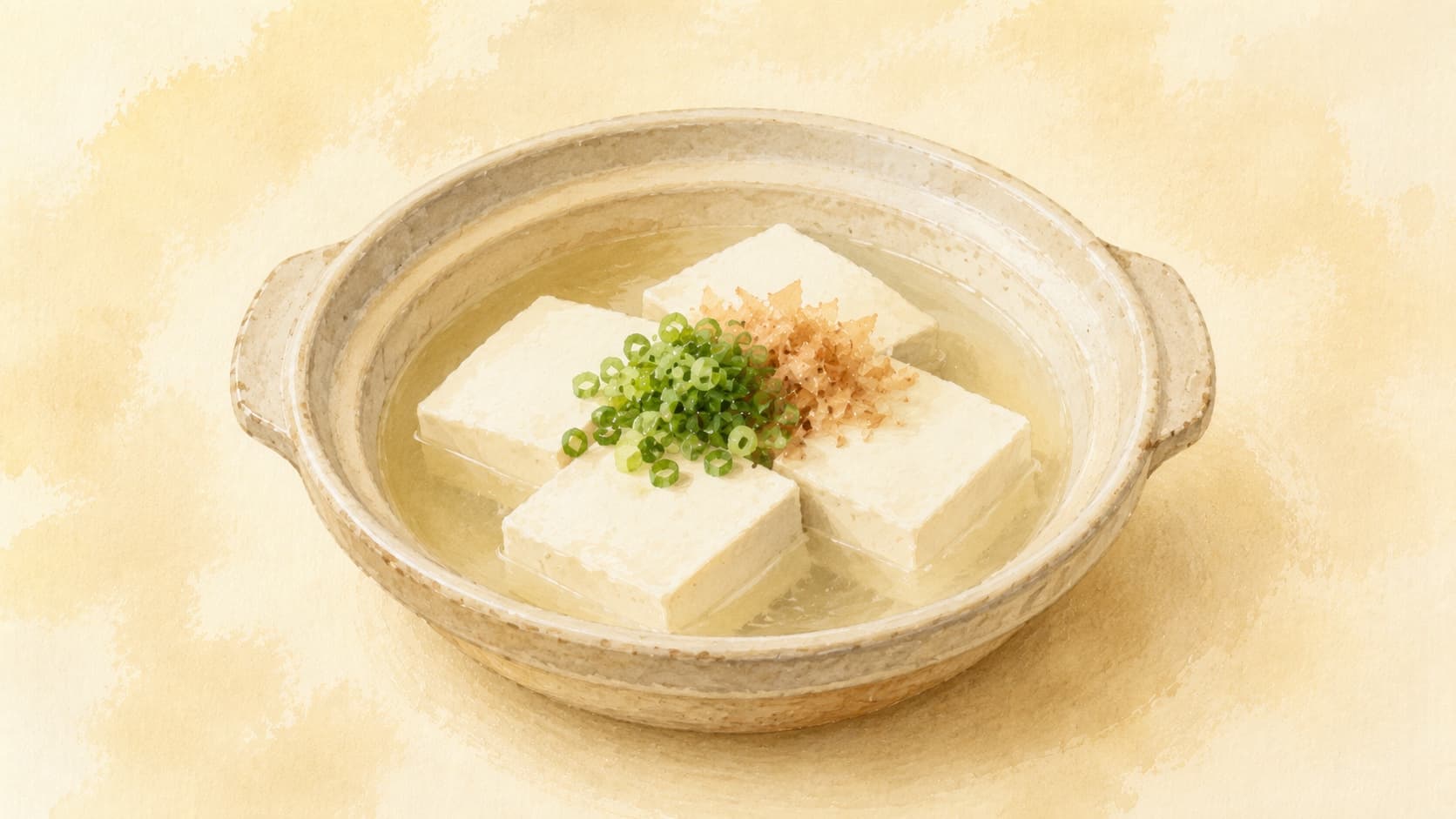
Yudofu exemplifies the simplicity and purity of Japanese cuisine, highlighting the delicate balance of tofu and dashi.
Contents (5 sections)▾
Ingredients
- 400g silken tofu
- 1 liter dashi stock
- 2 tablespoons soy sauce
- 1 tablespoon mirin
- 2 green onions, chopped
- 1 sheet kombu (optional)
- 1 tablespoon grated daikon (optional)
- Shichimi togarashi (optional, for serving)
Steps
Prepare dashi by simmering kombu in water for 10 minutes, then remove kombu.
Add soy sauce and mirin to the dashi, bringing it to a gentle simmer.
Cut silken tofu into 4 equal squares and gently place into the simmering broth.
Cook tofu for 5-7 minutes, ensuring it heats through without breaking.
Serve hot, garnished with green onions and grated daikon, with shichimi togarashi on the side.
Tools you'll want
- · Digital kitchen scale (gram precision)
Why this works
Yudofu relies on the subtlety of dashi to enhance the natural flavor of tofu. The gentle heat during simmering preserves the tofu's delicate texture while allowing it to absorb the umami of the broth. Maintaining a low simmer prevents the tofu from breaking apart, ensuring an elegant presentation.
The ratio of dashi to tofu is crucial. Too much dashi can overwhelm the tofu, while too little can lead to a bland dish. The addition of soy sauce and mirin introduces depth without masking the tofu's inherent qualities. This balance showcases the essence of Japanese cuisine: simplicity and harmony.
The use of fresh ingredients, like green onions and optional grated daikon, brightens the dish. They provide a contrast in flavor and texture, enhancing the overall experience. Each component serves to highlight the others, creating a cohesive dish that feels both comforting and refined.
Common mistakes
Wrong tofu type.
Target: Fresh kinugoshi (silken) or momen (firm) tofu from a Japanese tofu maker if possible. Avoid extra-firm or extra-soft.
Why it matters: The dish's whole point is the pure tofu flavor. Mass-produced tofu lacks the bean character; extra-firm has no silkiness; extra-soft falls apart. Quality tofu is the dish. Yudofu (Japanese hot tofu gently warmed in kombu broth) depends entirely on the tofu's intrinsic flavor.
What to do: Buy from a Japanese grocery or tofu specialty shop. Look for short ingredient list (soybeans, water, nigari/coagulant).
Workarounds:
- Only supermarket tofu → choose silken; drain briefly before warming.
Boiling the water.
Target: Water at 80-85°C — small bubbles, never rolling boil. Tofu warmed gently.
Why it matters: Hard boiling breaks silken tofu into pieces and roughens momen tofu's surface. The dish's elegance depends on intact, gently warmed tofu blocks.
What to do: Thermometer or visual: water shows wisps of steam, no surface agitation.
Workarounds:
- Stove runs hot → use a deeper pot for more thermal mass; or kombu pre-soak the water for 30 min before heating.
Removing kombu too late.
Target: Remove kombu just before water boils — around 75-80°C, signs of small bubbles starting.
Why it matters: Kombu boiled past 85°C releases alginates that cloud the water and add a slippery mouthfeel. Yudofu's clear broth is the visual marker of correctly handled kombu.
What to do: Watch carefully. Pull kombu at first sign of bubbles. Reserve for niban dashi or other use.
Workarounds:
- Forgot → strain the water through fine mesh; quality won't fully recover but salvageable.
Skipping the dipping sauce setup.
Target: Ponzu sauce (citrus-soy dipping sauce) + grated daikon + green onion + grated ginger in small bowls — diners customize each bite.
Why it matters: Yudofu is incomplete without dipping. The plain tofu is intentionally bland — flavor comes from the customized condiment combination. Pre-seasoning the broth defeats the purpose.
What to do: Set condiment bowls on the table before serving. Each diner gets their own.
Workarounds:
- No ponzu → soy sauce + lemon juice + a little dashi works as substitute.
Cooking tofu too long.
Target: 5-7 minutes in 80°C water — just to warm through, not cook.
Why it matters: Tofu is already cooked when you buy it; yudofu is about warming, not cooking. Long heat = the protein structure tightens, tofu loses its silky mouthfeel.
What to do: Time it. Test by touching gently — should be warm throughout but still soft.
Workarounds:
- Larger pieces of tofu → 8-10 minutes; smaller pieces 4-5 min.
Serving in cold bowls.
Target: Pre-warm serving bowls with hot water before plating; pour out water just before serving.
Why it matters: Cold bowls drop the tofu temperature immediately — defeats the entire purpose of yudofu (warming, comforting dish). Hot bowls preserve the gentle warmth.
What to do: Hot water in bowls for 1-2 min before service. Drain, plate immediately.
Workarounds:
- Donabe (clay pot) directly to the table → keeps tofu warm naturally; traditional method.
What to look for
- The tofu should appear soft but not broken.
- The broth should be clear and lightly flavored, not cloudy.
- Garnishes should be vibrant and fresh.
- A gentle simmering sound indicates the broth is at the right temperature.
- The aroma should be subtle, with a hint of umami.
Chef's view
Yudofu holds a special place in Japanese cuisine, often enjoyed in winter as a warming dish. It reflects the philosophy of "shun," or seasonal eating, where fresh ingredients shine. Traditionally served at home or in restaurants, it emphasizes communal dining and simple pleasures.
The technique of simmering tofu in dashi (Japanese kelp-and-bonito stock) showcases the Japanese approach to cooking, where less is often more. Each ingredient is chosen with care, allowing natural flavors to emerge. Yudofu is not just a dish but a moment of connection to Japanese culture and its appreciation for simplicity and balance.
<!-- beginner-glossed v1 -->Get the essays in your inbox — free
Weekly notes on flavor, fermentation, and food history — the writing behind the Atlas of Flavor. No spam; unsubscribe anytime.