
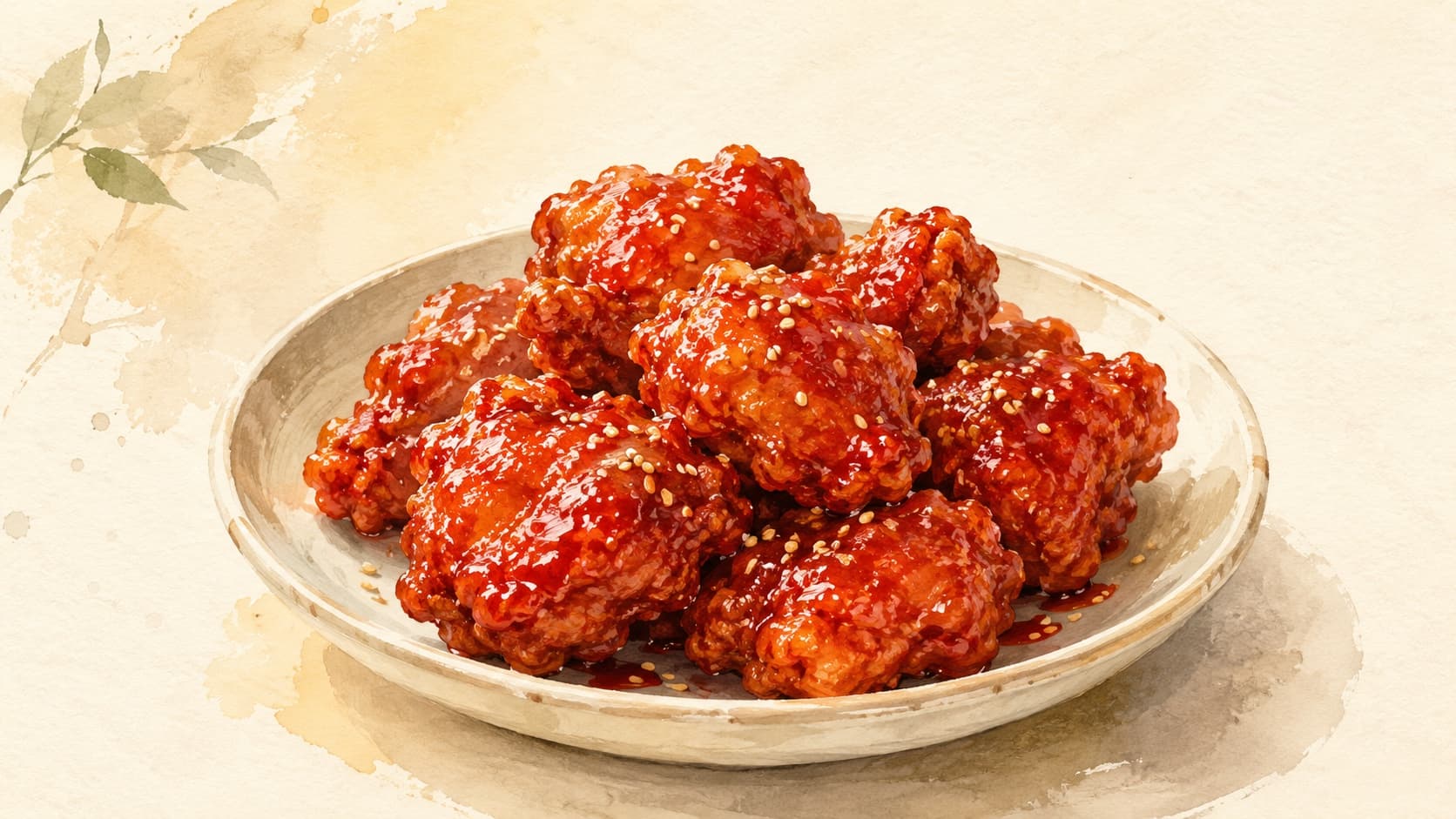
Yangnyeom Chicken
A balance of spicy and sweet flavors enhances the crispy texture of the fried chicken.
Contents (5 sections)▾
Ingredients
- 1 lb chicken wings
- 1/2 cup cornstarch
- 1/2 cup flour
- 1/2 tsp salt
- 1/2 tsp black pepper
- 1/4 cup gochujang (Korean chili paste)
- 2 tbsp soy sauce
- 2 tbsp honey
- 1 tbsp sesame oil
- 2 cloves garlic, minced
- 1 tbsp sesame seeds
- 2 green onions, chopped
Steps
Combine cornstarch, flour, salt, and pepper in a bowl.
Coat chicken wings with the flour mixture.
Fry the chicken in hot oil until golden and crispy and the thickest part reaches 74 °C / 165 °F on an instant-read thermometer, about 10-12 minutes — the oil temperature, colour and time are guides, not the safety test.
In a separate bowl, mix gochujang, soy sauce, honey, sesame oil, and garlic.
Toss the fried chicken in the sauce until evenly coated.
Garnish with sesame seeds and green onions before serving.
Tools you'll want
- · Digital kitchen scale (gram precision)
Why this works
Yangnyeom Chicken achieves its distinct flavor and texture through a precise balance of ingredients and cooking techniques. The double frying method ensures a crispy skin by first frying the chicken at 160°C, allowing the meat to cook through. The second fry at 190°C crisps the exterior. The sauce, a blend of gochujang, soy sauce, garlic, and ginger, provides depth with a 2:1:1:0.5 ratio, while corn syrup and sugar contribute sweetness. The heat from gochujang imparts spice, balanced by the sweetness, ensuring a harmonious flavor. Combining these elements creates a dish that is both crunchy and flavorful.
Common mistakes
Overcrowding the fryer.
Target: 4-5 pieces per batch in a 25 cm pot. Oil temperature drops no more than 10°C.
Why it matters: Crowded fryer = temperature collapse, pieces poach instead of fry, no crisp shell. The signature texture depends on maintained heat.
What to do: Work in batches. Let oil return to 160°C before next batch.
Workarounds:
- Have many pieces → use a deeper pot with more oil volume for thermal mass.
Skipping the double-fry.
Target: First fry 160°C (5-7 min to cook through) → rest → second fry 190°C (2-3 min for color/crisp).
Why it matters: Single-fry chicken either over-cooks the outside or under-cooks the inside. Double-fry decouples "cook through" from "crisp" — each at its optimal temperature.
What to do: Thermometer for both stages. Rest 5 min between fries.
Workarounds:
- Want extra crispy → very short third fry at 200°C (60 sec) gives even more crunch.
Wrong sauce ratio.
Target: Gochujang (Korean fermented red-chili paste) : sugar : soy : garlic — about 2 : 1 : 1 : 0.5 by volume. Plus corn syrup for stickiness.
Why it matters: Imbalanced ratio = too spicy, too sweet, or flat. The classic Korean balance is precise.
What to do: Measure all components. Taste sauce alone before tossing — should be balanced sweet-spicy-savory.
Workarounds:
- No corn syrup → honey works; slightly different gloss but similar adhesion.
Skipping rice vinegar.
Target: 1 tbsp rice vinegar at the end — adds the acid lift that defines the sauce.
Why it matters: Without acid, sauce tastes flat and one-dimensional. The vinegar brightens the gochujang-sugar combination.
What to do: Add at the very end, off heat, just before tossing with chicken.
Workarounds:
- No rice vinegar → apple cider vinegar works similarly.
Wet chicken skin.
Target: Pat dry thoroughly with paper towels before flouring/coating.
Why it matters: Moisture prevents crispness — the coating won't adhere properly, and oil absorbs into wet skin. The signature shatter-crisp shell requires dry skin.
What to do: Dry on a rack 20 min before frying for extra-dry surface.
Workarounds:
- Time-short → press paper towels firmly on each piece; less ideal but workable.
Saucing too far in advance.
Target: Toss chicken in sauce immediately before serving — within 2 minutes.
Why it matters: Sauced chicken loses crispness within 5-10 minutes as the wet sauce softens the crust. Yangnyeom is meant to be hot and crisp.
What to do: Time the toss with serving. Have sauce warm and ready when chicken finishes second fry.
Workarounds:
- Need to hold → keep chicken and sauce separate; toss at the table.
What to look for
Properly fried Yangnyeom Chicken (Korean spicy-sweet glazed fried chicken) should exhibit a golden-brown hue and a crispy texture that audibly crunches when bitten. The interior should remain juicy, with an internal temperature of at least 74 °C (165 °F) — the USDA safe minimum for poultry — confirming it is cooked through. The sauce should cling to the chicken without pooling at the bottom, indicating a proper reduction to a sticky consistency. The flavor must present a seamless blend of sweet, spicy, and umami (savoury depth from glutamates) notes, with a lingering hint of garlic and ginger. The aroma should be inviting, with a subtle kick from the gochujang.
Chef's view
From a chef's perspective, Yangnyeom Chicken embodies the art of balancing textures and flavors. The double frying technique requires precision; a few degrees variance impacts the final texture. The sauce demands careful attention to ratios; a slight deviation alters the flavor significantly. Consistency in sauce reduction is crucial for achieving the desired stickiness without losing vibrancy. This dish depends on technique and balance, rewarding meticulous preparation with flavors and textures.
<!-- beginner-glossed v1 -->Get the essays in your inbox — free
Weekly notes on flavor, fermentation, and food history — the writing behind the Atlas of Flavor. No spam; unsubscribe anytime.