
Yakisoba
Yakisoba combines stir-fried noodles with various proteins and vegetables using a balance of flavors and textures.
Contents (5 sections)▾
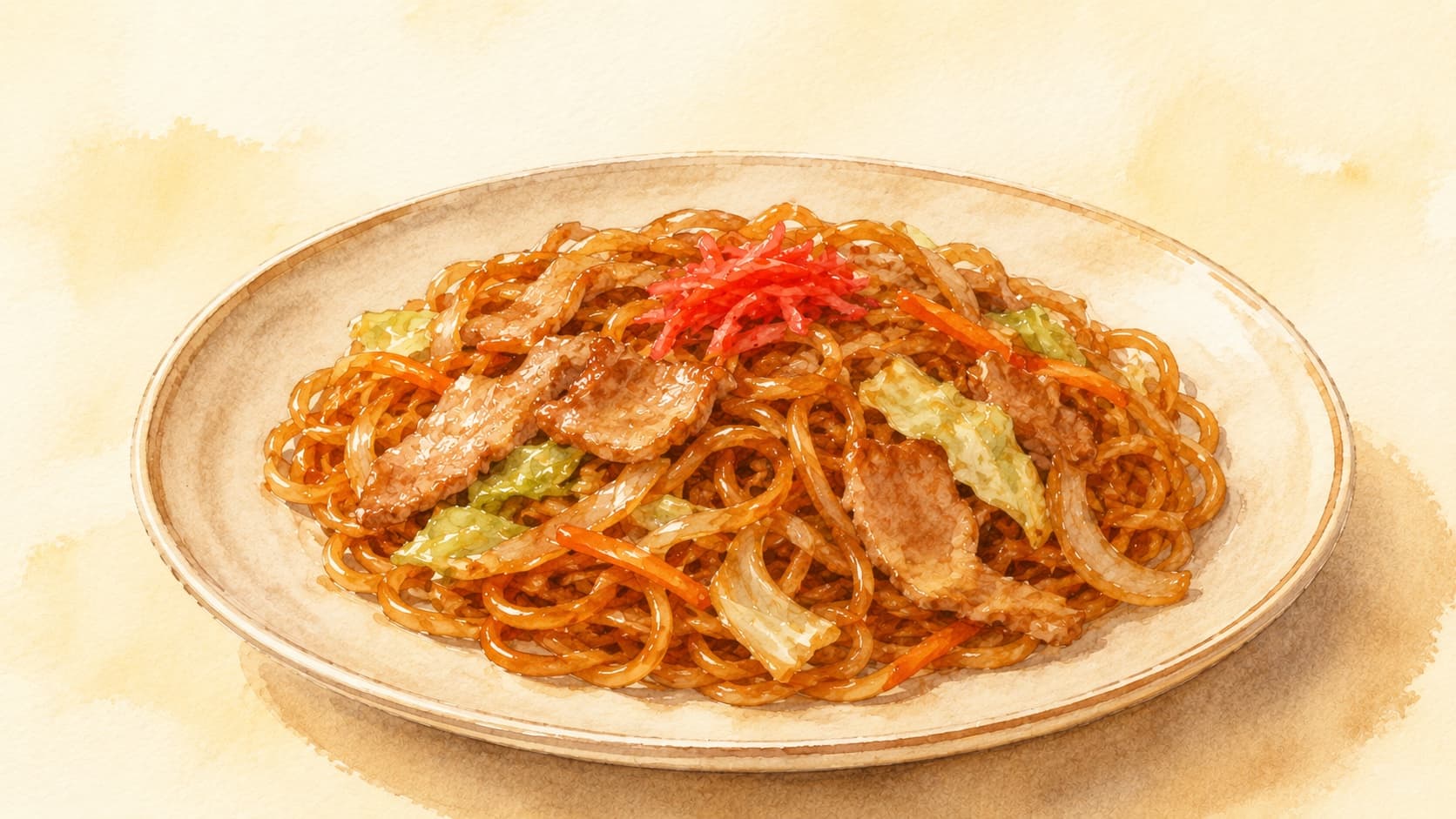
Ingredients
- 300g yakisoba noodles
- 150g chicken breast, sliced
- 100g carrots, julienned
- 100g cabbage, shredded
- 50g bell pepper, sliced
- 2 tbsp vegetable oil
- 3 tbsp yakisoba sauce
- 1 tsp pickled ginger, for garnish
Steps
Heat vegetable oil in a wide heavy skillet over medium-high heat.
Add sliced chicken and stir-fry until the thickest slices reach 74 °C / 165 °F on an instant-read thermometer (no longer pink), about 5 minutes — colour and time are guides, not the safety test.
Add carrots, cabbage, and bell pepper; stir-fry for another 3 minutes.
Add yakisoba noodles and sauce; mix well and cook for 2-3 minutes.
Garnish with pickled ginger before serving.
Tools you'll want
- · Digital kitchen scale (gram precision)
Why this works
Yakisoba uses a high heat to achieve a slight char on the noodles, enhancing flavor through the Maillard reaction. The combination of fresh vegetables adds both crunch and moisture, preventing the dish from becoming dry. Using the right amount of yakisoba sauce ensures a well-balanced flavor, while the timing of adding ingredients maintains their texture.
Common mistakes
Cold noodles straight into the pan.
Target: Pre-loosen the noodles by running under hot water for 30 seconds OR microwaving for 30 seconds. Should separate into individual strands.
Why it matters: Fresh yakisoba noodles come in tight clumps. Adding them cold means you spend time trying to separate them in the hot pan — by which point they've burned or absorbed too much sauce.
What to do: Loosen noodles BEFORE they hit the pan. Hot water or microwave does the trick.
Workarounds:
- For pre-packed yakisoba with sauce packets, the noodles are already partially cooked and easy to separate.
Low heat.
Target: Maximum heat — wok or cast-iron at 230 °C+. Cook in batches if pan is small.
Why it matters: Yakisoba's signature is the slight char from high-heat stir-frying. Low heat produces "noodles stirred with vegetables" — pleasant but missing the smoky depth.
What to do: Pre-heat pan thoroughly. Add oil, let smoke wisp, then ingredients.
Workarounds:
- Weak home burner → cook in smaller batches to keep pan hot.
Wrong sauce ratio.
Target: Sauce: 3 tbsp Worcestershire + 1 tbsp soy + 1 tbsp ketchup + 1 tsp oyster sauce + 1 tsp sugar per serving.
Why it matters: Generic stir-fry sauce won't taste like yakisoba (Japanese stir-fried noodles). The Worcestershire-heavy profile is specifically Japanese — sweet, tangy, with umami (savoury depth from glutamates).
What to do: Mix sauce ahead in a bowl. Add to noodles at the end.
Workarounds:
- Use Otafuku yakisoba sauce from an Asian market — pre-mixed and authentic.
Adding vegetables and noodles together.
Target: Stir-fry vegetables and protein FIRST until tender-crisp, then add noodles, then sauce.
Why it matters: Noodles need very brief cooking. Adding them with hard vegetables means either noodles are overcooked or vegetables are raw.
What to do: Cook in order: hardest vegetables first, protein, soft vegetables, noodles last, sauce immediately after.
Workarounds:
- For one-pan simplicity, cook vegetables and protein in 1–2 batches, set aside, add noodles + sauce, then return everything.
Skipping the toppings.
Target: Aonori (powdered seaweed), beni shoga (pickled red ginger), and bonito flakes (dried, shaved skipjack tuna) after plating.
Why it matters: The toppings provide aroma, acid, and visual identity. Yakisoba without them is "stir-fried noodles" — not yakisoba.
What to do: Have toppings ready. Sprinkle immediately.
Workarounds:
- No aonori? Sesame seeds work as a different but acceptable garnish.
What to look for
- Noodles should have a slight char and be well-coated in sauce.
- Vegetables should retain their color and crispness.
- A fragrant aroma should fill the kitchen as the dish cooks.
Chef's view
Yakisoba is a staple street food in Japan, often enjoyed at festivals or food stalls. It reflects the philosophy of using what’s available, making it a versatile dish adaptable to various ingredients. The balance of flavors and textures is crucial, showcasing Japan's culinary emphasis on harmony in food.
<!-- beginner-glossed v1 -->Get the essays in your inbox — free
Weekly notes on flavor, fermentation, and food history — the writing behind the Atlas of Flavor. No spam; unsubscribe anytime.