
Xiao Long Bao
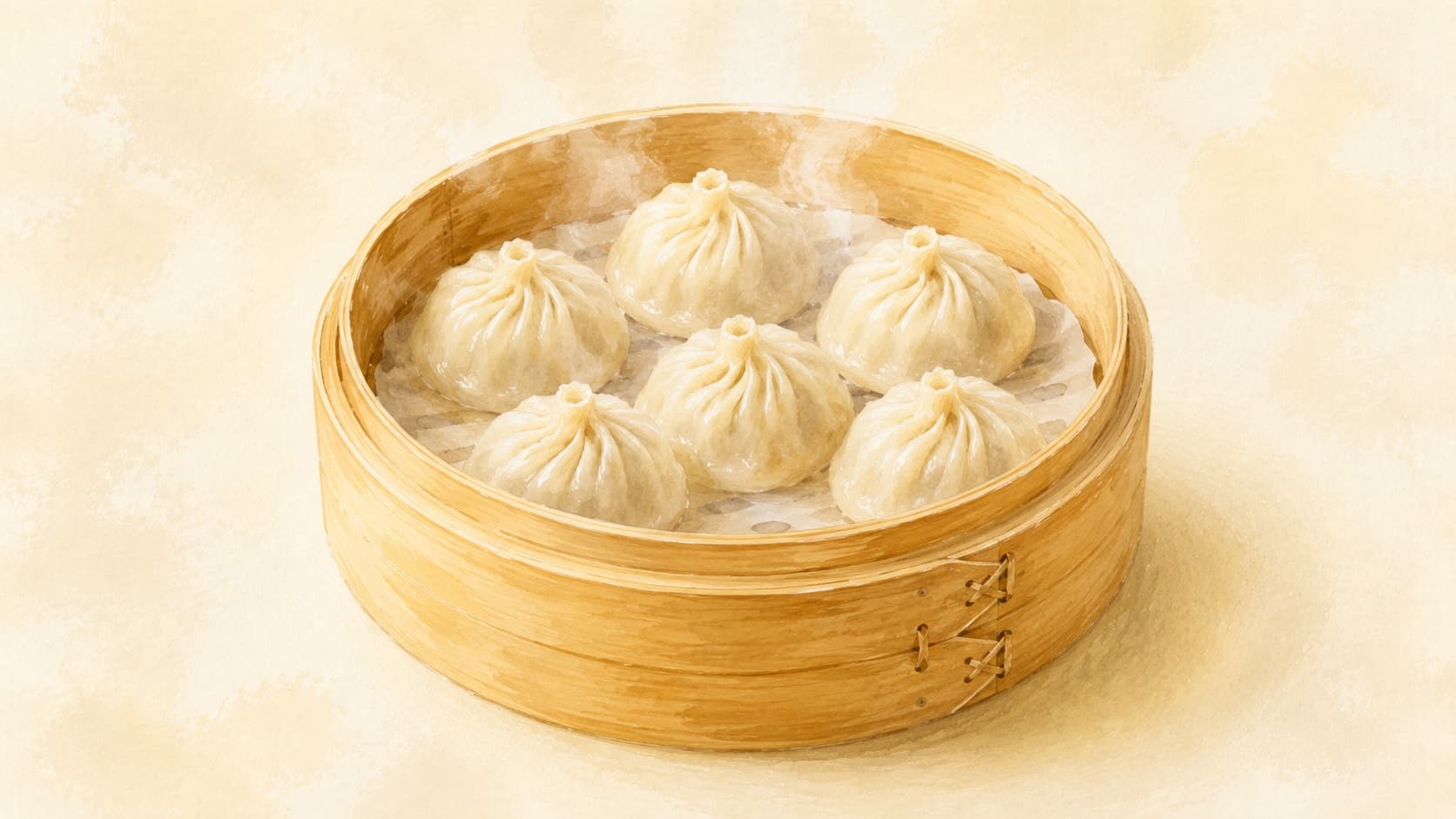
A delicate steamed dumpling featuring a thin skin encasing a savory broth and meat filling.
Contents (5 sections)▾
Ingredients
- 250g all-purpose flour
- 120ml water
- 150g ground pork
- 50g gelatin
- 2 tbsp soy sauce
- 1 tbsp sesame oil
- 1 tsp ginger, minced
- 1 tsp scallions, chopped
Steps
Mix flour and water to form a dough.
Knead for 10 minutes, rest for 30 minutes.
Melt gelatin in warm water, mix with pork, soy sauce, sesame oil, ginger, and scallions.
Roll dough into small circles, fill with meat mixture.
Steam the dumplings for 8-10 minutes. The filling is raw ground pork, so cook it fully — a pool of soup forming and the wrapper turning translucent are gelatin-and-dough cues, not a meat cue. Before serving, check a representative dumpling: its filling should reach 71 °C / 160 °F on an instant-read thermometer with no pink.
Tools you'll want
Why this works
Xiao Long Bao requires a precise dough-to-filling ratio. The dough must be thin enough to create a delicate skin while holding the broth. A balance of water and flour ensures elasticity. Steaming at a consistent temperature retains moisture, allowing the gelatin to melt and create the signature soup.
Proper kneading develops gluten, essential for the dumpling's structure. Resting the dough allows for relaxation, making it easier to roll out. The gelatin, when melted, transforms the filling into a flavorful broth, enhancing the overall experience.
Common mistakes
Skipping the gelatin/aspic step.
Target: Gelatin-set broth (aspic — savory stock chilled into a wobbly jelly that melts when steamed) chopped into the filling — pork-bone broth + gelatin set in fridge, diced into cubes, folded into pork mixture.
Why it matters: The signature soup-burst is created when the cold aspic in the filling melts during steaming. Without it, you have a regular dumpling with no soup — the entire defining feature is missing.
What to do: Make broth from pork bones + chicken feet (high collagen), simmer 3 hours, strain, refrigerate to set firmly. Dice 5 mm cubes, fold into seasoned pork.
Workarounds:
- Time-short → use store-bought powdered gelatin dissolved in concentrated stock; set 4 hours minimum.
Dough too thick at the center.
Target: Wrapper 2 mm thick at center, tapering to even thinner at edges. Pleated top.
Why it matters: Thick wrappers absorb broth steam without releasing it = doughy skin, less soup transfer. The pleated top must be thin enough to be tender but strong enough to hold the soup pocket.
What to do: Roll edges thinner than center using a small dowel. Practice on a few before committing to a full batch.
Workarounds:
- Beginner → make slightly thicker wrappers (2.5 mm); easier to handle, still functional.
Over-steaming.
Target: 8-10 minutes in a hot steamer (water at full rolling boil before placing).
Why it matters: Past 10 minutes, the wrapper over-cooks → tears, soup leaks out, dumpling deflates. The window is narrow — undercooked filling is unsafe, overcooked is broken.
What to do: Set a timer. Test one at 8 min if uncertain: soup should be present (a gelatin cue) and, because the filling is raw ground pork, its centre should reach 71 °C / 160 °F on an instant-read thermometer with no pink — soup alone is not proof the pork is safe.
Workarounds:
- Slightly under → 1 more minute. Slightly over → already too late; serve immediately before more drainage.
Not resting the dough.
Target: 30 minutes minimum rest after kneading, covered with damp cloth.
Why it matters: Gluten in fresh-kneaded dough is tense — wrappers spring back when rolled and tear during pleating. Rested dough rolls smoothly and pleats hold their shape.
What to do: Knead 10 min, cover, rest at room temp 30+ min. Roll into long log only after rest.
Workarounds:
- Even longer rest (1-2 hours) makes rolling easier — no downside.
Loose pleating.
Target: 18-20 pleats minimum, tightly pinched at the top into a small knot.
Why it matters: Loose pleats let steam escape and soup leak. The traditional Shanghai standard is 18+ pleats for a reason — it creates a strong, sealed dome.
What to do: Hold filled wrapper in one hand, pleat counter-clockwise with the other. Pinch top firmly when done.
Workarounds:
- Beginner → 10-12 pleats and a strong top pinch is acceptable; aim for 18 with practice.
What to look for
- A translucent skin that showcases the filling.
- A glossy appearance from the steam.
- The dumpling should be plump but not overly swollen.
- A gentle sound when the dumplings are moved, indicating a well-cooked broth inside.
Chef's view
Xiao Long Bao (Shanghai-style soup dumplings) is a cultural staple, originating from Jiangnan, China. The technique of wrapping soup within the dumpling showcases craftsmanship. Each bite reflects the balance of ingredients. The dish symbolizes communal dining, often served in bamboo steamers (stacked round baskets that sit over a pot of simmering water), inviting shared enjoyment. The art of making these dumplings connects generations, preserving culinary traditions.
<!-- beginner-glossed v1 -->Get the essays in your inbox — free
Weekly notes on flavor, fermentation, and food history — the writing behind the Atlas of Flavor. No spam; unsubscribe anytime.