
Warabi Mochi
This recipe highlights the delicate balance of ingredients and techniques used to achieve the characteristic chewy texture of Warabi Mochi.
Contents (5 sections)▾
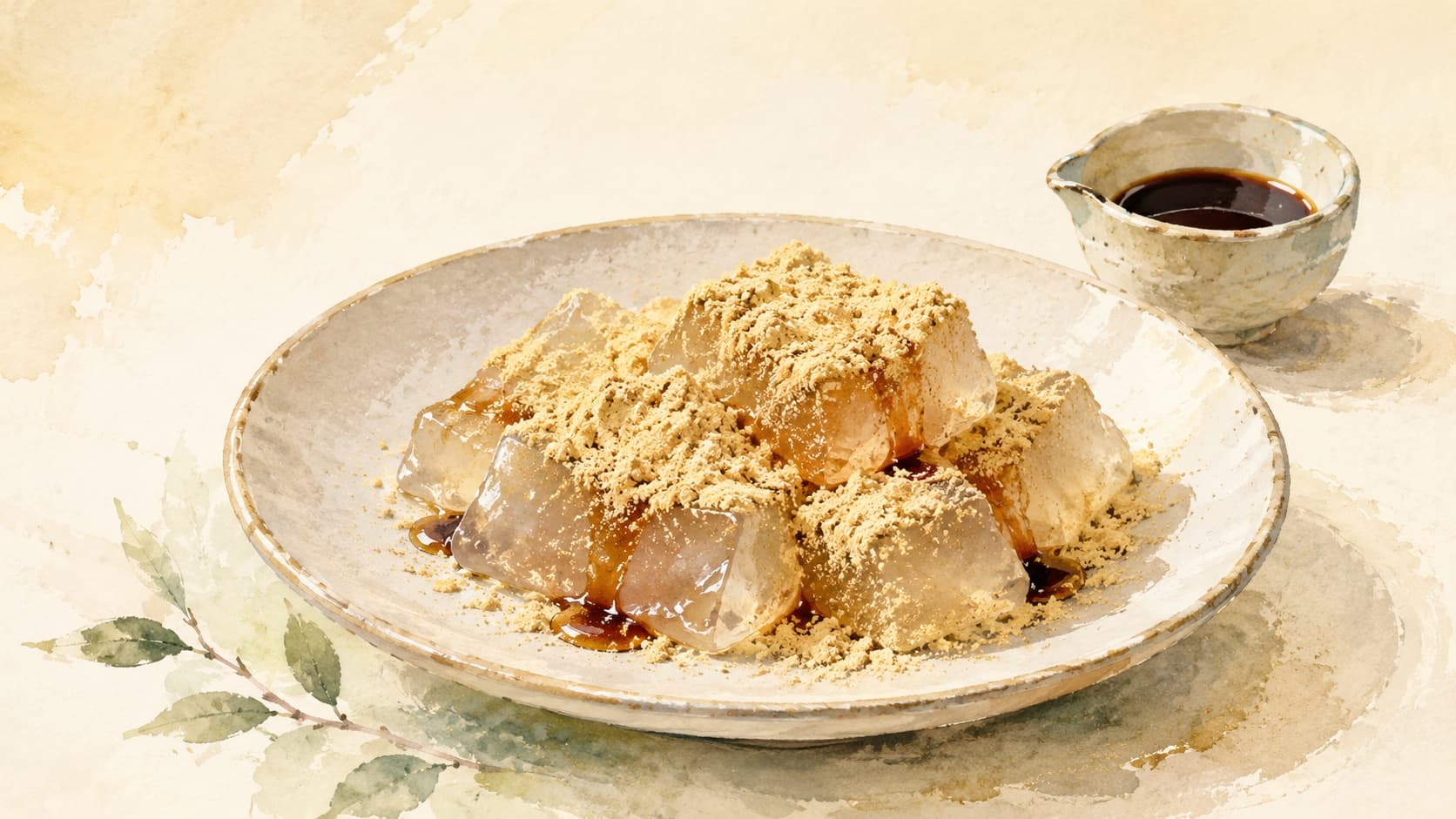
Ingredients
- 100g warabi starch
- 300ml water
- 50g sugar
- Kinako (roasted soybean flour) for dusting
- Kurogome (black sesame) for garnish (optional)
- Matcha for flavor (optional)
- Cornstarch for dusting (optional)
Steps
In a bowl, mix warabi starch and sugar.
Gradually add water while stirring until smooth.
Transfer mixture to a wide, heavy skillet over medium heat.
Cook, stirring continuously, until the mixture thickens and becomes translucent.
Pour into a flat dish and let cool completely.
Once set, cut into bite-sized pieces and dust with kinako.
Tools you'll want
Why this works
Warabi Mochi relies on warabi starch, which is derived from the bracken fern. This starch has unique gelling properties, allowing the mochi to achieve its signature chewy texture. The ratio of starch to water is critical; too much water results in a watery texture, whereas too little makes the mochi too tough.
Heating the mixture activates the starch granules, causing them to swell and gelatinize. Continuous stirring prevents lumps and ensures an even consistency. The final translucent appearance indicates that the starch has been adequately cooked and is ready to set.
Cooling is essential for the mochi to firm up properly. It should be left undisturbed in a flat dish. This allows for an even texture throughout. Dusting with kinako adds flavor and prevents sticking.
Common mistakes
Using substitute starches.
Target: Genuine warabiko (bracken starch) — or in modern Japan, a sweet potato starch blend labeled "warabi mochi powder."
Why it matters: True warabiko gives the distinctive translucent, slightly elastic texture. Cornstarch is too brittle; tapioca starch is too rubbery; potato starch is closest but still different. The traditional bracken texture is unique.
What to do: Buy from a Japanese grocery — look for 本わらび粉 (true warabi) or わらびもち粉 (warabi mochi blend).
Workarounds:
- No warabiko → 70% sweet potato starch + 30% tapioca starch approximates the texture acceptably.
Insufficient continuous stirring.
Target: Stir continuously with a wooden spatula throughout cooking — never stop until translucent.
Why it matters: Starch granules at the bottom hit heat first and gel into lumps. Stirring keeps the mixture moving and the starch gelatinization even.
What to do: Plan for 5-8 minutes of constant stirring — both hands engaged. Don't multitask.
Workarounds:
- Arm fatigue → silicone spatula gives better leverage; switch hands as needed.
Pulling off heat too early.
Target: Cook until fully translucent AND glossy, mixture pulls cleanly from spoon when lifted.
Why it matters: Under-cooked warabi mochi is opaque, weak, and watery; the chewy elastic texture requires full gelatinization. Stopping at "looks ready" = under-cooked.
What to do: Visual + texture test: lift spoon, should leave a clean ribbon trail. Continue 2 min after translucent appearance to fully set the structure.
Workarounds:
- Over-cooked (rubbery)? Add 2 tbsp warm water and stir back to smooth — partial recovery only.
Cooling without proper shaping.
Target: Pour into oiled flat dish or ice water bath immediately after cooking; cool to room temp.
Why it matters: Warabi mochi at temperature is still semi-fluid. Without a defined shape, it spreads thin or pools. Ice water = traditional method for chewy quenched texture.
What to do: Oil a flat dish (or directly into ice water for traditional style). Don't refrigerate while still warm — sweat forms.
Workarounds:
- Make shaped portions → drop spoonfuls directly into ice water; instant cooling, distinct pieces.
Insufficient kinako coating.
Target: Generous kinako (roasted soy flour) dusting on all sides — toss to fully coat before serving.
Why it matters: Without coating, warabi mochi pieces stick into a single mass that can't be separated. Kinako provides both flavor (nutty roast) and physical separation.
What to do: Toss in kinako immediately after cutting/shaping. Re-coat just before serving if needed.
Workarounds:
- No kinako → cornstarch works for separation only (no flavor); peanut powder is a Hong Kong-style alternative.
Serving immediately from the cold ice bath.
Target: Drain from ice water, let rest 5 minutes at room temp before kinako coating.
Why it matters: Surface water dilutes the kinako; mochi straight from ice is also harder than ideal. Brief rest = pliable mochi, dry surface, kinako adheres beautifully.
What to do: Drain on a clean towel, brief rest, then coat.
Workarounds:
- Need to serve quickly → pat with paper towels first to remove surface water.
What to look for
- Translucent appearance indicating proper cooking.
- Firm yet slightly springy texture when pressed.
- Smooth surface without lumps or air pockets.
- Evenly dusted with kinako for flavor and to prevent sticking.
Chef's view
Warabi Mochi (a soft, translucent Japanese confection made from refined bracken starch, sugar, and water — always use the refined warabi starch sold for sweets, never raw bracken root) is a traditional Japanese sweet that showcases the beauty of simplicity. It is often served during festivals or special occasions. The process reflects a deep respect for nature and the ingredients used.
In Japan, the preparation of Warabi Mochi is often seen as an art form, emphasizing precision and technique. The chewy texture and delicate flavor allow it to pair well with various accompaniments, such as matcha (powdered Japanese green tea, whisked with hot water to a frothy bright-green drink) or sweet red bean paste, enriching the cultural experience of this dessert.
<!-- beginner-glossed v1 -->Get the essays in your inbox — free
Weekly notes on flavor, fermentation, and food history — the writing behind the Atlas of Flavor. No spam; unsubscribe anytime.