
Spaghetti alle Vongole
A classic dish that balances the brininess of clams with the richness of olive oil and garlic.
Contents (5 sections)▾
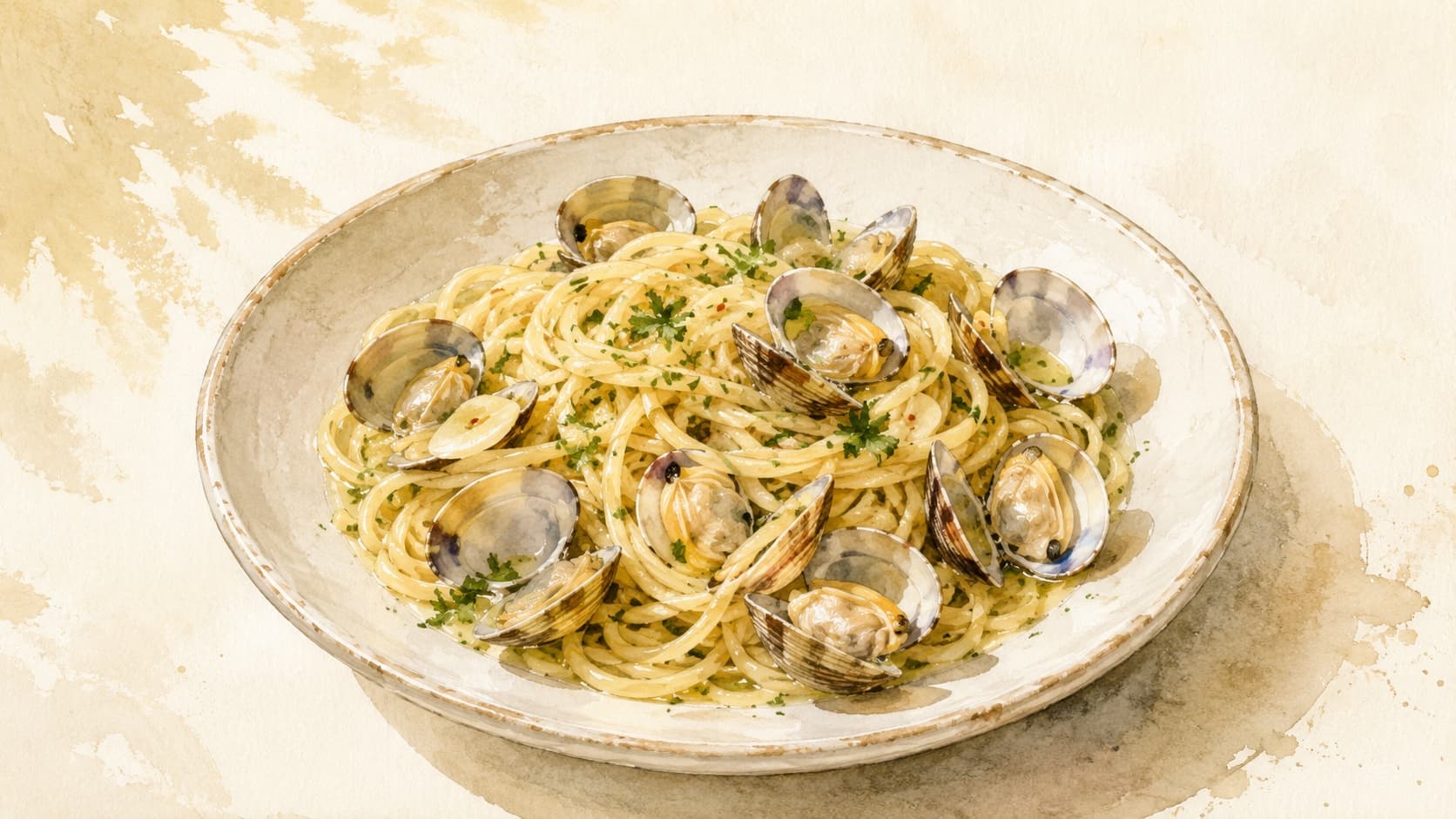
Ingredients
- 400g spaghetti
- 1kg fresh clams, cleaned
- 4 tablespoons olive oil
- 3 garlic cloves, sliced
- 1/2 teaspoon red pepper flakes
- 1/2 cup white wine
- 1/4 cup fresh parsley, chopped
- Salt, to taste
Steps
Boil salted water and cook spaghetti until al dente.
In a wide skillet, heat olive oil over medium heat.
Add garlic and red pepper flakes; sauté until fragrant.
Pour in white wine and add clams; cover and cook until clams open.
Drain spaghetti and add to the skillet with clams; toss with parsley.
Serve immediately, garnished with extra parsley.
Tools you'll want
- · Digital kitchen scale (gram precision)
Why this works
Cooking spaghetti to al dente ensures a firm texture that holds up against the sauce. The addition of salt in the water enhances the pasta's flavor. Olive oil provides richness, while garlic adds depth through its aromatic qualities. The heat should be moderate to prevent burning the garlic, allowing it to release its oils without becoming bitter.
White wine adds acidity and helps to steam the clams, infusing the dish with a briny essence. Clams should open fully under heat, indicating they are cooked properly. The integration of pasta and clam sauce occurs off heat, allowing the starch from the spaghetti to thicken the sauce.
Common mistakes
Not purging the clams.
Target: Soak clams in salted water (35 g salt per liter) in the fridge for 2–3 hours. Add 1 tbsp cornmeal to encourage purging.
Why it matters: Live clams contain sand and grit in their digestive tracts. Without purging, the sand ends up in the sauce — gritty bites destroy the dish. Cornmeal encourages clams to expel internal sand.
What to do: Plan ahead. Purge upon getting the clams home. Drain just before cooking.
Workarounds:
- Limited time? Even 30 minutes purge is better than nothing.
- For pre-purged clams (some markets do this), confirm with the fishmonger.
Overcooking the clams.
Target: Pull clams from heat the moment they open — about 3–5 minutes in covered pan. Discard any that don't open.
Why it matters: Clams overcook in seconds — past "just opened" they turn rubbery. The textural sweet spot is brief.
What to do: Cover the pan, watch through the lid (or check briefly). The moment most clams are open, kill the heat.
Workarounds:
- For finer control, remove opened clams as they pop, then return to the pan once pasta is ready.
Using canned clams.
Target: Fresh small clams — vongole veraci (Manila clams), little necks, or similar. Live, shells closed.
Why it matters: Canned clams lack the briny pop that defines vongole. The juices are also inferior — pasteurized and one-dimensional.
What to do: Buy from a fishmonger the day of cooking. Tap any open shells; if they close, they're alive. If they don't, discard.
Workarounds:
- For backup, frozen pre-cooked clams + a bottle of clam juice approximates the dish — not authentic but workable.
Skipping the wine.
Target: 1/2 cup dry white wine — preferably Italian (Vermentino, Pinot Grigio) or similar.
Why it matters: Wine adds acid + aromatic complexity AND chemically helps clams release their juices. Without it, the dish reads flat — just garlicky pasta with seafood.
What to do: Add wine after the garlic infuses oil, before the clams. Let alcohol cook off briefly (1 minute) before adding clams.
Workarounds:
- Alcohol-free? 1 tbsp white wine vinegar + 1/2 cup water + a pinch of sugar approximates.
Adding cheese.
Target: ZERO cheese on vongole. NO parmigiano, NO pecorino.
Why it matters: Italian tradition is firm: NO cheese with seafood pasta. The cheese's fat clashes with the clam brine, masking the delicate sea flavor. This is a hard rule in Italy.
What to do: Resist the urge. Use parsley + a drizzle of olive oil instead for finish.
Workarounds:
- Want richness? Add a small knob of cold butter at the end (off heat) — emulsifies the sauce without the masking effect of cheese.
Pasta water emulsion skipped.
Target: Use 1/4 cup pasta water at the end, swirling vigorously to emulsify with the clam juices and olive oil.
Why it matters: Pasta water emulsifies the wine + clam juice + olive oil into a unified sauce. Without it, you get watery liquid at the bottom of the plate.
What to do: Reserve pasta water before draining. Add to the pan with pasta, swirl/toss to emulsify.
Workarounds:
- For maximum starch concentration, cook pasta in less water than usual.
What to look for
- Clams should be fully opened when cooked.
- Spaghetti should have a slight bite when tasted — the al dente point (Italian for "to the tooth", meaning pasta is cooked through but still firm in the center).
- The sauce should be glossy and coat the pasta evenly.
- Garlic should be golden, not brown, to avoid bitterness.
Chef's view
Spaghetti alle Vongole (Italian for "spaghetti with clams" — vongole are small saltwater clams; alle vongole means "in the style of clams") is a staple of coastal Italian cuisine, reflecting the simplicity and freshness of the Mediterranean. The dish embodies the philosophy of using high-quality ingredients and minimal intervention. It highlights the clams' briny sweetness, balanced with the richness of olive oil.
The technique emphasizes timing and temperature control, illustrating the importance of cooking pasta and sauce in harmony. This dish is not just a meal; it is a celebration of the sea and an exploration of Italian culinary heritage.
<!-- beginner-glossed v1 -->Get the essays in your inbox — free
Weekly notes on flavor, fermentation, and food history — the writing behind the Atlas of Flavor. No spam; unsubscribe anytime.