
Tzatziki
A creamy blend of yogurt, cucumber, and garlic, essential to Greek cuisine.
Contents (5 sections)▾
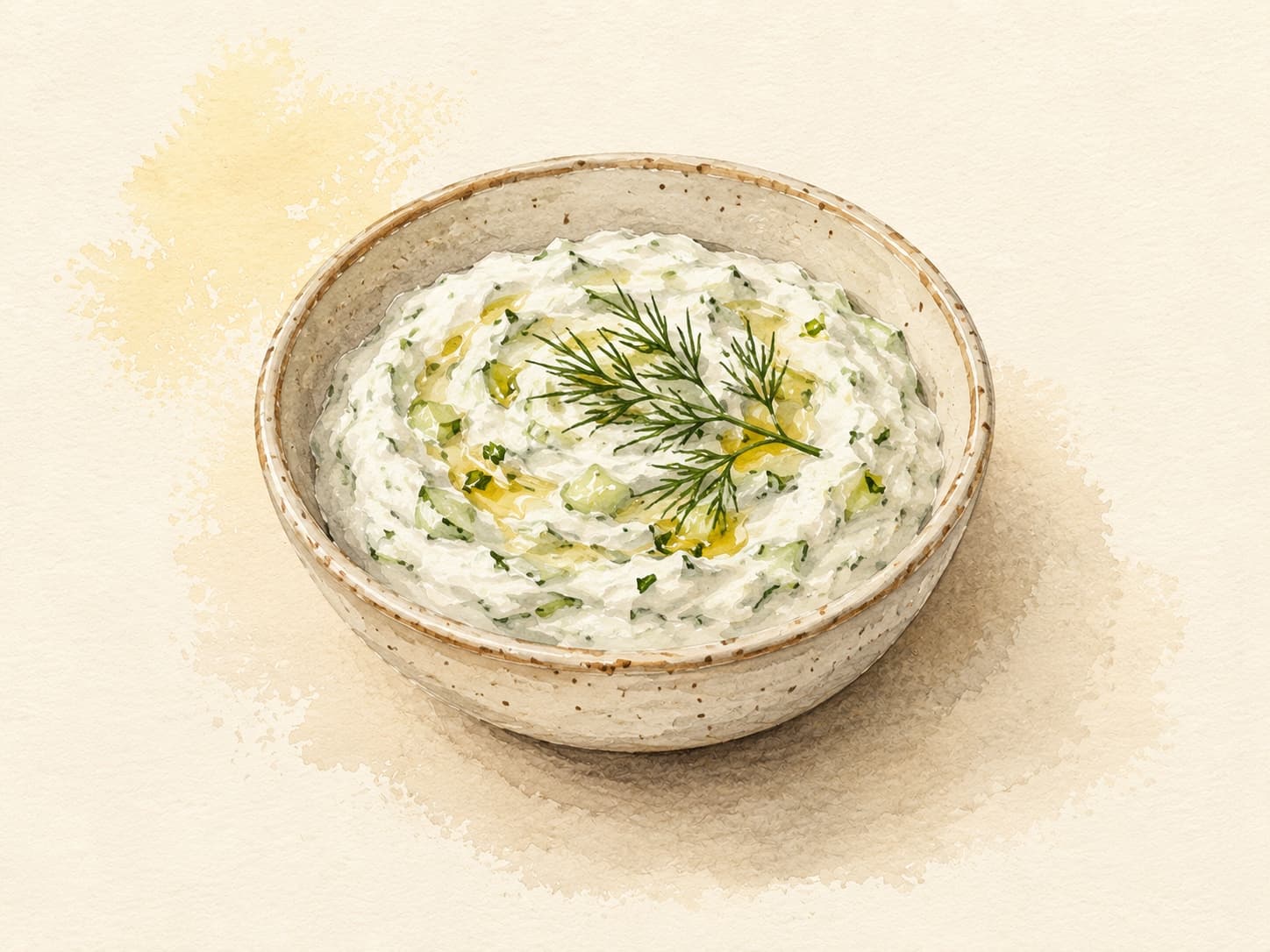
Ingredients
- 2 cups Greek yogurt
- 1 medium cucumber, grated
- 2 cloves garlic, minced
- 2 tablespoons olive oil
- 1 tablespoon white vinegar
- 1 tablespoon fresh dill, chopped
- Salt, to taste
- Pepper, to taste
Steps
Grate the cucumber and squeeze out excess moisture.
In a bowl, combine yogurt, garlic, olive oil, vinegar, and dill.
Add the grated cucumber to the yogurt mixture.
Season with salt and pepper, mixing well.
Chill in the refrigerator for at least 15 minutes before serving.
Tools you'll want
- · Digital kitchen scale (gram precision)
Why this works
Tzatziki relies on the balance of yogurt's creaminess and cucumber's crunch. Greek yogurt provides a thick, tangy base. Its high protein content maintains structure, preventing the sauce from becoming too runny. Grated cucumber introduces moisture but must be drained to avoid dilution.
Garlic adds a pungent flavor, complementing the yogurt's richness. The acidity from vinegar brightens the taste. Dill enhances the freshness, typical in Mediterranean dishes. Allowing the tzatziki to chill develops its flavors.
The ratios of yogurt to cucumber are crucial. Too much cucumber results in a watery dip, while too little makes it overly dense. Seasoning with salt enhances flavor, but should be balanced to avoid overpowering the other ingredients.
Common mistakes
Using regular yogurt.
Target: Full-fat Greek yogurt (strained). NOT regular yogurt, NOT low-fat.
Why it matters: Regular yogurt is too thin — produces a soupy tzatziki that won't hold on a pita bite. Low-fat lacks the richness that balances the sharp garlic and cucumber. Greek strained yogurt has the right body.
What to do: Look for "Greek" or "strained" on the label. Whole milk specifically.
Workarounds:
- No Greek yogurt? Strain regular yogurt overnight in cheesecloth.
Not squeezing the cucumber.
Target: Grate cucumber, salt for 10 minutes, then SQUEEZE OUT every drop of water.
Why it matters: Cucumber is 96% water. Unsqueezed cucumber turns tzatziki into watery soup within 30 minutes. The aggressive squeezing is essential — yields about 1/4 of the original volume.
What to do: Grate on a box grater, salt, rest, then squeeze in cheesecloth or by handful — should yield only the cucumber pulp, almost dry.
Workarounds:
- For ultra-dry, use English/Persian cucumbers (fewer seeds, less water).
Raw garlic overload.
Target: Start with 1 small clove per cup of yogurt. Refrigerated, garlic flavor intensifies over time.
Why it matters: Raw garlic flavor compounds intensify as they sit — what's "perfect" today is overpowering tomorrow. Tzatziki served the same day needs more garlic than tzatziki served the next day.
What to do: Microplane the garlic so it disperses evenly. Taste, refrigerate, taste again.
Workarounds:
- For milder flavor, soak grated garlic in lemon juice for 5 minutes before mixing — tames sharpness.
Skipping the rest.
Target: Refrigerate 2+ hours before serving for flavors to meld.
Why it matters: Tzatziki improves dramatically with rest — garlic mellows, cucumber juice (the little that remains) integrates with yogurt, dill releases aromatic compounds. Fresh-mixed tzatziki tastes raw and sharp.
What to do: Make ahead. Best the day of serving but improved overnight too.
Workarounds:
- Emergency 30-minute chill still helps somewhat.
Wrong herbs (fresh herb leaves used here for aroma rather than dried).
Target: Fresh dill (Greek classic) and/or fresh mint. NOT dried.
Why it matters: Dried dill lacks the fresh, slightly sweet character that distinguishes Greek tzatziki. Fresh dill provides essential aromatic complexity.
What to do: Use fresh dill. Chop fine.
Workarounds:
- For variety, add a small amount of fresh mint for a more Cypriot style.
What to look for
- A thick, creamy consistency.
- Vibrant green flecks from the cucumber.
- A balanced aroma of garlic and dill.
- A smooth, uniform mixture.
Chef's view
Tzatziki (a chilled Greek yogurt-and-cucumber sauce sharpened with raw garlic) is more than a dip; it’s a staple in Greek cuisine. Traditionally served with grilled meats or pita, it embodies the Mediterranean's fresh flavors. Its origins trace back to ancient times, showcasing the simplicity and richness of local ingredients.
The technique emphasizes balance. Each element contributes to the final texture and flavor. The ritual of preparing tzatziki reflects a communal culture, often enjoyed during gatherings and celebrations.
<!-- beginner-glossed v1 -->Get the essays in your inbox — free
Weekly notes on flavor, fermentation, and food history — the writing behind the Atlas of Flavor. No spam; unsubscribe anytime.