
Tteokbokki
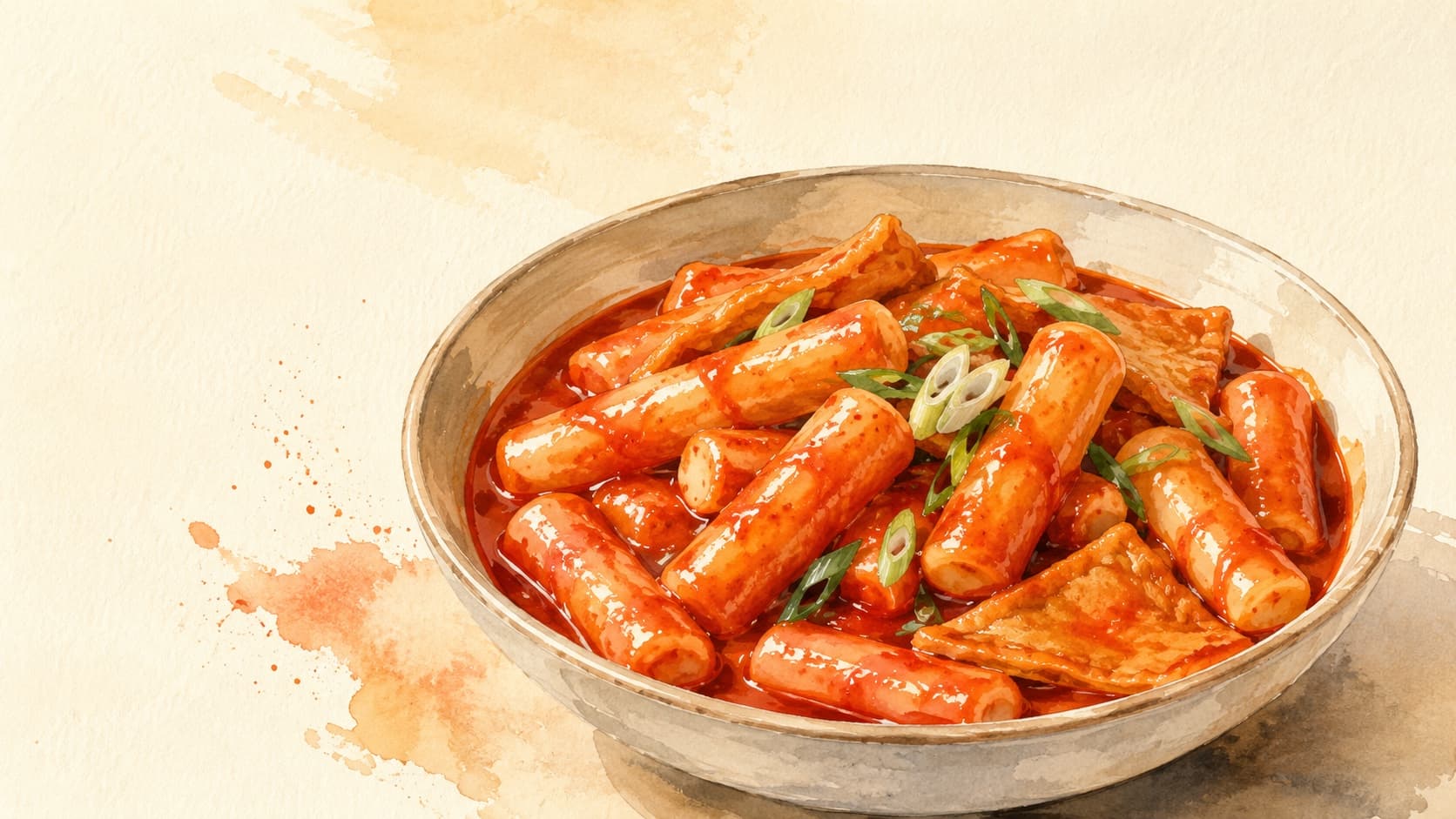
This dish combines chewy rice cakes with a spicy-sweet sauce for a satisfying texture and flavor contrast.
Contents (5 sections)▾
Ingredients
- 400g rice cakes (tteok)
- 2 tablespoons vegetable oil
- 1 onion, sliced
- 3 green onions, chopped
- 1 tablespoon minced garlic
- 3 tablespoons gochujang (Korean chili paste)
- 1 tablespoon gochugaru (Korean chili flakes)
- 2 tablespoons sugar
- 500ml water or anchovy broth
- 1 boiled egg (optional)
- Sesame seeds for garnish
- Fish cakes (optional)
Steps
Soak rice cakes in water for 30 minutes if hard.
Heat oil in a wide skillet over medium heat, add onion and garlic, sauté until translucent.
Stir in gochujang, gochugaru, and sugar, cooking for 1-2 minutes.
Pour in water or broth, bring to a simmer, then add rice cakes and fish cakes.
Cook for 10-15 minutes until sauce thickens, stirring occasionally.
Serve hot, garnished with green onions, boiled egg, and sesame seeds.
Tools you'll want
Why this works
The balance of gochujang and sugar creates a cohesive sauce that clings to the rice cakes. The simmering process allows the rice cakes to absorb flavors while maintaining their chewy texture. High heat in the first steps caramelizes the onions and garlic, enhancing the dish's complexity.
Rice cakes should be soaked to prevent them from becoming too hard. Using anchovy broth adds umami depth, complementing the spicy-sweet sauce. A simmering time of 10-15 minutes allows the sauce to thicken, enhancing the overall mouthfeel.
Common mistakes
Hard, dry rice cakes (garaetteok — the cylindrical Korean rice cakes used here).
Target: Soak refrigerated/dried tteok in warm water 20-30 minutes before cooking; fresh tteok needs no soak.
Why it matters: Dry tteok cooked directly in sauce takes too long to soften, absorbs too much liquid, and disrupts the sauce balance. Soaked tteok cooks in the right time and absorbs sauce evenly.
What to do: Check tteok condition first. If firm/dry to the touch, soak in warm (40°C) water until pliable.
Workarounds:
- Frozen tteok → thaw in cold water 1 hour first, then proceed normally.
Wrong gochujang (Korean fermented chili-soybean paste) amount.
Target: 3 tbsp gochujang per 400 g tteok as starting point. Adjust to brand strength.
Why it matters: Each gochujang brand has different heat and salt levels. Adding "by recipe" without tasting = unpredictable result. The sweet-spicy-salty balance is the dish's signature.
What to do: Start at 2 tbsp, taste the sauce alone before adding tteok, adjust toward target.
Workarounds:
- Want milder → reduce gochujang, add 1 extra tbsp tomato paste for color.
No anchovy broth (using plain water).
Target: Anchovy-kelp broth (myeolchi-dashima) as the cooking liquid — small dried anchovies + dried kelp simmered 10 min.
Why it matters: Plain water = thin, one-dimensional sauce. Anchovy broth adds the umami foundation that distinguishes good tteokbokki from bland ones. The base flavor depends on it.
What to do: Make broth ahead — 10 anchovies + 1 piece kombu in 600 ml water, simmer 10 min, strain.
Workarounds:
- Vegetarian → kelp-only broth + 1 tsp soy sauce.
- Time-short → Dashida (Korean stock powder) 1 tsp in water.
Over-reduced sauce.
Target: Sauce coats tteok glossily without pooling — about 50-100 ml liquid remaining when done.
Why it matters: Over-reduced = pasty, salty, burnt-edge tteokbokki. Under-reduced = soup with tteok. The glossy coating is the texture goal.
What to do: Stir frequently in the last 5 minutes. Pull when sauce coats spoon and tteok looks lacquered.
Workarounds:
- Over-reduced → add 1-2 tbsp warm broth to loosen; serve immediately.
Skipping fish cake / eomuk.
Target: Fish cake (eomuk) strips added with the tteok — about 100 g per 400 g tteok.
Why it matters: Fish cake is a traditional component, not optional. It adds protein, texture variety, and absorbs the sauce in a different way than tteok. Pure tteok+sauce is incomplete.
What to do: Cut fish cake into wide strips. Add same time as tteok.
Workarounds:
- No fish cake → boiled eggs added at the end for a "ramyeon-style" tteokbokki.
Tteok added too early to thin sauce.
Target: Sauce should be boiling and slightly reduced before tteok joins.
Why it matters: Cold tteok into thin sauce = tteok absorbs liquid before flavors develop, ends up bland inside with concentrated sauce outside. Hot reduced sauce penetrates evenly.
What to do: Boil sauce first for 3-4 minutes to develop, then add tteok and fish cake.
Workarounds:
- Working with already-cold tteok in cold pan → bring sauce to simmer alone first, add tteok when bubbling.
What to look for
- A glossy, thick sauce coating the rice cakes.
- Softened, yet chewy texture of the rice cakes.
- Bright colors from the garnishes and sauce.
- A fragrant aroma from the sautéed ingredients.
Chef's view
Tteokbokki (Korean spicy stir-simmered rice cakes in a gochujang-based sauce) is a street food in Korea, often enjoyed as a snack or light meal. Its origins trace back to royal court cuisine, evolving into a popular dish among the masses. The dish reflects a balance of flavors and textures, showcasing the versatility of rice cakes.
This dish is a comfort food and a symbol of community and shared experiences. Preparing tteokbokki invites gatherings, where flavors are customized to personal preference, further enriching its cultural significance.
<!-- beginner-glossed v1 -->Get the essays in your inbox — free
Weekly notes on flavor, fermentation, and food history — the writing behind the Atlas of Flavor. No spam; unsubscribe anytime.