
Tonkotsu Ramen
A rich, creamy broth achieved through prolonged simmering of pork bones.
Contents (5 sections)▾
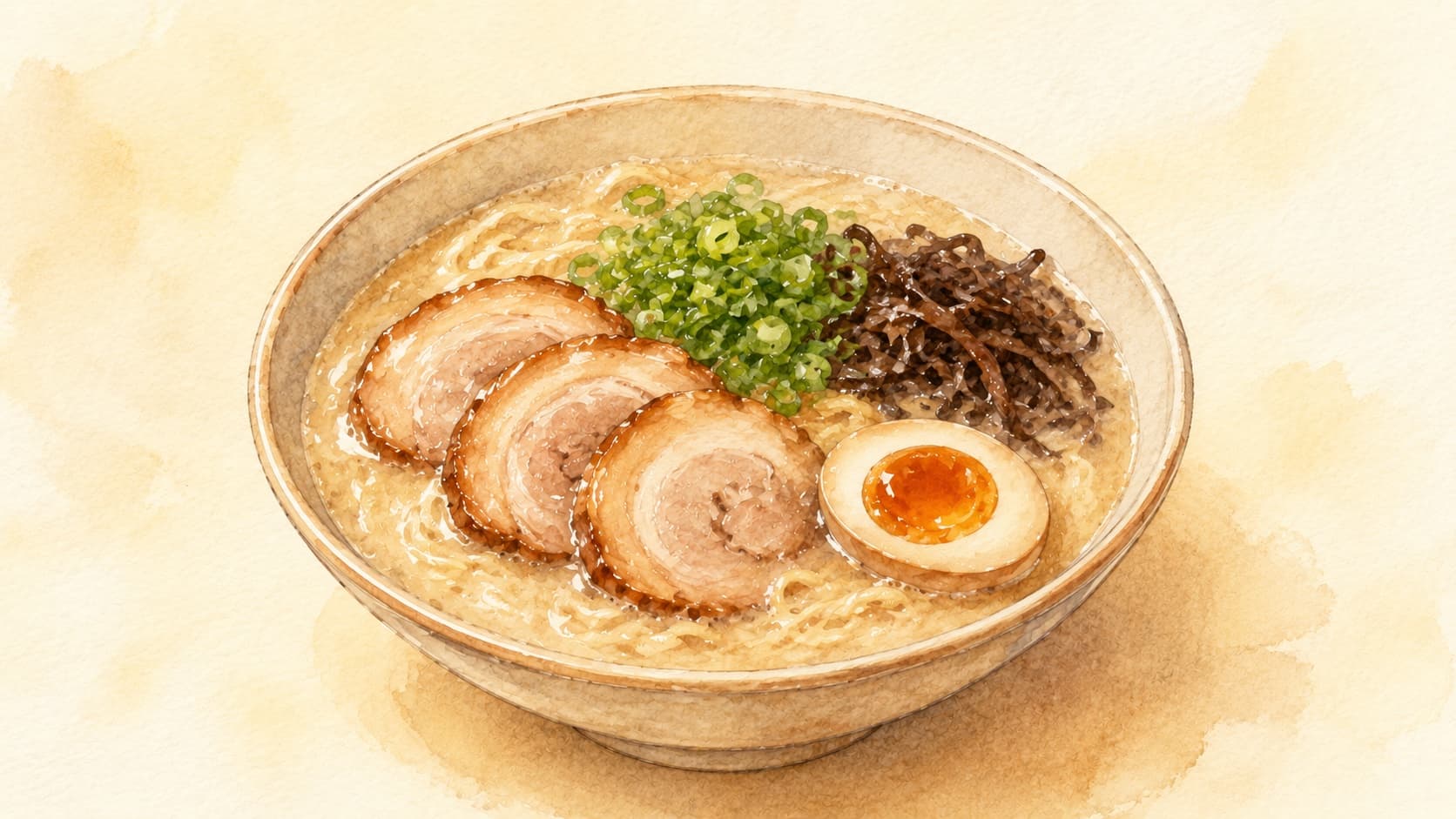
Ingredients
- 1 kg pork bones
- 200 g pork belly
- 1 onion, halved
- 2 cloves garlic, crushed
- 1 inch ginger, sliced
- 4 liters water
- 200 g ramen noodles
- 4 soft-boiled eggs
- Chopped green onions, for garnish
- Nori seaweed, for garnish
Steps
Rinse the pork bones under cold water to remove impurities.
In a large pot, combine pork bones, pork belly, onion, garlic, ginger, and water.
Bring to a boil, then reduce heat and simmer for at least 12 hours.
Strain the broth, discarding solids, and return liquid to the pot.
Cook ramen noodles according to package instructions and divide into bowls.
Ladle hot broth over noodles and top with soft-boiled eggs, green onions, and nori.
Tools you'll want
Why this works
The broth's creaminess results from the emulsification of fats released from the pork bones during the long simmering process. Simmering at a consistent low temperature allows for the collagen in the bones to break down, creating a silky texture. The aromatic ingredients like garlic and ginger infuse the broth with depth, enhancing the flavor.
The ratio of pork to water is crucial. A higher concentration of bones yields a richer broth. The intense heat at the start helps to quickly dissolve impurities, leading to a clearer final product. Straining the broth removes solids, ensuring a smooth texture.
Cooking the ramen noodles separately prevents them from becoming mushy. Adding them to the bowl just before serving maintains their texture. The final assembly of toppings provides contrasting flavors and textures, balancing the richness of the broth.
Egg-safety note: The soft-boiled egg has a set white and a soft, not-fully-set yolk — that texture is the point, but soft timing, the clock, and ladling hot broth over it are not a validated Salmonella kill. To keep the yolk soft, use a shell egg pasteurized in the shell, through to the contents; an ordinary egg that is only fresh, clean, washed, or graded is not pasteurized through the contents. For high-risk diners (pregnancy, immunocompromised, very young or old), use pasteurized eggs or boil the egg through to a fully-set yolk.
Common mistakes
Boiling at too low a temperature.
Target: Rolling, aggressive boil (100 °C) the entire 12+ hours — opposite of every other stock you've ever made.
Why it matters: Tonkotsu's signature white, opaque, creamy broth is an emulsion (a stable, milky blend where fat is broken up and held suspended in liquid instead of floating on top) of collagen and rendered fat — and emulsions REQUIRE physical agitation to form. A gentle simmer (the rule for clear stocks like chicken or beef broth) is wrong here; the fat just floats on top and the broth stays clear. The hard boil is what makes tonkotsu tonkotsu.
What to do: Keep the heat high enough that the surface is constantly churning. Top up with hot water as needed (cold water kills the emulsion).
Workarounds:
- Tight stove space? A pressure cooker at high pressure for 3–4 hours produces a similar emulsion in dramatically less time.
- For deeper color, use roasted pork bones (oven at 220 °C for 30 minutes before blanching).
Not blanching the bones.
Target: Cover bones with cold water, boil hard for 10 minutes, drain, scrub off the gray scum with a brush, rinse.
Why it matters: Pork bones release significant blood and impurities in the first 10 minutes. Without blanching, these become permanent off-flavors in the final broth. Tonkotsu skips clear-broth clarity (it's supposed to be cloudy) but it doesn't skip the funk control.
What to do: This step is non-negotiable for clean-tasting tonkotsu. Allow time for it.
Workarounds:
- For deeper flavor, blanch + roast: after blanching, roast the bones at 220 °C for 20 minutes before the main simmer. Adds Maillard depth.
Insufficient simmer time.
Target: 12 hours minimum, 18 is better, 24 is ideal.
Why it matters: The creamy texture comes from collagen breakdown into gelatin (slow) and fat emulsification (slow + agitation). Under 12 hours and you have a thin, slightly milky soup, not real tonkotsu.
What to do: Plan a Sunday-cook day. Start in the morning, monitor and water top-ups every 1–2 hours.
Workarounds:
- Pressure cooker: 3–4 hours high pressure ≈ 12 hours conventional simmer.
- For a "cheat" tonkotsu, add 1 tbsp neutral oil and an immersion blender hit at the end — emulsifies what fat is there.
Wrong noodle.
Target: Thin, straight, low-hydration Hakata-style ramen noodles. NOT egg noodles, NOT Chinese alkaline noodles, NOT thick wavy.
Why it matters: Tonkotsu's rich, fatty broth demands a thin noodle that won't absorb too much liquid. Thick noodles soak up broth and become tonkotsu-flavored mush.
What to do: Look for Hakata-style fresh noodles in Asian markets. If only dried, choose the thinnest available.
Workarounds:
- No Hakata noodles? Thin Italian spaghettini boiled with 1 tsp baking soda per liter approximates the alkaline noodle texture surprisingly well.
- Soba and udon are wrong for tonkotsu — different broth tradition.
Not toasting the tare (the concentrated seasoning base — usually salt-, soy-, or miso-based — added to each bowl before the broth, which carries most of the salt and umami of finished ramen).
Target: Build a separate concentrated seasoning (shio or shoyu tare) and toast its aromatics before mixing.
Why it matters: Salt added directly to tonkotsu broth tastes flat. The tare carries umami concentrates (sake, mirin, kombu, dashi, soy) that bloom when heated, layering flavor in a way plain salt cannot.
What to do: Per bowl: 1 tbsp shio tare + 1 ladle hot broth + noodles. Adjust tare to taste.
Workarounds:
- Quick tare: 1 tbsp soy sauce + 1 tsp mirin + 1/2 tsp sake + a pinch of salt, briefly heated. Not authentic but functional.
Skipping the aroma oil.
Target: 1 tsp mayu (burnt garlic oil) or chashu (Japanese-style braised pork belly, sliced thinly as a ramen topping) fat drizzled over the finished bowl.
Why it matters: The aroma oil floating on top hits your nose with every spoonful — it's the signature finish that separates restaurant tonkotsu from home tonkotsu. Without it, the broth tastes good but lacks the layered olfactory experience.
What to do: Make mayu by frying minced garlic in lard until black, blending smooth. Keeps for weeks refrigerated.
Workarounds:
- No time for mayu? A drizzle of toasted sesame oil + a pinch of black pepper covers similar territory.
- Chashu drippings (the rendered fat from making the pork) work beautifully — save and reuse.
What to look for
- A creamy, opaque broth with a rich aroma.
- Ramen noodles should be firm but tender.
- Toppings should be vibrant and fresh.
- The broth should cling slightly to the noodles when served.
Chef's view
Tonkotsu ramen is a staple in Japanese cuisine, originating from Fukuoka. Its preparation is both an art and a science, requiring patience and precision. This dish reflects the cultural importance of broth in Japanese cooking, where depth of flavor is paramount.
The technique of simmering pork bones for hours extracts flavors and unites the ingredients into a harmonious dish. Each bowl tells a story of tradition, craftsmanship, and the pursuit of culinary excellence.
<!-- beginner-glossed v1 -->Get the essays in your inbox — free
Weekly notes on flavor, fermentation, and food history — the writing behind the Atlas of Flavor. No spam; unsubscribe anytime.