
Tiramisu
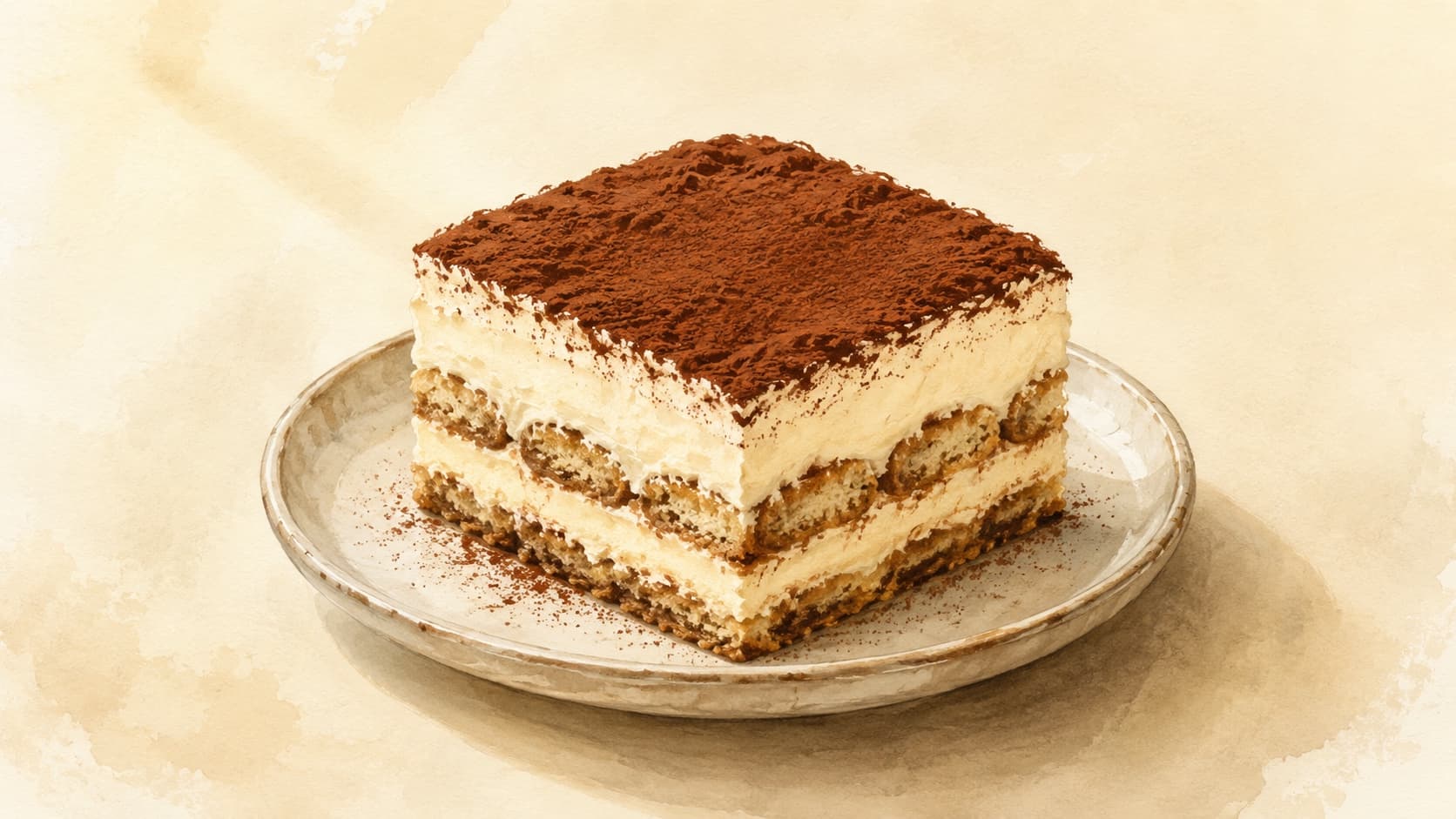
This layered dessert combines coffee-soaked ladyfingers with mascarpone cream for a balanced texture.
Contents (5 sections)▾
Ingredients
- 6 egg yolks — pasteurized, or from shell eggs treated to destroy Salmonella (see the safety note)
- 3/4 cup sugar
- 2/3 cup brewed espresso, cooled
- 1 cup mascarpone cheese
- 1 1/2 cups heavy cream
- 1 package ladyfingers (about 24)
- 2 tablespoons cocoa powder
- 1 teaspoon vanilla extract
Steps
Whisk the pasteurized egg yolks and sugar in a bowl until pale and thick.
Fold in mascarpone cheese until smooth.
In another bowl, whip heavy cream to soft peaks; fold into mascarpone mixture.
Dip ladyfingers quickly in espresso; layer in a dish.
Spread mascarpone mixture over ladyfingers; repeat layers.
Dust with cocoa powder and refrigerate for at least 4 hours.
Tools you'll want
- · Digital kitchen scale (gram precision)
Why this works
Tiramisu achieves its signature texture through the careful layering of ingredients. The mascarpone cheese provides a creamy base that balances the bitterness of espresso. The whipped cream adds volume and lightness, ensuring the dessert feels airy rather than dense.
The ratio of ingredients is crucial. A higher mascarpone content creates a richer flavor, while the right amount of sugar ensures sweetness without overpowering the coffee notes. The ladyfingers must be dipped quickly in espresso to prevent them from becoming too soggy, maintaining their integrity.
Refrigeration allows the flavors to meld. Chilling facilitates the setting of the mascarpone mixture, enhancing the overall taste and ensuring the layers hold their shape when served.
Safety — raw eggs: This tiramisu is chilled, not cooked — the yolks stay raw, so it carries a Salmonella risk. Whipping, sugar, mascarpone, coffee, alcohol, and refrigeration do not make raw egg safe; chilling only slows bacteria rather than removing the hazard. Use pasteurized egg yolks, or yolks from shell eggs specifically treated to destroy Salmonella — a merely washed or "fresh" shell egg is not the same thing. Pregnant people, infants and young children, older adults, and anyone immunocompromised should avoid tiramisu made with unpasteurized raw egg.
Common mistakes
Over-soaking the ladyfingers.
Target: Quick dip — 1 second per side. The cookie should still feel slightly firm in the center.
Why it matters: Ladyfingers (savoiardi — the dry, crunchy Italian sponge biscuits the recipe is built around) hydrate completely in 2 seconds. Over-soaked, they collapse into mush and the entire tiramisu becomes a wet, structureless puddle.
What to do: Pour espresso into a wide shallow bowl. Hold cookie horizontally, dunk one side for 1 second, flip, dunk the other side for 1 second, place. Move on.
Workarounds:
- For pre-set tiramisu (sets faster), under-dip slightly — the cookie absorbs more during the rest.
- Stale ladyfingers absorb less — actually preferable for tiramisu.
Mascarpone too cold.
Target: Bring mascarpone to room temperature (about 18 °C) before mixing.
Why it matters: Cold mascarpone seizes when combined with the egg-sugar mixture, producing a curdled-looking, lumpy filling. Room temperature mascarpone folds in smoothly.
What to do: Take mascarpone out of the fridge 30 minutes before assembly.
Workarounds:
- Forgot to soften? Microwave for 10 seconds, stir, microwave another 5 seconds — careful not to melt.
Over-whipping the eggs.
Target: Whip egg yolks + sugar until pale and ribbon-stage — falls in a thick ribbon that holds shape briefly.
Why it matters: Under-whipped yolks give a flat, dense tiramisu. Over-whipped (past stiff peak for whites) collapses during folding, deflating the mousse-like texture.
What to do: Use a stand mixer. Yolks first to pale ribbon (about 3 minutes), then whites to soft-medium peak (NOT stiff).
Workarounds:
- As a culinary variation, the yolks can be cooked into a sabayon — whisking yolks + sugar over a double boiler (a bowl over barely-simmering water) into a warm, airy custard. This is a cooked-yolk technique for flavour and texture, not a safety step: a home sabayon without a validated time-temperature process must not be used as a substitute for the treated/pasteurized-egg requirement in this chilled tiramisu (see the safety note above).
Skipping the booze (or wrong booze).
Target: Marsala wine (a sweet fortified wine from Sicily traditionally used in classic Italian tiramisu), or 1 tbsp dark rum, brandy, or Kahlua per portion.
Why it matters: A small amount of alcohol cuts the richness of mascarpone and lifts the coffee aromatics. Without it, tiramisu reads heavy and one-note. The right choice — Marsala — provides Italian authenticity.
What to do: Mix 2 tbsp Marsala into the espresso for dipping.
Workarounds:
- Alcohol-free? Add 1 tsp vanilla + 1/2 tsp coffee extract for depth without alcohol.
Skipping the proper chill.
Target: Refrigerate at least 6 hours, ideally overnight (8–12 hours).
Why it matters: Tiramisu needs hydration time — the mascarpone fully soaks the ladyfingers and the layers settle into the marbled custard texture. Under-chilled tiramisu has distinct layers without integration.
What to do: Assemble the day before. Slice cold the next day.
Workarounds:
- Emergency 2-hour chill works but the result is less unified.
Using cocoa powder too early.
Target: Dust cocoa over the top JUST before serving, never during chilling.
Why it matters: Cocoa absorbs moisture from the mascarpone over time, becoming a wet brown patch. Fresh-dusted cocoa is fine and aromatic.
What to do: Cover the top with plastic wrap during chilling. Remove, dust cocoa, slice, serve.
Workarounds:
- For variety, use dark cocoa + a pinch of espresso powder for deeper aroma.
Using American "ladyfingers."
Target: Italian savoiardi — firm, crunchy, hold their shape during dipping.
Why it matters: American "ladyfingers" are softer and sweeter — they collapse during dipping and contribute the wrong sweetness profile. Real savoiardi are deliberately dry and lightly sweet.
What to do: Look for "savoiardi" specifically. Imported brands (Vicenzi, Forno Bonomi) are widely available.
Workarounds:
- No savoiardi? Pavesini (Italian thin biscuits) are an acceptable substitute.
What to look for
- Smooth and creamy mascarpone layers.
- Defined layers of coffee and cream.
- A light dusting of cocoa powder on top.
- The dessert should hold its shape when sliced.
Chef's view
Tiramisu is a classic Italian dessert with origins tracing back to the Veneto region. Its name translates to "pick me up," referencing the energizing effects of espresso. This dish encapsulates the Italian philosophy of simplicity in cooking—using quality ingredients to create a harmonious dish.
The technique of layering is essential. Each layer contributes to the overall experience. The balance of textures—from the creamy mascarpone to the slightly chewy ladyfingers—invites a satisfying mouthfeel. Tiramisu is not just a dessert; it's a celebration of Italian culinary tradition.
<!-- beginner-glossed v1 -->Get the essays in your inbox — free
Weekly notes on flavor, fermentation, and food history — the writing behind the Atlas of Flavor. No spam; unsubscribe anytime.