
Teriyaki Chicken
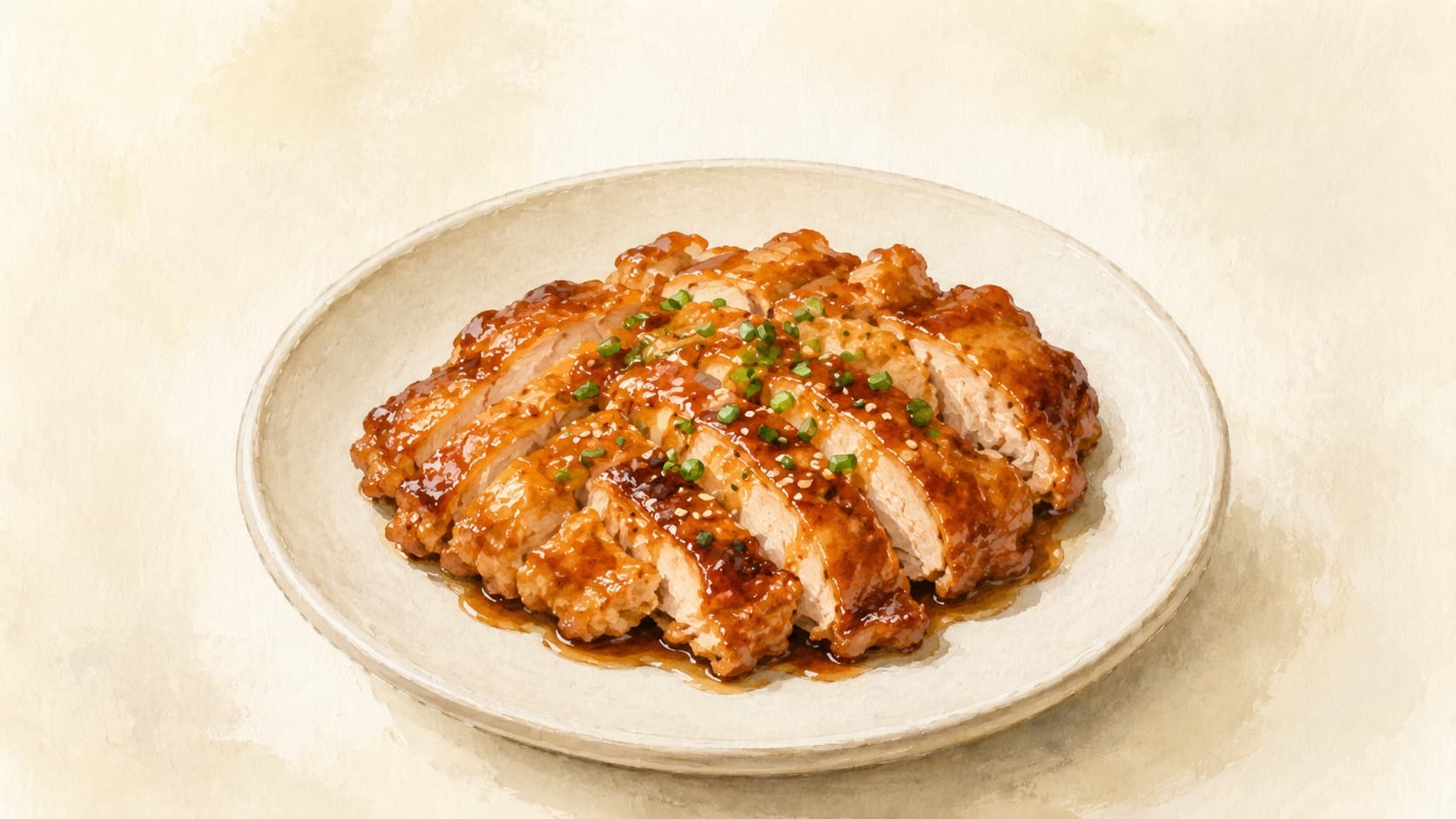
Soy sauce, mirin, sake, and sugar reduced to a glaze over chicken thighs: the sheen comes from Maillard reactions and caramelization working simultaneously, and the ratio between sugars and soy determines how quickly the glaze moves from glossy to burnt.
Contents (7 sections)▾
Ingredients
- 4 bone-in skin-on chicken thighs (about 800 g / 1.8 lb)
- 3 tbsp soy sauce
- 3 tbsp mirin
- 2 tbsp sake
- 1 tbsp sugar
- Neutral oil for the pan
Steps
Combine soy sauce, mirin, sake, and sugar in a small bowl and stir until the sugar dissolves. Set aside. Pat the chicken thighs completely dry with paper towels — surface moisture creates steam and prevents browning.
Heat a heavy skillet over medium heat with a thin film of oil. When the oil shimmers, place the chicken thighs skin-side down. Do not move them. Cook undisturbed for 8–10 minutes, until the skin has rendered its fat and developed a deep golden-brown colour. The skin will stick initially and release on its own when properly browned. Tip off excess fat from the pan.
Flip the chicken to the flesh side. Cook 4–5 minutes until the underside is pale gold and the thighs are nearly cooked through (internal temperature 70°C). Pour off any remaining fat. Reduce heat to low.
Pour the sauce over the chicken. The sauce will foam and spit on contact with the hot pan. Tilt and swirl the pan to coat the chicken, then let the sauce reduce. Baste the chicken repeatedly by tilting the pan and spooning the sauce over the top. As the sauce reduces, it will darken and thicken into a glaze. At this stage the process accelerates — watch carefully.
When the sauce has reduced to a thick, glossy glaze that coats the back of a spoon and the chicken reads 75–80°C internal temperature, remove from heat. The glaze should be dark mahogany and sticky. Rest for 3–5 minutes before serving. The glaze continues to set slightly as it cools. Slice across the bone if desired, or serve whole.
Tools you'll want
- · Cast-iron skillet (Lodge, 6.5–10in)
- · Instant-read digital thermometer
- · Digital kitchen scale (gram precision)
Why this works
Teriyaki is a cooking method, not just a sauce — the word breaks into teri (shine, gloss) + yaki (grilled or pan-fried). The visual characteristic, that lacquer-deep shine on the finished chicken, is produced by the intersection of two browning reactions working simultaneously in the final glaze stage: Maillard reactions (between amino acids in the soy protein hydrolysates and reducing sugars from the mirin and sugar) and caramelization (the thermal decomposition of sucrose and glucose above 160°C at the surface).
The sauce ratio matters because sugars are volatile at the temperatures involved. The standard teriyaki ratio used here (3 tbsp soy : 3 tbsp mirin : 2 tbsp sake : 1 tbsp sugar) gives you approximately 15–18% sugar content in the combined liquid. At that concentration, the glaze forms reliably without burning during the final 3–4 minutes of basting. Increase the sugar significantly and the glaze burns before the chicken is cooked through. Decrease it and the sauce reduces to a dark, salty, flat finish without the characteristic sheen.
Mirin contributes glucose and maltose from its fermentation, which are more reactive in Maillard conditions than sucrose. This is why mirin produces a more complex, deeper glaze than a sugar-only sweetener would — the reducing sugars from fermentation are already in the right form for Maillard reactions, while table sugar (sucrose) must first hydrolyze.
The skin-side-down initial cooking is the structural first step. Chicken skin is primarily fat and collagen. Placed skin-side down in a medium-hot dry pan, the fat renders and the skin crisps through its own fat, while collagen converts to gelatin and the skin becomes structurally tight. The rendered fat coats the pan surface and helps produce even browning. Properly rendered chicken skin does not become soggy when glazed — it retains texture under the sauce. Under-rendered skin becomes soft and unpleasant when the sauce goes on.
Common mistakes
Pan too hot during the initial skin render.
Target: Medium heat (160–180 °C pan surface) for the full skin render — about 8 minutes.
Why it matters: Screaming-hot pans brown the surface skin before the underlying fat has rendered. The result is dark, charred exterior over raw, soft, slimy skin underneath — the worst combination.
What to do: Start the chicken in a cold pan, skin down, and SLOWLY raise the heat to medium. The fat renders gradually and the skin crisps from the bottom up.
Workarounds:
- If the skin is browning too fast, lower the heat and add 1 tsp of cold water to the pan — drops the temperature instantly.
- For ultra-crisp skin, weigh the chicken down with a heavy pan on top for the first 4 minutes.
Moving the chicken during skin browning.
Target: Leave undisturbed for at least 6 minutes after placing.
Why it matters: The Maillard reaction (the browning chemistry between amino acids and sugars that builds savoury depth and color when proteins hit a hot, dry surface) requires sustained contact between protein-rich skin and hot pan. Moving the chicken disrupts the bond and prevents the proper crust from forming.
What to do: Press once at the start to ensure contact, then walk away. The chicken will release naturally when ready.
Workarounds:
- If you absolutely must check, use tongs to lift just one corner — don't drag.
Adding the sauce too early.
Target: Internal chicken temperature 70 °C before sauce goes in.
Why it matters: Sauce added too early creates steam that prevents further browning. The glaze never develops because there's too much water in the pan. The chicken should be mostly cooked when sauce arrives.
What to do: Render skin → flip → cook other side → check internal temp → THEN add sauce for the final 2 minutes of glazing.
Workarounds:
- For boneless thighs (faster cooking), the timing is tighter — sauce goes in at 5 minutes total cook time.
Walking away during the glaze stage.
Target: Continuous basting for the final 90 seconds as the sauce reduces.
Why it matters: The glaze reduction accelerates exponentially as water evaporates. Thirty seconds of inattention turns glossy glaze into bitter sticky char that's impossible to recover.
What to do: Tilt the pan, spoon sauce over the chicken every 10 seconds, pull from heat when sauce is thick and glossy (coats the back of a spoon).
Workarounds:
- If the glaze burns, add 2 tbsp water immediately to dissolve the char and lower the heat.
Wrong sauce ratios.
Target: Soy sauce : mirin : sake : sugar = 3:3:2:1 by volume.
Why it matters: Authentic teriyaki sauce is balanced — sweet, salty, and rich with mirin's complex sugars. Generic "teriyaki sauce" from bottles is usually too sweet and one-note.
What to do: Mix sauce fresh per cook session: 3 tbsp soy + 3 tbsp mirin + 2 tbsp sake + 1 tbsp sugar.
Workarounds:
- No mirin? 2 tbsp sake + 1 tbsp sugar approximates it (mirin is essentially sweetened sake).
- For deeper glaze, add 1 tsp of grated ginger or a smashed garlic clove to the sauce — modern variation, not strictly traditional.
Bone-in vs boneless timing confusion.
Target: Bone-in thighs need 12–15 min total cooking; boneless thighs need 8–10 min.
Why it matters: Bone-in chicken takes significantly longer to cook through. Using a bone-in timing for boneless results in dry meat; the reverse leaves bone-in chicken undercooked at the bone.
What to do: Confirm cut. Use a thermometer — 75 °C in the thickest part is done.
Workarounds:
- Mixed batch? Cook bone-in first, add boneless mid-way.
- Bone-in chicken can be finished in a 180 °C oven for 10 minutes if the skin is already crispy and the inside isn't cooked through.
What to look for
- Initial skin side down: skin begins to sizzle audibly on contact; fat begins to pool in the pan. No moving.
- After 8 minutes skin-side down: skin is deep golden-brown, releases from the pan cleanly. Fat has rendered out; the skin looks crisp.
- After adding sauce: foam and rapid sizzle as the sugars hit the hot surface. Reduce heat immediately.
- Glaze developing: the sauce darkens progressively; the surface of the chicken starts to look lacquered. Baste every 30 seconds.
- Finished: dark mahogany glaze, sticky when touched, internal temperature 75–80°C. The pan should show only a thin caramelized smear.
Chef's view
The bone-in versus boneless question has a clear answer from a texture standpoint: bone-in thighs are better for teriyaki. The proximity of meat to bone slows cooking, creating a more gradual temperature gradient and more tender meat. The bone marrow also contributes gelatin and fat that enrich the rendered juices. Boneless thighs are faster but produce a slightly flatter result.
The question of marinating before cooking is worth addressing. Many Western teriyaki recipes call for marinating the chicken in the sauce for 30 minutes to overnight before cooking. My view: marination is counterproductive here. The sugar in the sauce draws moisture from the chicken surface via osmosis (the physical process where water moves from inside the meat out toward a saltier or sweeter liquid until both sides balance), which then steams in the pan and prevents browning. The glazing method — cooking the chicken fully, then adding the sauce in the final stages — produces a much better result. The flavour penetration from a marinade is marginal; the surface crust from un-marinated, dried chicken is significant.
The version with sake and mirin and a relatively low sugar content is the classical home-cooking version. The sweeter, thicker, more intense version found in restaurants uses a higher sugar-to-soy ratio and sometimes glucose syrup (a clear, mild syrup made from starch that lacquers glazes without crystallising) for additional shine. Both are valid; this recipe is calibrated for the home kitchen, where a dish that eats well with rice and is not cloying is the goal.
Chef Test Notes
I tested three sauce ratios across batches. The equal-parts version (soy:mirin:sake:sugar = 3:3:2:1 by tablespoon) produced the most balanced glaze — enough sweetness for the characteristic sheen, not so much that it overpowered the soy. A higher-sugar version (doubling the sugar) produced a thicker, more confectionery-style glaze that set rigid on cooling and was difficult to serve. The lower-sugar version (omitting sugar entirely, relying on mirin alone) produced a lighter-coloured, less glossy result — acceptable but missing the characteristic teriyaki lacquer.
Related glossary terms
- Maillard reaction — the amino-acid/sugar browning that produces the deep colour and complex flavour of the glaze
- Caramelization — the sugar-only thermal decomposition that contributes bitterness and darker colour at the glaze surface
- Reduction — the concentration mechanism that transforms dilute sauce into a glaze
Get the essays in your inbox — free
Weekly notes on flavor, fermentation, and food history — the writing behind the Atlas of Flavor. No spam; unsubscribe anytime.