
Tamales
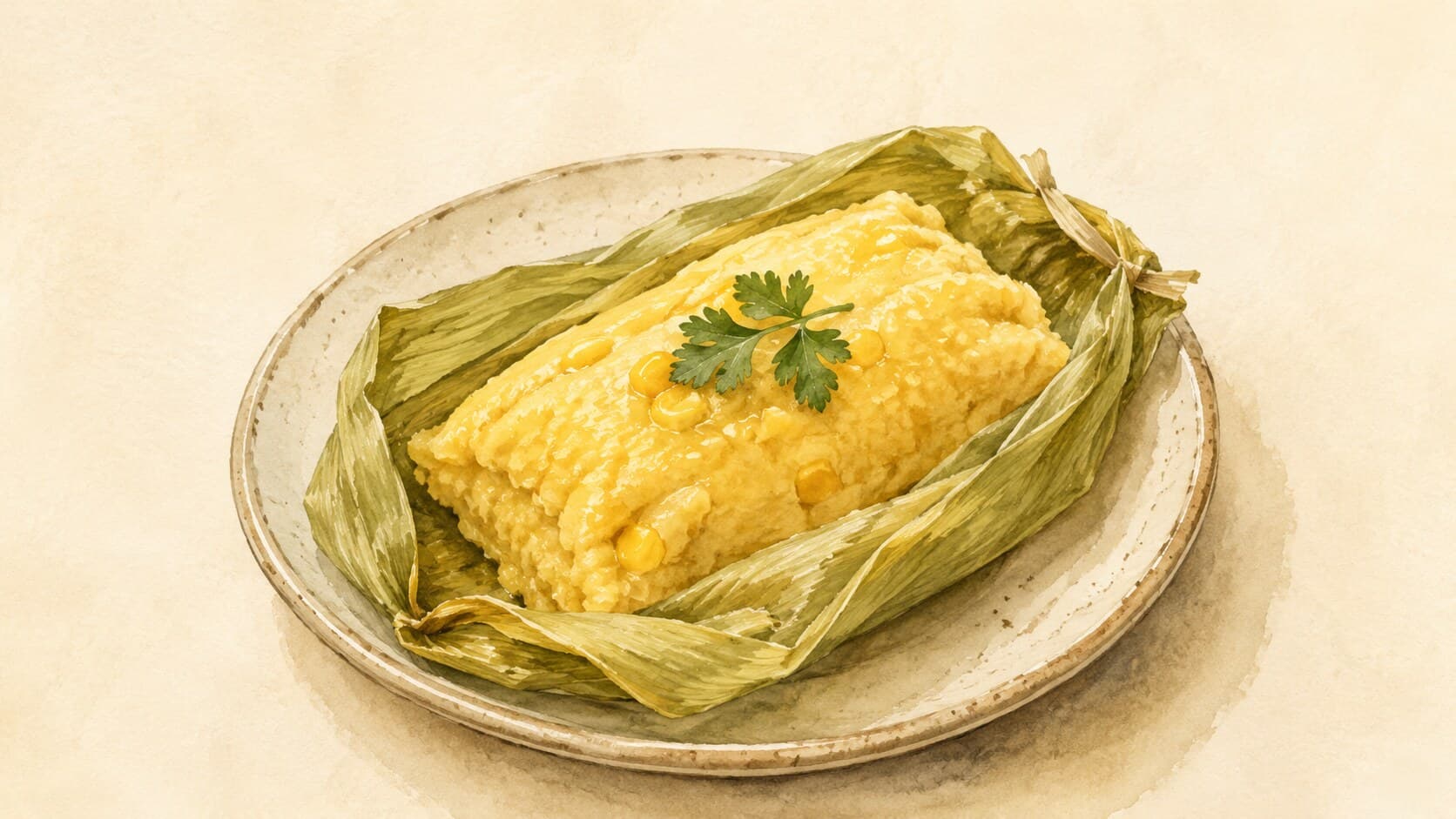
Tamales are a traditional Mexican dish made by wrapping masa dough around various fillings and steaming them in corn husks.
Contents (5 sections)▾
Ingredients
- 4 cups masa harina
- 1 cup lard or vegetable shortening
- 2 cups chicken or vegetable broth
- 1 tsp baking powder
- 1 tsp salt
- 2 cups filling (e.g., shredded chicken, cheese, or vegetables)
- 20-25 dried corn husks
- Optional: salsa for serving
Steps
Soak corn husks in warm water for 30 minutes.
In a large bowl, beat lard until fluffy, then mix in masa harina, baking powder, and salt.
Gradually add broth until a soft dough forms.
Spread masa on soaked husks, add filling, and fold.
Place tamales upright in a steamer and steam for 1 hour.
Serve with salsa if desired.
Tools you'll want
- · Digital kitchen scale (gram precision)
Why this works
Tamales require precise ratios of masa flour to fat for a light, fluffy texture. The lard or shortening creates air pockets when whipped, contributing to the masa's rise during steaming. Adding broth hydrates the dough, ensuring it doesn't dry out during cooking. A consistent steam temperature around 212°F (100°C) keeps the tamales moist and allows the masa to cook evenly.
The wrapping method is crucial. Using soaked corn husks prevents sticking and imparts flavor. The husks also retain moisture, creating a steamy environment that helps the masa expand without becoming gummy. Proper folding technique maintains the shape, allowing for even cooking and easy serving.
Common mistakes
Using cold lard or shortening.
Target: Room-temperature lard (rendered pork fat, the traditional fat for tamales — neutral-tasting and silky when whipped) (or shortening), whipped 8-10 min until light and fluffy — like buttercream.
Why it matters: Cold lard doesn't whip air in — masa stays dense, doesn't rise. The fluffy texture of authentic tamales depends on this aeration step.
What to do: Leave lard out 30 min before whipping. Stand mixer or hand mixer at medium-high speed.
Workarounds:
- No mixer → vigorous hand whisking for 10 minutes; tiring but workable.
Overfilling tamales.
Target: 1-2 tbsp filling per tamale, centered in the masa (the nixtamalized corn dough that forms the tamale wrapper, made from masa harina or fresh masa). Husk seals easily.
Why it matters: Overfilled tamales burst during steaming; filling escapes into the steamer water. Modest filling = clean seal, intact tamale.
What to do: Measure. Spread masa to leave 2 cm margins; filling in center only.
Workarounds:
- Like more filling → make slightly larger tamales (use 2 husks) rather than overfilling.
Insufficient corn husk soaking.
Target: 30+ min hot water soak until husks are pliable and translucent.
Why it matters: Dry husks tear during folding; insufficient hydration also produces gummy masa edges. Husks need to bend without cracking.
What to do: Soak in hot water with a weight to keep them submerged.
Workarounds:
- Short on time → 15 min in boiling water; less ideal but functional.
Steam temperature too low.
Target: Rolling steam maintained throughout. Check water level every 30 min.
Why it matters: Low steam = under-cooked masa stays gummy. Steaming requires sustained high heat to gelatinize the masa starch.
What to do: Cover tightly with lid + towel for extra seal. Maintain water level.
Workarounds:
- Multi-tier steamer → ensures even steam distribution; rotate tiers halfway.
Skipping the resting period.
Target: Rest 10-15 minutes after steaming, still wrapped, before serving.
Why it matters: Just-steamed tamales are soft and fragile; rest lets masa firm up and detach cleanly from the husk.
What to do: Steamer off heat, lid on, 10-15 min rest. Then serve.
Workarounds:
- Time-pressed → minimum 5 min rest still helps with structure.
Not testing one before declaring done.
Target: Test one tamale at the 75-min mark — masa should pull cleanly from the husk.
Why it matters: Under-cooked masa sticks; over-steamed is mushy. The "pulls clean" test is the reliable indicator.
What to do: Unwrap one, check for clean release. If masa sticks, continue 10-15 min.
Workarounds:
- Sticks badly → return to steamer with more water; salvageable.
What to look for
- Tamales should have a firm yet soft texture.
- The masa should easily pull away from the husk when unwrapped.
- Fillings should be well-distributed and visible.
- A pleasant aroma of steamed corn and spices should fill the air.
- The color of the masa should be slightly golden, indicating proper cooking.
Chef's view
Tamales hold a significant place in Mexican culture, often prepared for celebrations and family gatherings. The process of making tamales is communal, with family members collaborating to create various fillings and flavors. Each region in Mexico has its own variations, reflecting local ingredients and traditions.
The technique behind tamales is rooted in history, tracing back to ancient civilizations. Tamales were portable meals for warriors and travelers. Today, they represent more than just food; they embody a rich cultural heritage and the spirit of community. Making tamales is a labor of love, where each step builds a connection to the past and to one another.
<!-- beginner-glossed v1 -->Get the essays in your inbox — free
Weekly notes on flavor, fermentation, and food history — the writing behind the Atlas of Flavor. No spam; unsubscribe anytime.