
Takoyaki
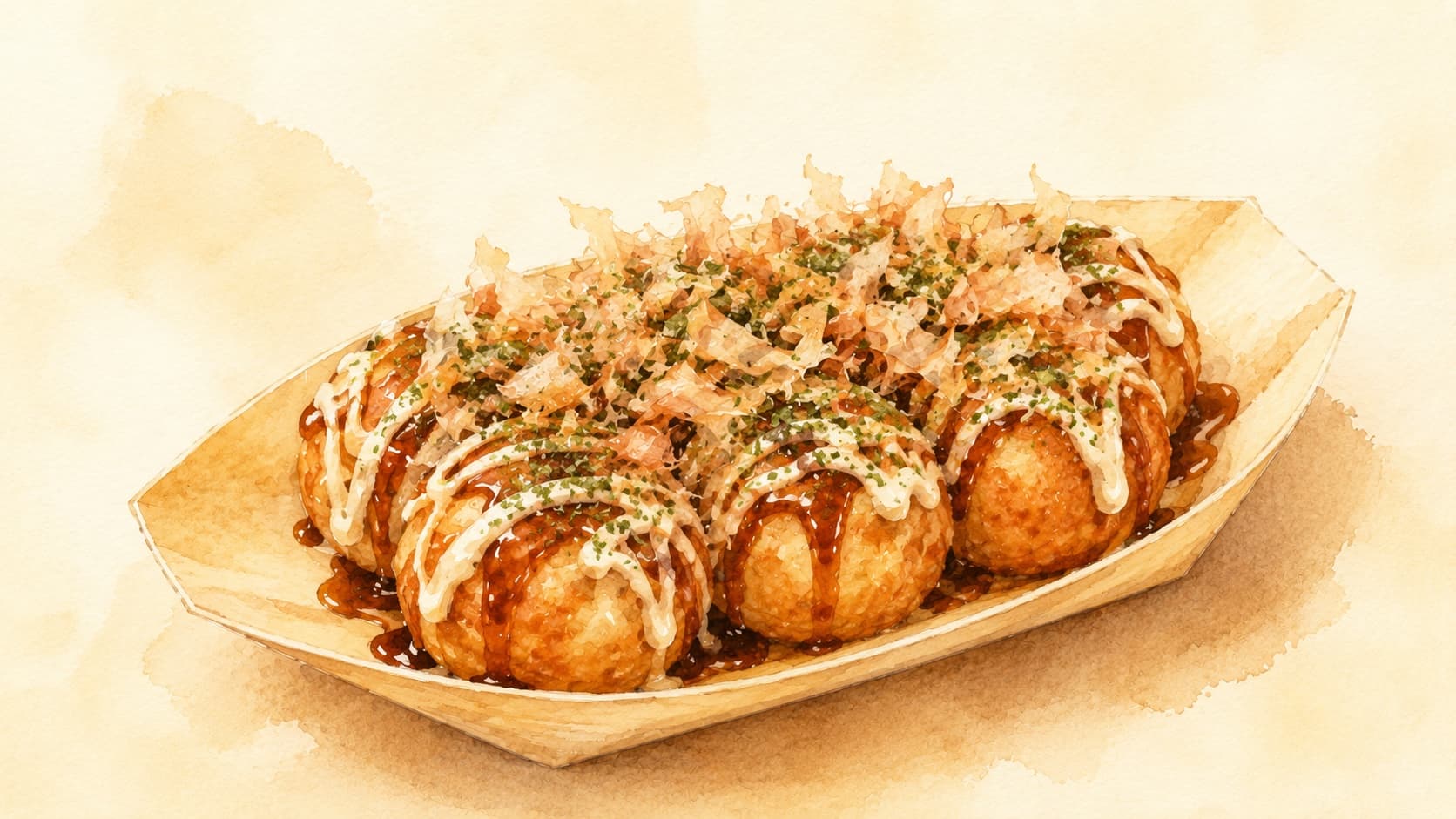
Takoyaki is a savory Japanese snack made by cooking a batter filled with diced octopus in a special molded pan.
Contents (5 sections)▾
Ingredients
- 200g all-purpose flour
- 600ml dashi stock
- 2 large eggs
- 100g cooked octopus, diced
- 60g green onions, chopped
- 50g tenkasu (tempura scraps)
- 1 tsp soy sauce
- 1 tsp salt
- Takoyaki sauce, for drizzling
- Katsuobushi (bonito flakes), for garnish
- Aonori (seaweed flakes), for garnish
Steps
In a bowl, mix flour, dashi stock, eggs, soy sauce, and salt until smooth.
Heat a takoyaki pan and grease it with oil.
Pour batter into the molds, filling each halfway.
Add diced octopus, green onions, and tenkasu into the molds.
Cover with more batter and cook until golden brown, turning with a skewer.
Serve hot, drizzled with takoyaki sauce and garnished with katsuobushi and aonori.
Tools you'll want
Why this works
Takoyaki relies on a batter made from flour and dashi stock, which provides umami depth. The batter's consistency is crucial; it must be thin enough to flow into the molds but thick enough to hold shape. Cooking in a specialized pan allows for even heat distribution.
The interaction between the hot pan and the batter creates a Maillard reaction, leading to the crispy outer layer typical of takoyaki. The addition of diced octopus and other fillings adds texture and flavor contrast to the soft interior.
Proper flipping of the takoyaki balls is essential. This technique ensures they cook evenly on all sides. The key is to wait until the edges begin to set before using skewers to turn them, which maintains the round shape.
Common mistakes
Wrong batter consistency.
Target: Crepe-thin, completely pourable, easily runs off a spoon. Flour:dashi ratio about 1:2.5 by volume.
Why it matters: Authentic takoyaki has a crisp shell with an almost-liquid molten interior — this paradox requires very thin batter. Thick batter cooks through to a dense rice-ball texture, missing the signature creamy center.
What to do: Mix flour, dashi, egg, and a touch of soy sauce. Whisk until smooth — should pour like heavy cream, not pancake batter.
Workarounds:
- Too thick? Thin with more dashi until pourable.
- For richer interior, add 1 tbsp grated yamaimo (mountain yam) — increases the gelatinous "molten" quality.
Not flooding the pan generously.
Target: Pour batter to OVERFLOW the mold cavities, covering the entire pan surface in a thin layer.
Why it matters: Counter-intuitively, you want excess batter spilling between the wells. This excess is what you "fold" into each ball during the turn, building up the perfect spherical shape. Filling only the wells produces small, sad takoyaki.
What to do: Pour generously, immediately add the takoyaki fillings (octopus, green onion, tenkasu, pickled ginger) into each well, then let cook.
Workarounds:
- For first attempts, fill 80 % full only and skip the overflow — easier to handle, less authentic shape.
Wrong pan temperature.
Target: Pan at 200–220 °C — droplet of batter sizzles immediately on contact.
Why it matters: Below 180 °C, the batter doesn't set fast enough — it stays liquid throughout and won't form the sphere. Above 240 °C, the bottom burns before the rest cooks.
What to do: For electric takoyaki pans, max setting and pre-heat 5 minutes. Test with a drop of batter before pouring the full amount.
Workarounds:
- Cast-iron takoyaki pan: pre-heat on medium-high for 8 minutes, check with droplet test.
- No takoyaki pan? Cake-pop pan or aebleskiver pan are close substitutes.
Flipping with the wrong tool, too early.
Target: Bamboo or wooden takoyaki pick. Wait until the batter at the edges sets and pulls away from the pan (about 90 seconds).
Why it matters: Metal tools tear the half-formed batter. Flipping too early breaks the not-yet-set ball. The technique is to ROTATE not flip — start with a 90-degree turn, letting the loose batter flow down into the cavity to form the rest of the sphere.
What to do: Insert the pick into the edge, gently lift and rotate 90 degrees first (the molten interior fills in below). Wait 30 seconds, then turn another 90 degrees.
Workarounds:
- Chopsticks work but require finesse. A small bamboo skewer is the home cook's best tool.
Not oiling between batches.
Target: Re-oil the pan cavities with a brush dipped in neutral oil before each new batch.
Why it matters: Each batch leaves residue in the wells. Without re-oiling, the next batch sticks and tears during the rotation. This is the single most common reason home takoyaki fails.
What to do: Keep a small bowl of oil and a silicone brush next to the pan. Re-oil between every batch.
Workarounds:
- For maximum non-stick, season the pan like a cast-iron skillet — multiple oil layers baked on over time.
Skipping the rest before flipping.
Target: After pouring batter, wait 90 seconds undisturbed before any rotation.
Why it matters: The bottom needs time to set into a firm shell before the rotation can work. Premature movement collapses the structure and produces irregular, broken balls.
What to do: Use a timer. 90 seconds for the first quarter-turn, then 30-second intervals for subsequent rotations.
Workarounds:
- If you flipped too early and the ball broke, push the batter back into the well with the pick — it'll re-form, just less spherically perfect.
What to look for
- A golden-brown exterior with a crispy texture.
- Soft, fluffy interior that holds ingredients without collapsing.
- A slight sizzling sound during cooking, indicating proper heat.
- Topping ingredients like katsuobushi (shaved dried-and-smoked bonito flakes — the savoury topping that "dances" over hot food) dancing slightly from heat.
- Evenly shaped balls without burnt spots.
Chef's view
Takoyaki (literally "octopus grill", the round Osaka street snack of batter and diced octopus baked in a dimpled iron pan) is not just a dish but a cultural experience in Japan, often enjoyed at festivals and street vendors. Its origins trace back to Osaka, where it has become a staple. The technique of making takoyaki embodies the Japanese philosophy of balance—between texture, flavor, and presentation.
The act of cooking takoyaki is social, often done in groups, where each person can tailor their balls with various fillings and toppings. This interactive cooking method fosters a sense of community and enjoyment, a hallmark of Japanese culinary traditions.
<!-- beginner-glossed v1 -->Get the essays in your inbox — free
Weekly notes on flavor, fermentation, and food history — the writing behind the Atlas of Flavor. No spam; unsubscribe anytime.