
Takikomi Gohan
A layered rice dish that absorbs flavors from its ingredients during cooking.
Contents (5 sections)▾
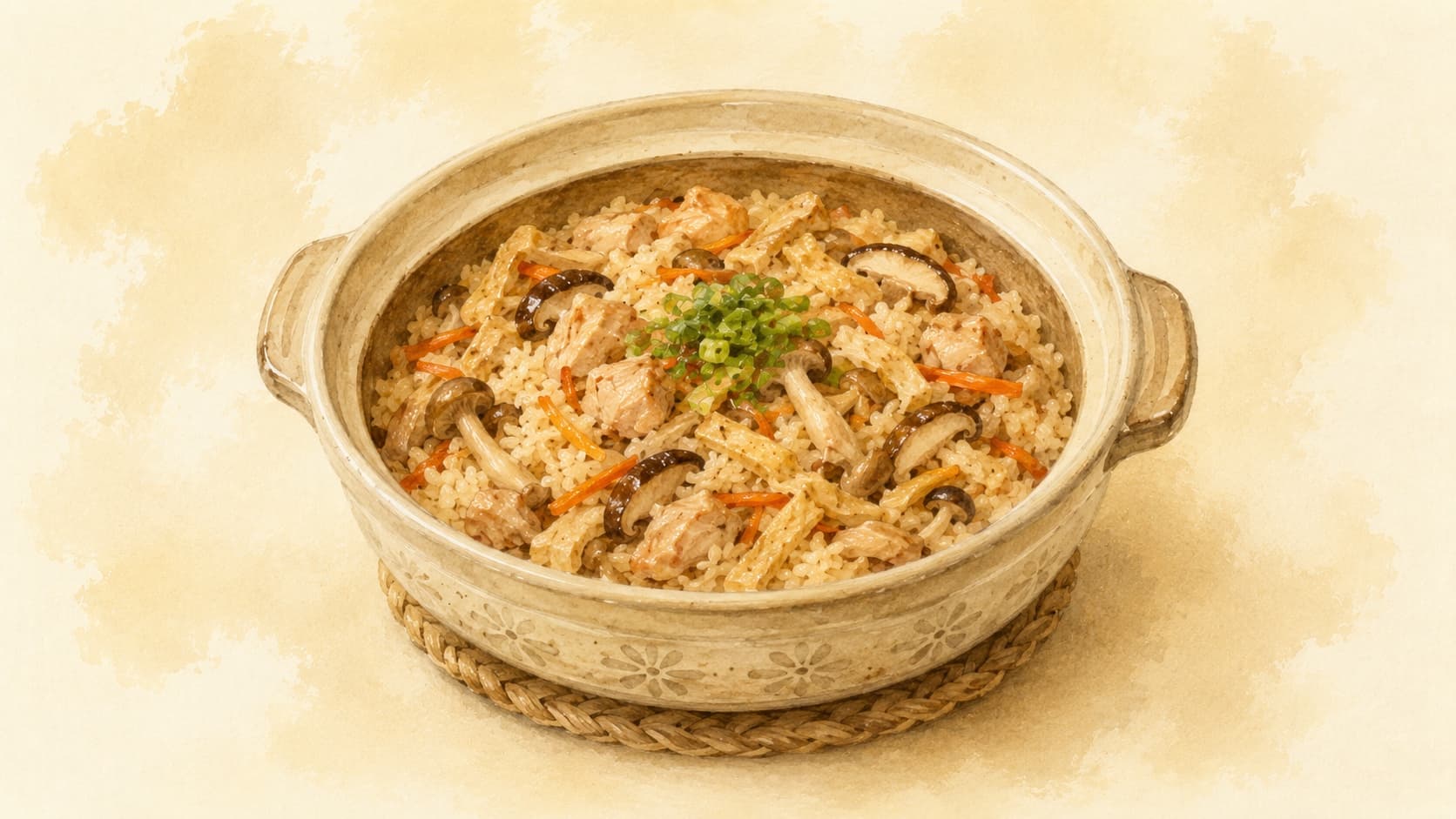
Ingredients
- 2 cups Japanese short-grain rice
- 2 1/2 cups dashi stock
- 1/2 cup carrots, julienned
- 1/2 cup shiitake mushrooms, sliced
- 1/2 cup chicken or tofu, cubed
- 1/4 cup soy sauce
- 1 tablespoon sake
- 1 tablespoon mirin
- 1/2 cup green onions, chopped
Steps
Rinse the rice under cold water until the water runs clear.
Combine rice, dashi stock, soy sauce, sake, and mirin in a rice cooker.
Layer carrots, shiitake mushrooms, and chicken or tofu on top.
Cook according to rice cooker instructions.
Once cooked, let it sit for 10 minutes before fluffing with a fork.
Garnish with chopped green onions before serving.
Tools you'll want
Why this works
The absorption method creates a harmonious flavor. Japanese short-grain rice releases starch, yielding a sticky texture. Dashi stock infuses umami flavors, while soy sauce and mirin add depth. Layering ingredients allows for even cooking, ensuring every bite is flavorful.
Cooking at medium heat maintains a gentle simmer, preventing burnt rice at the bottom. The resting period allows excess moisture to evaporate, resulting in fluffy grains. The balance of liquid to rice is crucial; too much liquid results in mushy rice, while too little leads to dryness.
Common mistakes
Not rinsing the rice.
Target: Rinse short-grain rice until water runs clear (3–4 changes).
Why it matters: Surface starch on unwashed rice produces gluey, clumpy takikomi gohan. Rinsing removes excess starch, allowing grains to remain distinct.
What to do: Rinse vigorously, drain, repeat 3–4 times until water runs nearly clear.
Workarounds:
- Pre-washed Japanese rice (sold in bags labeled "musenmai") skips the rinsing step.
Stirring during cooking.
Target: Layer rice + dashi + ingredients in the cooker, but DO NOT mix before cooking. Press cook button as is.
Why it matters: Stirring before cooking releases the rice's starch into the dashi, producing a sticky, gluey result. The Japanese rice cooker depends on undisturbed layers for proper cooking.
What to do: Add rice → add dashi/seasoning liquid → top with ingredients (chicken, mushroom, etc.) → cook without stirring.
Workarounds:
- If you accidentally stirred, expect a slightly stickier result — still edible.
Wrong dashi-to-rice ratio.
Target: Same volume of liquid as you'd use for plain rice cooking (1:1 ratio with rinsed rice). The seasoning is in the liquid, not added on top.
Why it matters: Adding extra liquid (because of "additional ingredients") produces mushy rice. The rice still needs exactly its usual water volume.
What to do: Measure the dashi + soy + sake + mirin combined to equal the standard rice cooking liquid volume.
Workarounds:
- For wetter ingredients (like fresh mushrooms), reduce liquid by 1 tbsp to compensate.
Adding raw seasoning to the rice cooker.
Target: Mix soy + sake + mirin + dashi in a measuring cup first, THEN add to rice cooker.
Why it matters: Adding seasoning separately means uneven flavor — some grains get over-seasoned, others bland. Pre-mixed seasoning distributes uniformly.
What to do: Mix all liquid seasonings + dashi (the kelp-and-bonito base stock that gives much Japanese cooking its savoury backbone) together. Add to rice as a single pour.
Workarounds:
- For deeper umami (Japanese for the savoury "fifth taste" you get from glutamates in kelp, mushrooms, fermented soy), use kombu-shiitake dashi (vegetarian) — adds dimension.
Skipping the rest after cooking.
Target: Rest the rice cooker on "warm" for 10 minutes after cooking completes, before fluffing.
Why it matters: Rice needs to settle and absorb residual moisture. Fluffing immediately disturbs grains that are still releasing steam.
What to do: When cooker beeps, wait 10 minutes. Then open and fluff gently with a rice paddle.
Workarounds:
- For deeper flavor, let rest 15 minutes — flavors meld further.
What to look for
- Fluffy rice with a glossy sheen.
- Evenly distributed ingredients throughout the rice.
- A fragrant aroma of dashi and soy sauce.
- Bright colors from the vegetables.
- Slightly caramelized edges on the rice.
Chef's view
Takikomi Gohan (literally "rice cooked with things in it", the Japanese family of seasoned mixed-rice dishes) reflects the essence of Japanese home cooking. It showcases seasonal ingredients and the importance of umami. This dish is often enjoyed during family gatherings, emphasizing togetherness and comfort.
The layering technique is a hallmark of Japanese culinary philosophy, allowing each ingredient to contribute to the final flavor. It embodies a balance of taste, texture, and visual appeal, making it a staple in many households.
<!-- beginner-glossed v1 -->Get the essays in your inbox — free
Weekly notes on flavor, fermentation, and food history — the writing behind the Atlas of Flavor. No spam; unsubscribe anytime.