
Tabbouleh
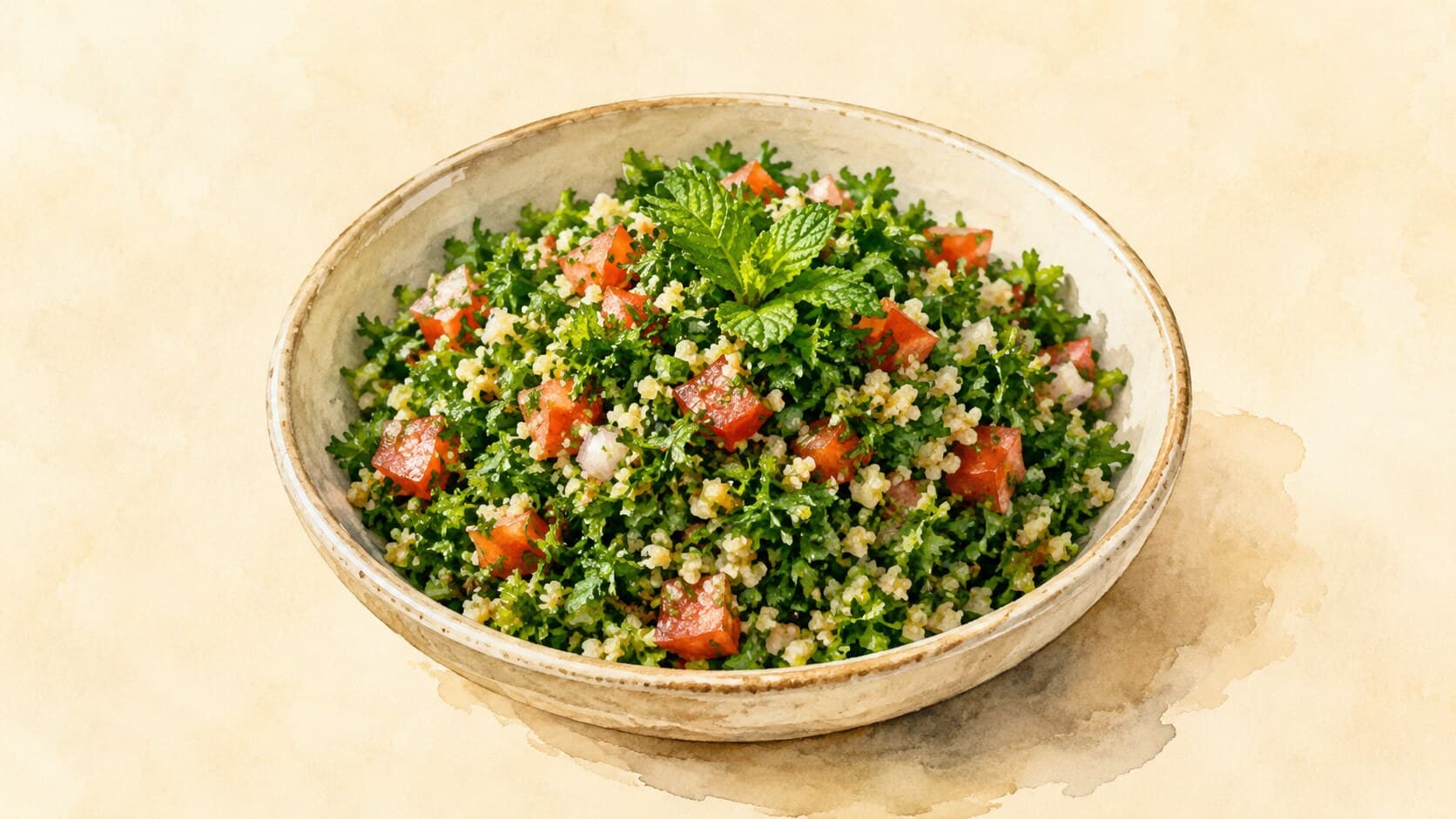
Tabbouleh is a Middle Eastern salad made with finely chopped herbs, soaked bulgur wheat, tomatoes, and a lemon-olive oil dressing.
Contents (5 sections)▾
Ingredients
- 1 cup bulgur wheat
- 2 cups boiling water
- 1 cup fresh parsley, finely chopped
- 1/2 cup fresh mint, finely chopped
- 1 cup tomatoes, diced
- 1/2 cup cucumber, diced
- 1/4 cup red onion, finely chopped
- 1/4 cup olive oil
- 2 lemons, juiced
- Salt, to taste
- Pepper, to taste
Steps
Rinse the bulgur wheat under cold water.
Place bulgur in a bowl and pour boiling water over it; let it soak for 15 minutes.
Drain excess water, fluff bulgur with a fork, and let cool.
In a large bowl, combine the parsley, mint, tomatoes, cucumber, and onion.
Add the cooled bulgur, olive oil, lemon juice, salt, and pepper; mix well.
Chill in the refrigerator for at least 30 minutes before serving.
Tools you'll want
Why this works
Tabbouleh relies on the balance of flavors and textures. The bulgur wheat absorbs moisture, creating a chewy base. Fresh herbs add brightness and complexity. The ratio of bulgur to herbs should be approximately 1:3 for optimal flavor. Soaking the bulgur in boiling water softens it without cooking, preserving the nutty taste.
Acidic lemon juice enhances the freshness. It also helps to break down the vegetables slightly, marrying the flavors. Use high-quality olive oil to add richness. Proper seasoning with salt and pepper amplifies all the ingredients.
Chilling the salad allows flavors to meld. Aim for at least 30 minutes in the fridge. This resting period develops depth while keeping the ingredients crisp.
Common mistakes
Too much bulgur.
Target: Tabbouleh is a PARSLEY salad with bulgur (cracked wheat that's been parboiled and dried, the staple grain of the Levant), not the reverse. Ratio: 4 parts parsley : 1 part bulgur by volume.
Why it matters: American/Lebanese-American tabbouleh often inverts the ratio (more bulgur, less parsley), producing a grain salad. Authentic Levantine (from the eastern Mediterranean: Lebanon, Syria, Palestine, Jordan) tabbouleh is overwhelmingly green — parsley is the headliner.
What to do: Buy multiple bunches of flat-leaf parsley. Use small amount of fine-grain bulgur (#1 size).
Workarounds:
- For gluten-free, use quinoa (soaked and drained) instead of bulgur — different but valid.
Wrong parsley.
Target: Flat-leaf (Italian) parsley, finely chopped by hand. NOT curly parsley.
Why it matters: Curly parsley is decorative — has a slightly bitter, rough texture. Flat-leaf parsley is robust, slightly peppery, and tender. The textural and flavor difference is significant when parsley is the main ingredient.
What to do: Source flat-leaf parsley. Wash, dry thoroughly, finely chop.
Workarounds:
- No flat-leaf? Curly works in a pinch but expect a slightly tougher result.
Wet parsley.
Target: Parsley washed and dried THOROUGHLY before chopping (salad spinner + paper towel pat).
Why it matters: Wet parsley dilutes the dressing and produces a watery salad. Tabbouleh's structure depends on parsley being dry enough to absorb the olive oil and lemon properly.
What to do: Wash → spin dry → pat with paper towels → THEN chop.
Workarounds:
- For even drier parsley, lay on a kitchen towel for 10 minutes after spinning.
Skipping the salt cure for tomatoes.
Target: Diced tomatoes salted for 10 minutes, drained of excess liquid.
Why it matters: Tomato juice waters down the salad. Pre-salting and draining concentrates flavor and prevents tabbouleh from becoming soupy.
What to do: Dice tomatoes small, toss with 1/4 tsp salt, rest 10 minutes, drain.
Workarounds:
- For deeper tomato flavor, save the drained juice and add to the dressing.
Dressing on the wrong proportion.
Target: 1/2 cup lemon juice + 1/2 cup olive oil + plenty of salt, for a large bowl of tabbouleh.
Why it matters: Tabbouleh is meant to be assertively dressed — the parsley needs the acid and oil to come alive. Skimping produces a flat salad.
What to do: Combine lemon + olive oil + salt + minced garlic. Pour over the assembled tabbouleh. Mix and rest 15 minutes before serving.
Workarounds:
- For depth, add 1 tsp of pomegranate molasses (a thick, tart syrup made by reducing pomegranate juice — a staple sour-sweet ingredient in Levantine kitchens) to the dressing.
What to look for
- Bright green color from fresh parsley and mint.
- Diced tomatoes should be vibrant and firm.
- Bulgur should be fluffy, not mushy.
- A fragrant aroma from the herbs and lemon.
- A well-mixed consistency without clumps.
Chef's view
Tabbouleh has deep roots in Middle Eastern cuisine, often served as a side dish. Its origins trace back to Lebanon and Syria, where it reflects the region's agricultural abundance. The use of fresh herbs showcases the importance of seasonality in cooking.
Traditionally, tabbouleh is more than just a salad; it's a communal dish. It invites sharing and conversation, embodying the hospitality of Middle Eastern culture. The method emphasizes freshness and simplicity, allowing the ingredients to shine without excessive preparation.
<!-- beginner-glossed v1 -->Get the essays in your inbox — free
Weekly notes on flavor, fermentation, and food history — the writing behind the Atlas of Flavor. No spam; unsubscribe anytime.