
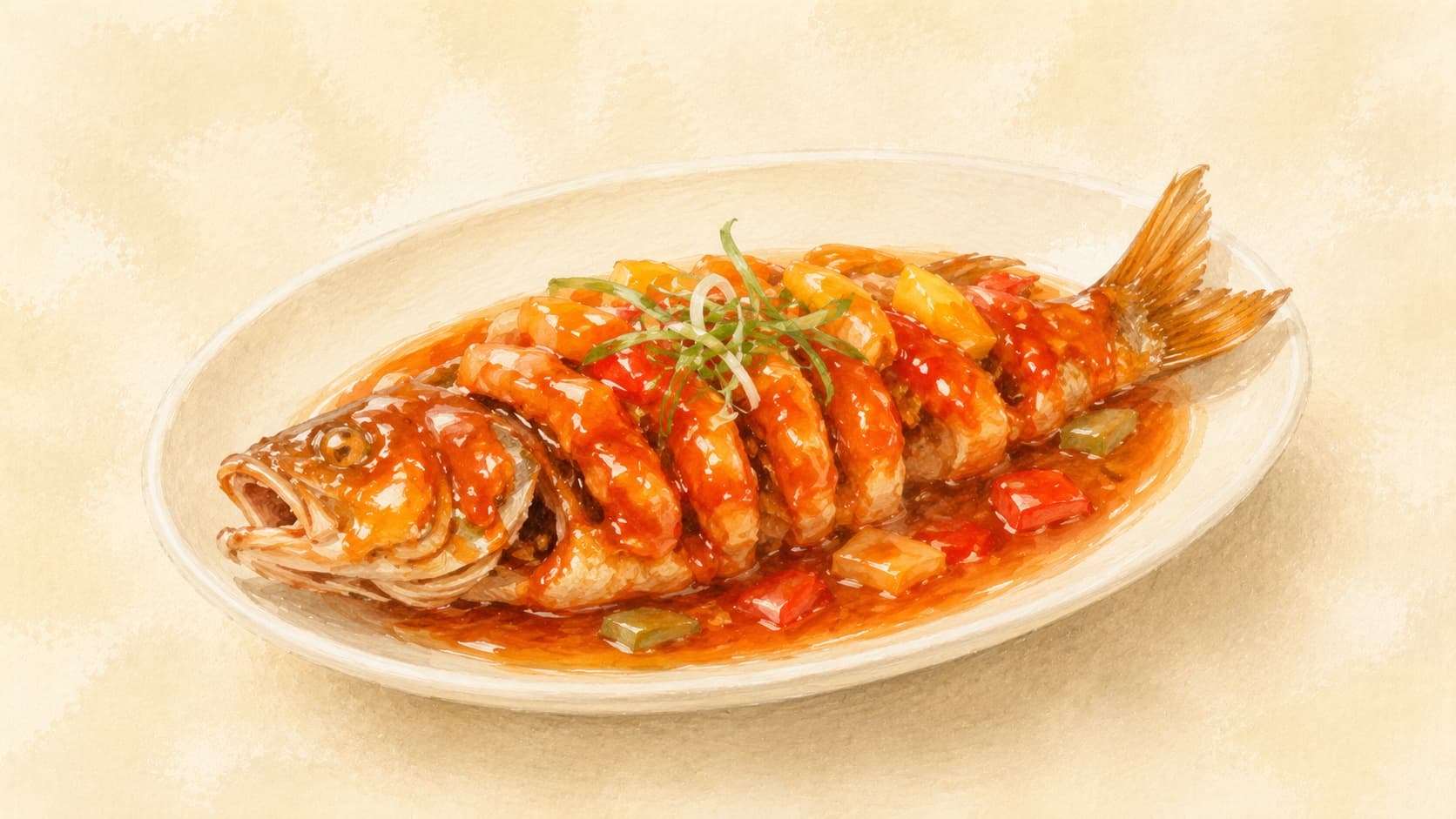
Sweet and Sour Fish
This dish combines contrasting flavors and textures to enhance the fish's natural taste.
Contents (5 sections)▾
Ingredients
- 4 fillets of white fish (e.g., cod or tilapia)
- 1/4 cup cornstarch
- 1/4 cup vegetable oil
- 1 bell pepper, diced
- 1 onion, sliced
- 1/2 cup pineapple chunks
- 1/4 cup rice vinegar
- 1/4 cup ketchup
- 1/4 cup sugar
- 1 tablespoon soy sauce
- Salt and pepper to taste
Steps
Pat fish fillets dry and season with salt and pepper.
Coat the fillets in cornstarch, shaking off excess.
Heat vegetable oil in a skillet over medium-high heat.
Fry the fish fillets until golden and crispy, about 3-4 minutes per side.
Remove fish and sauté onion, bell pepper, and pineapple until soft.
Combine vinegar, ketchup, sugar, and soy sauce; add to skillet and simmer.
Return fish to the skillet, coating it in sauce; serve hot.
Tools you'll want
- · Digital kitchen scale (gram precision)
Why this works
Sweet and sour fish relies on a balance of flavors and textures. The sweetness comes from sugar and sometimes pineapple, while vinegar provides the sourness. These elements enhance the natural umami of the fish, often a firm white variety like cod or tilapia. The batter, typically a mix of flour and cornstarch in a 1:1 ratio, ensures crispness. Frying at 185°C creates a golden crust that contrasts with the tender fish inside. The sauce, heated to 85°C to meld flavors without scorching, coats the fish evenly. This temperature maintains the sauce's viscosity, allowing it to cling without overpowering.
Common mistakes
Inconsistent oil temperature.
Target: 180°C sustained throughout frying. Use a thermometer.
Why it matters: Below 180°C, the cornstarch coating absorbs oil and becomes soggy rather than crisp. Above 200°C, the exterior browns before the fish cooks through. The crisp-tender contrast that defines the dish lives in this narrow temperature window.
What to do: Thermometer in the oil. Adjust heat between batches. Wait for temperature to return before adding next fillet.
Workarounds:
- No thermometer → wooden chopstick test (a classic kitchen trick: insert a dry wooden chopstick into hot oil and watch the bubbling pattern): bubbles should form steadily around the chopstick when dipped.
Overcrowding the pan.
Target: 2-3 fillets max per batch in a 30 cm pan. Single layer with space between pieces.
Why it matters: Crowded oil drops the temperature dramatically (cold fish + lots of moisture = thermal sink). Fillets stick together and steam rather than fry. Crust never forms properly.
What to do: Work in batches. Drain and reserve cooked fillets while frying remaining batches.
Workarounds:
- Need to fry many at once? Use a deeper pot with more oil — better heat retention.
Wrong vinegar-to-sugar ratio.
Target: 1:2 vinegar to sugar by volume for balanced sweet-sour. Adjust to taste, but stay close.
Why it matters: Too much vinegar = harsh sour that dominates the fish. Too little = candy-sweet sauce that masks everything. The classical balance is a sweet base with vinegar lifting it, not the reverse.
What to do: Mix sauce in measuring cup: 4 tbsp vinegar + 8 tbsp sugar + soy sauce + water + ketchup. Taste after combining.
Workarounds:
- Want sharper sauce → push to 1:1.5 ratio, taste-test before committing.
Under-reduced sauce.
Target: Sauce reduced until it coats the back of a spoon — glossy, slightly thick, not watery.
Why it matters: Watery sauce slides off the crispy fish, defeating the entire purpose of the cornstarch coating. The glaze must cling to deliver flavor in each bite.
What to do: Simmer sauce 2-3 minutes after combining to reduce. Add cornstarch slurry, a smooth premix of cornstarch and cold water used to thicken sauces without lumping, (1 tsp cornstarch + 2 tsp water) for extra body if needed.
Workarounds:
- Sauce reduced too far → add 1-2 tbsp warm water to thin and rebalance.
Sauce applied too early.
Target: Combine fish + sauce just before serving — within 30 seconds of plating.
Why it matters: Sauce on hot fried fish soaks into the crust within minutes — the crisp shell goes from crackling to soggy. The window is short between glazed and ruined.
What to do: Toss in pan briefly (10-15 sec) to coat, transfer to plate immediately. Or serve sauce on the side for maximum crisp retention.
Workarounds:
- Make-ahead → keep fish and sauce separate; reheat fish briefly in oven, combine at the last moment.
Overcooking the fish.
Target: 3-4 minutes per side depending on thickness (1.5 cm fillet), until the flesh flakes easily and reaches an internal temperature of 63 °C / 145 °F — flaking is the texture cue, 63 °C is the safe cooked endpoint.
Why it matters: Fish overcooks fast. Past 4 minutes per side, white fish becomes dry, tough, and chalky — the sauce can't recover that texture.
What to do: Test with fork around 3 minutes — easy flaking means start checking, not done. Confirm 63 °C / 145 °F at the thickest point with a thermometer before pulling the fish; the 3-4 minutes is only an estimate, and residual heat won't safely bridge an under-temp fillet. Rest after to let the texture settle.
Workarounds:
- Thick fillets (2+ cm) → reduce heat to 170°C and fry slightly longer; thermal lag is the issue, not time.
What to look for
Select fish with firm, opaque flesh and a neutral aroma, indicating freshness. Check the batter for smooth consistency, without lumps. When frying, observe the oil's surface: it should bubble vigorously around the fish without splattering. Post-frying, the fish should exhibit a uniform golden-brown color. The sauce should possess a sheen and cling to the spoon before pouring over the fish. Taste the sauce for a harmonious sweet and tangy profile. Adjust seasoning if necessary; a pinch of salt can enhance flavors without altering the overall balance.
Chef's view
Professional chefs emphasize mise en place—having all components ready before commencing cooking. This allows for precise timing, crucial for textural contrasts. Chefs often opt for seasonal, high-quality fish to ensure optimal taste and texture. They might experiment with additional aromatics, such as ginger or garlic, to add depth to the sauce. In plating, chefs focus on visual appeal, arranging fish pieces to highlight the sauce's glossy finish. They might garnish with thinly sliced scallions or bell peppers for color and crunch, ensuring each element complements the sweet and sour theme without overpowering the central fish component.
<!-- beginner-glossed v1 -->Get the essays in your inbox — free
Weekly notes on flavor, fermentation, and food history — the writing behind the Atlas of Flavor. No spam; unsubscribe anytime.