
Sukiyaki
Sukiyaki combines thinly sliced beef and vegetables in a sweet-savory broth, creating a balanced umami experience.
Contents (5 sections)▾
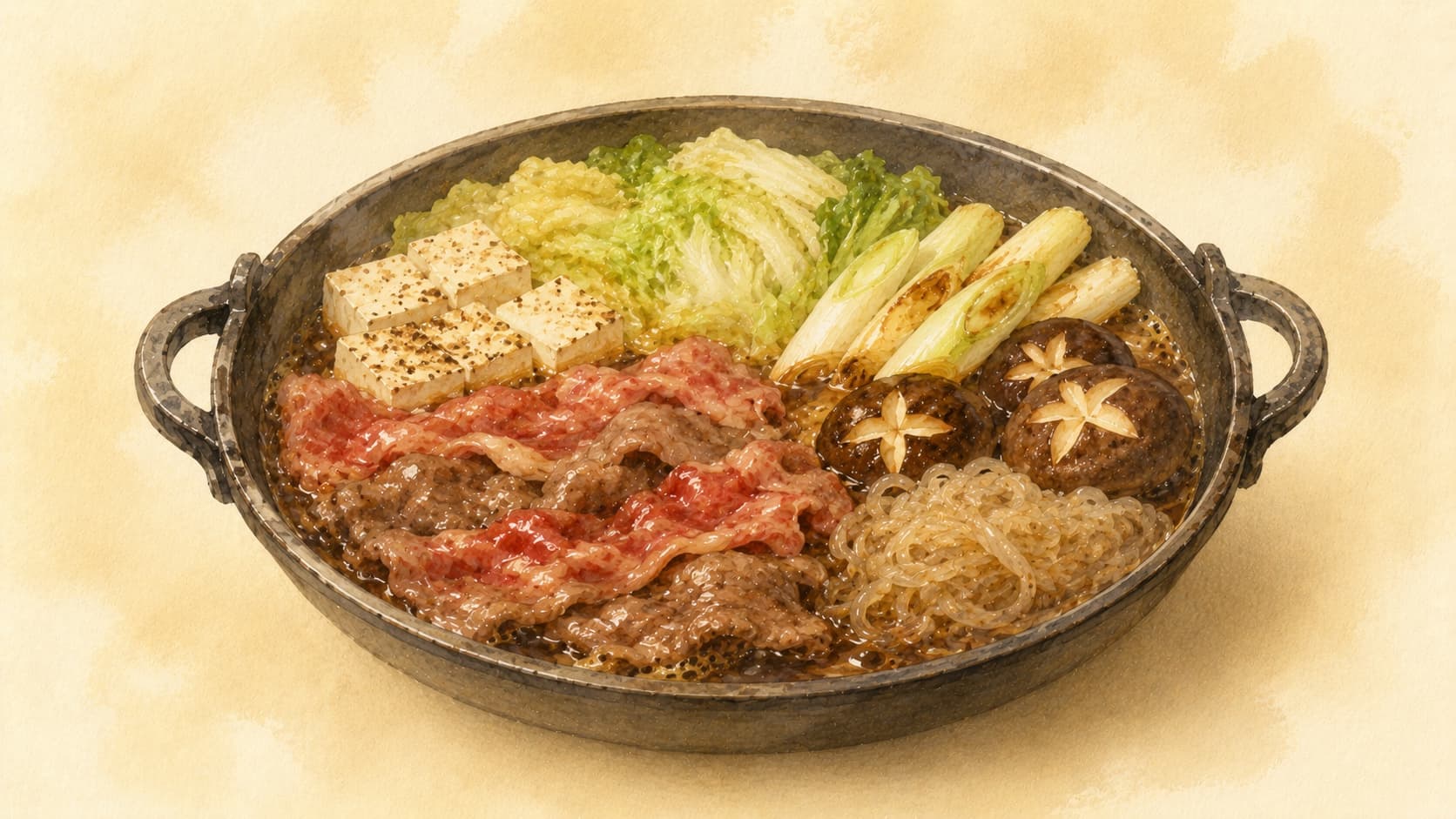
Ingredients
- 300g thinly sliced beef
- 200g shiitake mushrooms, sliced
- 150g tofu, cubed
- 100g green onions, cut into 2-inch pieces
- 150g napa cabbage, chopped
- 100ml soy sauce
- 50ml mirin
- 50ml sake
Steps
Heat a wide heavy skillet over medium heat.
Add the beef slices and cook until browned.
Pour in soy sauce, mirin, and sake; bring to a simmer.
Add vegetables and tofu; cover and cook for 5-7 minutes.
Serve hot, allowing diners to cook further if desired.
Tools you'll want
Why this works
Sukiyaki relies on the balance of flavors and textures. The thinly sliced beef cooks quickly, absorbing the flavors of the broth. Soy sauce provides umami, while mirin and sake add sweetness. The broth's temperature, around 80-90°C, ensures the ingredients cook evenly without becoming mushy.
The layering of ingredients allows for gradual flavor infusion. As vegetables release moisture, they enrich the broth. This creates a harmonious taste profile that highlights each component. The choice of ingredients affects texture—crisp vegetables contrast with tender beef and silky tofu.
The method of simmering allows for control over doneness. Diners can customize their experience by cooking ingredients to their liking. This interactive element enhances the meal's enjoyment and fosters communal dining.
Common mistakes
Using thick beef slices.
Target: Beef sliced paper-thin (1.5–2 mm) — get the butcher to slice it on a deli slicer, OR partially freeze the meat and slice it yourself.
Why it matters: Sukiyaki beef cooks in seconds in the warishita (sauce). Thick slices need longer cooking, which toughens them and overcooks the surrounding vegetables. Paper-thin slices cook in 10 seconds and stay tender.
What to do: Ask for "sukiyaki-cut" beef at a Japanese butcher. Or: freeze a ribeye/sirloin for 45 minutes (firm but not solid), slice across the grain with a very sharp knife.
Workarounds:
- For Kansai-style sukiyaki, the beef is seared first in pure sugar+soy (no liquid yet) for a more intense Maillard flavor.
- No deli slicer? Use shabu-shabu pre-sliced beef from a Japanese supermarket — same cut, perfect for sukiyaki.
Wrong beef cut.
Target: Well-marbled ribeye, sirloin, or chuck — at least 20 % fat (look for visible white veins).
Why it matters: The fat is what makes sukiyaki rich. The hot warishita melts the fat, which then coats the rice (the dipping egg also helps). Lean beef produces "boiled beef in soy sauce" — palatable but not sukiyaki.
What to do: Look for grade A4–A5 Japanese beef, or USDA Prime ribeye. Marbling matters more than cut.
Workarounds:
- Budget cuts → choose a fattier ribeye than usual. The dish forgives a less premium grade if there's enough fat.
Wrong warishita balance.
Target: Kanto-style warishita: dashi 100ml + soy sauce 100ml + mirin 100ml + sake 50ml + sugar 1 tbsp. Brought to a brief boil before use.
Why it matters: Sukiyaki's signature sweet-savory balance comes from the warishita. The 1:1:1 ratio of dashi/soy/mirin is the Kanto template; Kansai builds it in the pan with no pre-mix.
What to do: Mix warishita ahead, refrigerate. Bring to a brief boil to evaporate alcohol before pouring into the sukiyaki pan.
Workarounds:
- No mirin? Use 2 tbsp sake + 1 tbsp sugar to approximate (mirin is essentially sweetened sake).
- For a deeper sauce, swap dashi for kombu-shiitake dashi (vegetarian umami boost).
Skipping the raw egg dip.
Target: Each diner gets a small bowl with a beaten pasteurized egg (yolk or whole) for dipping cooked sukiyaki ingredients — the dip is raw, so use a treatment-confirmed / pasteurized egg (see below).
Why it matters: The egg is structural — it cools the just-cooked beef so you can eat immediately, coats it with rich creamy texture, and tames the saltiness of the warishita. Sukiyaki without the egg dip is recognizably incomplete to anyone Japanese.
What to do: Crack one egg per bowl, mix gently. Dip cooked beef and vegetables briefly before eating.
Workarounds:
- Raw egg safety → the beaten-egg dip is raw and uncooked, so use an egg pasteurized in the shell (treated through to the contents) or a pasteurized egg product; using only the yolk does not make a raw shell egg safe, and freshness is not a Salmonella control. Pregnant people, infants and young children, older adults, and anyone immunocompromised should use pasteurized egg or skip the raw dip.
- Vegan version → silken tofu blended smooth with mirin approximates the rich coating.
Cooking everything at once.
Target: Cook in rounds — beef first, then add vegetables for a round, eat that, add more beef, etc.
Why it matters: Sukiyaki is a "social cooking" dish — meant to be eaten as it's cooked, not all at once. Cooking everything together overcooks the beef while the vegetables are still hard.
What to do: Establish a rhythm: 2–3 beef slices in the warishita → 30 seconds → remove and dip in egg → eat. Repeat with vegetables added as needed.
Workarounds:
- For dinner parties without a tabletop burner, do "courses" — cook beef on the stove, bring out, then start vegetables.
Vegetables added in the wrong order.
Target: Add by cooking time: shirataki noodles (translucent, low-calorie noodles made from konjac yam — sold in water-packed bags in Asian markets) + tofu first (need to absorb flavor), then mushrooms, then napa cabbage, then enoki and shungiku (a slightly bitter Japanese chrysanthemum green that wilts in seconds) last.
Why it matters: Vegetables have very different cook times. Adding everything at once means shungiku turns to slime while the cabbage is still raw.
What to do: Have all ingredients prepped on a platter, add in order as the pan progresses.
Workarounds:
- Pre-blanch tougher vegetables (cabbage stems, mushrooms) for 1 minute in salted water — speeds up sukiyaki cooking time.
What to look for
- Beef should appear browned but not dry.
- Vegetables should remain vibrant and slightly crisp.
- Broth should be glossy, indicating proper seasoning.
- Steam rising from the pot suggests optimal cooking temperature.
Chef's view
Sukiyaki (a Japanese tabletop hot pot of paper-thin beef and vegetables simmered in a sweet-savory soy-mirin-sugar broth, with each bite traditionally dipped in raw beaten egg) is a cultural staple, often enjoyed during special occasions in Japan. Its communal cooking style fosters togetherness, as diners interact while preparing their food. The dish’s history traces back to the Edo period, showcasing the evolution of Japanese cuisine.
The technique emphasizes simplicity and quality. Focusing on high-quality ingredients allows for a satisfying meal that feels both indulgent and comforting. Sukiyaki embodies the spirit of Japanese hospitality, inviting diners to engage with their food and each other.
<!-- beginner-glossed v1 -->Get the essays in your inbox — free
Weekly notes on flavor, fermentation, and food history — the writing behind the Atlas of Flavor. No spam; unsubscribe anytime.