
Spanakopita
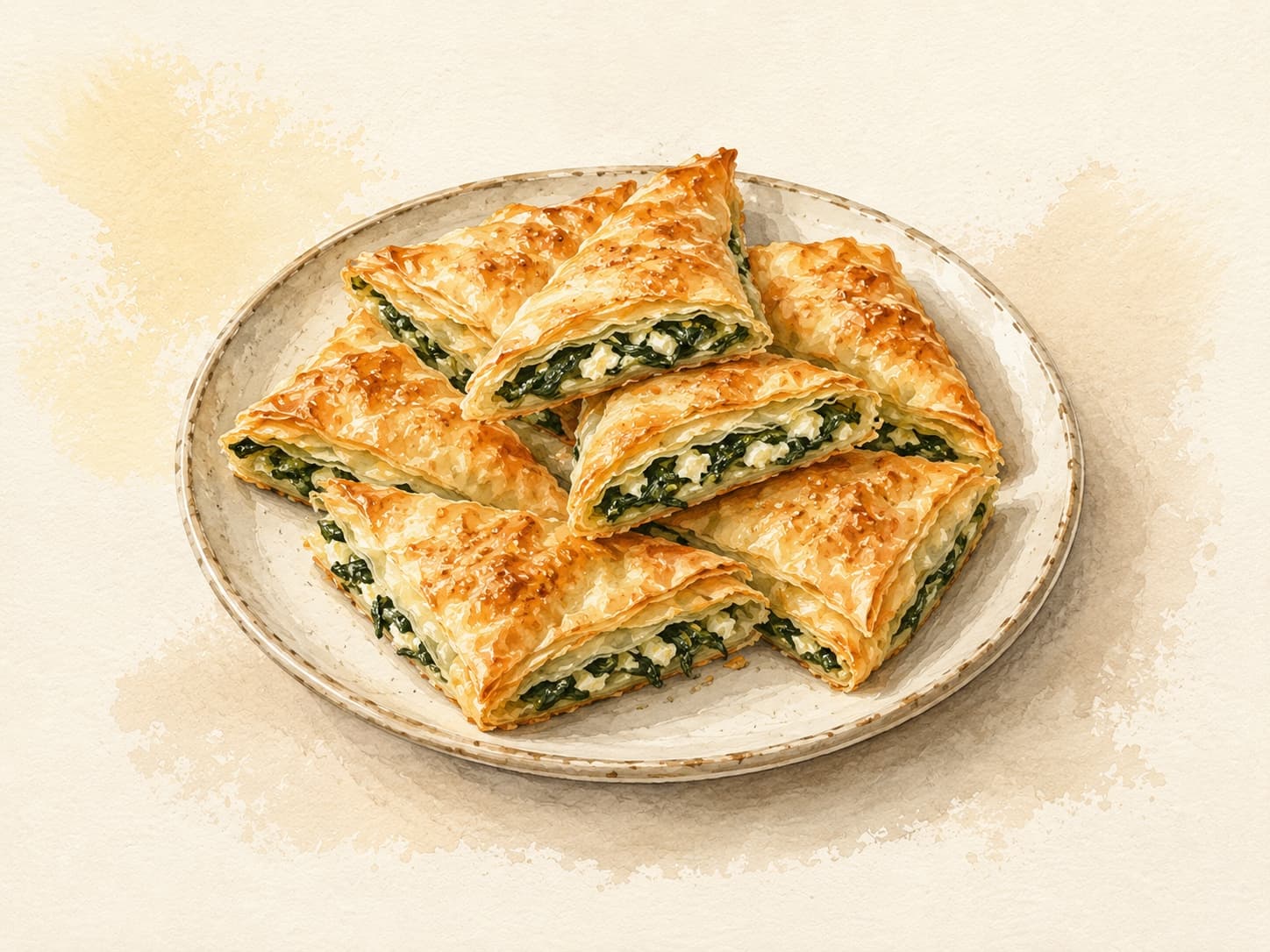
This dish combines flaky layers of phyllo pastry with a savory spinach and feta filling, showcasing the balance of textures and flavors.
Contents (5 sections)▾
Ingredients
- 1 lb fresh spinach, washed and chopped
- 8 oz feta cheese, crumbled
- 1 medium onion, finely chopped
- 2 cloves garlic, minced
- 2 large eggs, beaten
- 1/2 tsp nutmeg
- 1/2 cup fresh parsley, chopped
- 1 package phyllo dough (16 oz), thawed
- 1/2 cup unsalted butter, melted
- Salt and pepper to taste
Steps
Preheat the oven to 375°F (190°C).
In a skillet, sauté onion and garlic until translucent.
Add chopped spinach and cook until wilted; season with salt, pepper, and nutmeg.
In a bowl, combine spinach mixture with feta, parsley, and beaten eggs.
Layer phyllo sheets in a greased baking dish, brushing each with melted butter.
Spread filling over phyllo and fold over edges; bake until golden brown, about 20 minutes.
Tools you'll want
Why this works
Spanakopita achieves its signature flaky texture through the use of phyllo pastry, which consists of thin layers that create a crisp outer shell when baked. The filling, predominantly made of spinach and feta, balances moisture with richness, while eggs help bind the mixture. Cooking the spinach beforehand reduces excess moisture, preventing a soggy filling.
Temperature control is crucial. Baking at 375°F (190°C) ensures even cooking of the phyllo, allowing it to brown without burning. The butter used for brushing the layers enhances flavor and aids in achieving the golden color. The nutmeg adds a subtle warmth, complementing the spinach and feta.
The layering technique is also essential. Each phyllo sheet must be brushed with butter to create separation, allowing steam to escape during baking. This results in the desired texture: crispy on the outside, tender on the inside.
Common mistakes
Wet spinach filling.
Target: Wilt spinach, then SQUEEZE OUT every drop of water (a cheesecloth or strong handful press).
Why it matters: Spinach is 90 % water. Without aggressive draining, that water leaks into the phyllo during baking, producing soggy, gluey pastry. The single most common spanakopita failure.
What to do: After wilting, transfer to a colander. Press with the back of a spoon, then use cheesecloth to squeeze hard. Should yield a tight ball of spinach.
Workarounds:
- For frozen spinach (often used), thaw completely and squeeze even harder — frozen has more water than fresh.
Dry phyllo dough.
Target: Keep phyllo sheets covered with a damp tea towel while you work. They dry within 60 seconds of exposure.
Why it matters: Phyllo (also called filo — paper-thin Mediterranean pastry sheets, sold rolled and frozen) turns brittle and shatters when dry. You can't assemble with broken phyllo — must use whole sheets.
What to do: Have damp towel over the working stack. Pull one sheet at a time.
Workarounds:
- For broken phyllo, use as the bottom layer (visible only on the underside).
Skimping on butter.
Target: Brush EVERY phyllo layer with melted butter. About 1 tbsp per layer.
Why it matters: Phyllo's crispiness comes from layers separated by fat. Skipping butter brushing produces dense, doughy pastry instead of flaky shatter.
What to do: Have plenty of melted butter and a pastry brush. Don't be stingy — brush generously.
Workarounds:
- For lighter version, use olive oil (less rich, but acceptable — Greek tradition is butter though).
- For maximum flake, use ghee instead of butter — milk solids burn less.
Wrong cheese.
Target: Greek feta (the real thing, made from sheep + goat milk — a salty, crumbly white brined cheese) — crumbled into the spinach.
Why it matters: Cow's milk "feta" (often Bulgarian or American) is milder and creamier — produces a less assertive spanakopita. Greek feta has the sharpness and saltiness that distinguishes the dish.
What to do: Look for "PDO Feta" or "Greek Feta" on the label. Crumble fresh.
Workarounds:
- No Greek feta? Bulgarian feta is the next best. Cow's milk feta is third.
- For more dimension, add a small amount of myzithra or kefalotyri (firmer, sharper Greek aged cheeses often grated like Parmesan) to the cheese mix.
Cutting before cooling.
Target: Rest 15 minutes after baking before cutting.
Why it matters: Hot spanakopita has molten cheese and steam-trapped layers. Cutting immediately produces collapsed, runny squares. Rest sets the structure.
What to do: Pull from oven, let sit on the counter 15 minutes, then cut into squares with a sharp knife.
Workarounds:
- For dinner parties, bake 1 hour ahead — improves with brief resting at room temperature.
What to look for
- Golden brown top with a crisp texture.
- Even browning across the surface.
- Filling should be visible but not overflowing.
- A slight shimmer from the melted butter on the crust.
- A fragrant aroma of baked pastry and herbs.
Chef's view
Spanakopita (a Greek savoury pie of spinach and feta wrapped in flaky phyllo) is more than just a dish; it represents Greek culinary tradition. Its origins trace back to ancient times, reflecting the Mediterranean's emphasis on fresh greens and herbs. This pie can be found throughout Greece, often served as a snack or appetizer during gatherings.
Making spanakopita at home offers a connection to this rich history. The layering of phyllo is a technique that requires patience but rewards with a satisfying texture. Each bite combines the crunch of the pastry with the savory filling, making it a familiar dish for many.
<!-- beginner-glossed v1 -->Get the essays in your inbox — free
Weekly notes on flavor, fermentation, and food history — the writing behind the Atlas of Flavor. No spam; unsubscribe anytime.