
Shoyu Ramen
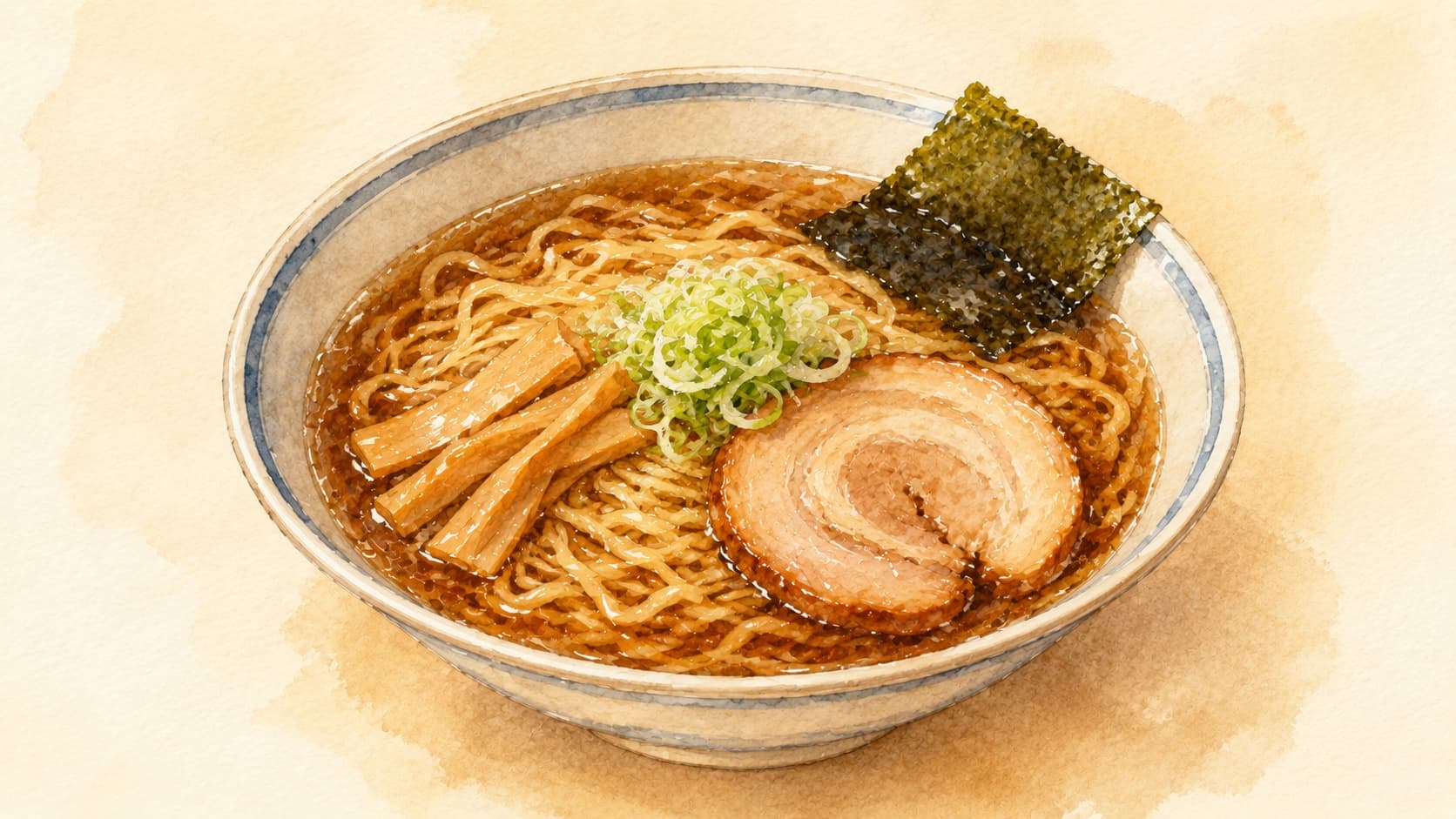
Shoyu Ramen consists of a soy sauce-based broth combined with cooked noodles, garnished with toppings like green onions and nori.
Contents (5 sections)▾
Ingredients
- 4 cups chicken broth
- 2 cups water
- 4 servings ramen noodles
- 1/4 cup soy sauce
- 2 tablespoons mirin
- 2 teaspoons sesame oil
- 2 green onions, sliced
- 1 cup sliced mushrooms
- 4 slices pork belly
- 1 soft-boiled egg, halved
Steps
In a pot, combine chicken broth and water, and bring to a simmer.
Add soy sauce, mirin, and sesame oil to the broth.
Cook ramen noodles according to package instructions, then drain.
In a separate pan, sauté mushrooms and pork belly until cooked.
Divide noodles into bowls, ladle broth over, and top with pork, mushrooms, green onions, and egg.
Tools you'll want
Why this works
The balance of chicken broth and soy sauce creates a deep umami flavor. Simmering extracts flavors from the broth while maintaining a light texture. The noodles absorb the broth, enhancing each bite. The toppings add complexity, with each ingredient complementing the base.
Egg-safety note: The soft-boiled egg has a set white and a soft, not-fully-set yolk — that texture is the point, but soft timing, the clock, and ladling hot broth over it are not a validated Salmonella kill. To keep the yolk soft, use a shell egg pasteurized in the shell, through to the contents; an ordinary egg that is only fresh, clean, washed, or graded is not pasteurized through the contents. For high-risk diners (pregnancy, immunocompromised, very young or old), use pasteurized eggs or boil the egg through to a fully-set yolk.
Common mistakes
Treating the tare and broth as one mixture.
Target: Build the tare (concentrated soy-based seasoning) SEPARATELY from the broth. Combine in the bowl, never in the pot.
Why it matters: Shoyu ramen's distinctive flavor lives in the tare — a complex blend of soy sauce, mirin, sake, kombu, and dried fish. Boiling the tare into the broth from the start oxidizes the soy aromatics and produces a flat, "soy-soup" result instead of layered ramen.
What to do: Make tare separately (mix ingredients, simmer briefly, strain). Add 1–2 tbsp per bowl, then pour hot broth over.
Workarounds:
- Quick tare: 3 tbsp soy + 1 tbsp mirin + 1 tsp sake + a piece of kombu, gently warmed for 5 minutes.
- For deeper tare, age it overnight in the fridge — flavors meld and round out.
Using only dark soy sauce.
Target: Blend of dark (koikuchi) + light (usukuchi) soy sauces, with optional addition of tamari for depth.
Why it matters: Pure koikuchi soy is heavy and dominates. Light soy contributes salinity without overwhelming color or aroma. The blend produces the clean amber broth that defines shoyu ramen.
What to do: 2 parts koikuchi + 1 part usukuchi + optional 1/2 part tamari for depth.
Workarounds:
- Only one soy available? Dilute with extra broth to lighten; add a touch of fish sauce for backbone.
- For aged complexity, use smoke-aged tamari (smoked soy sauce) for 25 % of the soy component.
Boiling the broth past clarity.
Target: Hold the broth at a bare simmer (88 °C); never let it boil hard.
Why it matters: Shoyu ramen's broth is supposed to be clear — that clarity is the dish's structural signature. Boiling emulsifies fat into the broth, turning it cloudy and giving it a "stewed" character rather than the clean savory profile of proper shoyu ramen.
What to do: Watch the surface — small bubbles rising occasionally, NOT rolling boil.
Workarounds:
- Already cloudy? Strain through cheesecloth lined with a coffee filter — partial clarification possible.
- For "white shoyu" variants, cloudiness is acceptable — even desirable in some regional styles.
Wrong noodle.
Target: Thin to medium straight alkaline noodles (Tokyo-style).
Why it matters: Shoyu ramen's clean broth pairs with thinner, more delicate noodles. Thick wavy noodles (Sapporo miso style) overwhelm the subtle broth and suck up too much liquid.
What to do: Fresh thin alkaline noodles from an Asian market. Cook just under package time — they finish in the hot bowl.
Workarounds:
- Dried thin ramen noodles work; cook 30 seconds shy of package time.
- Italian capellini boiled with 1 tsp baking soda per liter approximates thin alkaline noodles surprisingly well.
Skipping the aroma oil.
Target: 1 tsp chicken fat (schmaltz) or green-onion oil (negi-abura) per bowl.
Why it matters: A clean broth needs a layer of fat on top to carry aroma to the nose. Without it, the soup tastes "flat" even when the seasoning is correct.
What to do: Render schmaltz from chicken skin; or fry sliced green onions in neutral oil until golden, strain.
Workarounds:
- No schmaltz? 1 tsp toasted sesame oil approximates the function.
- For chashu-finished bowls, drizzle a tablespoon of the chashu cooking liquid (rendered pork fat + dashi) as the aroma oil.
Cold toppings in hot broth.
Target: Pre-warm chashu (braised pork belly slices, the classic ramen topping), ajitama (marinated egg) (a soft-marinated soy-sauce egg used as a ramen topping), and menma to room temperature minimum, ideally lightly warmed.
Why it matters: Cold toppings drop the broth temperature dramatically — and shoyu ramen depends on the broth being mouth-burning hot to fully express its aroma.
What to do: Slice toppings ahead, let them warm in a small steam tray over warm water, or briefly heat in a 100 °C oven.
Workarounds:
- Quick fix: place cold toppings in a small bowl, ladle hot broth over them for 30 seconds, drain, then assemble.
What to look for
- Steam rising from the bowl.
- Noodles should be firm yet tender.
- Broth should have a rich, dark color.
- Toppings should maintain their vibrant color.
- The egg yolk should be slightly runny.
Chef's view
Shoyu ramen (a soy-sauce-seasoned style of Japanese noodle soup) represents a harmonious blend of flavors and textures, embodying Japanese culinary philosophy. Its roots trace back to early 20th-century Japan, influenced by Chinese noodle dishes. The technique of simmering broth is essential; it allows flavors to meld while keeping the dish light and satisfying. Each bowl tells a story, inviting diners to explore the balance of savory and delicate notes.
<!-- beginner-glossed v1 -->Get the essays in your inbox — free
Weekly notes on flavor, fermentation, and food history — the writing behind the Atlas of Flavor. No spam; unsubscribe anytime.