
Shakshuka
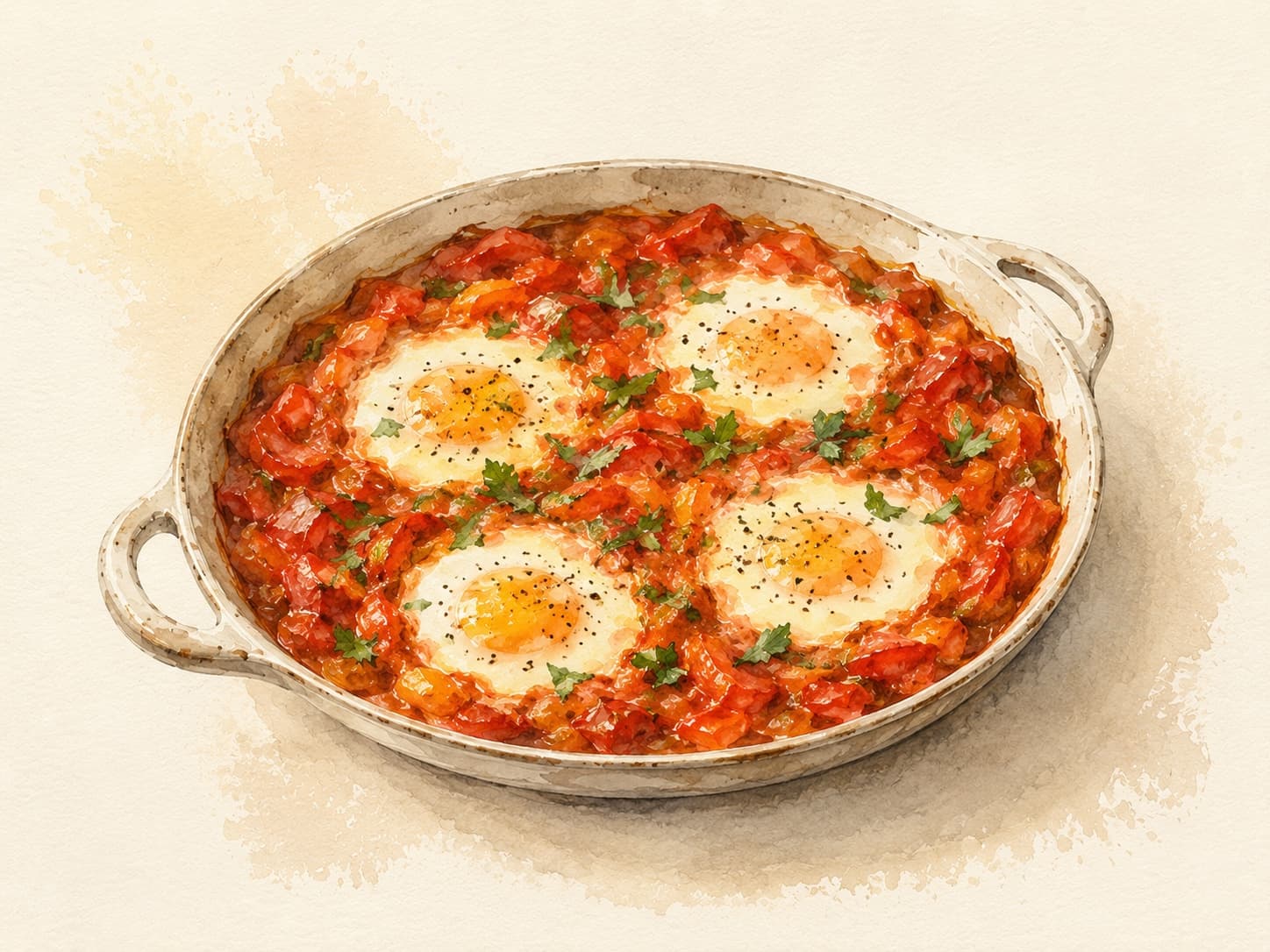
A one-pan dish featuring poached eggs in a spiced tomato sauce, embodying the balance of flavors.
Contents (5 sections)▾
Ingredients
- 2 tablespoons olive oil
- 1 onion, diced
- 1 red bell pepper, diced
- 3 cloves garlic, minced
- 1 teaspoon ground cumin
- 1 teaspoon paprika
- 1 can (28 oz) crushed tomatoes
- 4 large eggs
- Salt, to taste
- Black pepper, to taste
- Fresh parsley, chopped, for garnish
- Feta cheese, crumbled, for serving (optional)
Steps
Heat olive oil in a wide skillet over medium heat.
Add onion and bell pepper; sauté until softened.
Stir in garlic, cumin, and paprika; cook for 1 minute.
Pour in crushed tomatoes; season with salt and pepper, then simmer for 10 minutes.
Make small wells in the sauce; crack eggs into wells and cover.
Cook until egg whites are set; garnish with parsley and feta.
Tools you'll want
Why this works
The success of shakshuka lies in the layering of flavors. Sautéing the onion and bell pepper releases their natural sweetness, which balances the acidity of the tomatoes. Spices like cumin and paprika add warmth and depth. Simmering the sauce allows flavors to meld, while poaching the eggs in the simmering sauce ensures they absorb the rich, spiced liquid.
Temperature control is crucial. Medium heat helps sauté without burning, while a gentle simmer is necessary to prevent the sauce from boiling over. The timing of egg cooking is key; they should be set but still runny for the best texture.
The choice of a wide skillet promotes even cooking. It allows for more surface area, which aids in reducing the sauce efficiently. The final touch of fresh parsley and feta brightens the dish, adding color and a creamy contrast to the tangy sauce.
Safety — runny yolk: Shakshuka is built around a runny yolk, and this method does not include a validated step that reliably kills Salmonella — the simmering sauce sets the white but leaves the yolk soft, and softness, appearance, or refrigeration are not proof that it is safe. To keep the runny yolk, use a shell egg pasteurized in the shell, through to the contents (heat-treated to destroy Salmonella); an ordinary egg that has only been washed, graded, or surface-sanitized — no matter how fresh — is not pasteurized through the contents. Pregnant people, infants and young children, older adults, and anyone immunocompromised should cook the yolks through until set, or use pasteurized eggs.
Common mistakes
Watery tomato base.
Target: Sauce thick enough to hold wells for the eggs — about 15-20 minutes of simmering after tomatoes added.
Why it matters: Thin sauce won't support egg wells — eggs slide and merge instead of poaching individually. The thick sauce is what defines shakshuka's structure (eggs sitting in pockets).
What to do: Simmer uncovered to reduce. Stop when a spoon dragged through leaves a clear trail.
Workarounds:
- Already too watery? Strain off excess liquid before adding eggs; reserve to add back if too thick.
Toasting spices in tomato sauce.
Target: Spices toasted in oil with onions before tomato joins — cumin, paprika, harissa (a North African chili paste of red chiles, garlic and warm spices).
Why it matters: Spices need direct oil contact to bloom (release their aromatic oils into hot fat so the flavor opens up) their aromatic compounds. Added to tomato sauce, they hydrate without releasing aromatics — taste muted and "raw."
What to do: Spices in 30-60 seconds after garlic, before tomato. Stir constantly to prevent burning.
Workarounds:
- Forgot? Make a "tadka" of oil + extra spices in a separate small pan, swirl in at the end.
Cracking eggs directly into sauce.
Target: Crack each egg into a small ramekin (a small straight-sided ceramic cup) first, then slide into a well in the sauce.
Why it matters: Direct cracking risks shells, broken yolks, uneven distribution. Ramekin transfer = perfect placement, no broken yolks, restaurant-clean look.
What to do: Make wells with the back of a spoon. Slide eggs in one at a time from ramekins.
Workarounds:
- Want extra security → tilt pan slightly so each egg has a defined low spot.
Overcooking the eggs.
Target: Whites fully set, yolks still runny when broken. Total egg cook time: 5-7 minutes covered.
Why it matters: Over-cooked yolks defeat the entire purpose — the dish is about runny yolk mixing into the sauce. Hard yolks = a different (worse) dish.
What to do: Cover and cook on low. Check at 5 minutes — whites should be opaque, yolks still trembling.
Workarounds:
- Some prefer firmer yolks → cook 8-10 min covered; declare preference openly.
Wrong vessel.
Target: Wide skillet (28-30 cm) with lid — cast iron or heavy steel ideal.
Why it matters: Small pan = sauce piles too deep, eggs cook unevenly. Wide pan = thin sauce layer, eggs cook in line with each other. Cast iron retains heat for even egg cooking under the lid.
What to do: Choose the pan based on egg count (4 eggs need at least 25 cm pan).
Workarounds:
- Only small pan → cook in batches: sauce in pan, transfer half out, cook 2 eggs, repeat.
Skipping bread.
Target: Crusty bread, pita, or challah to scoop. Shakshuka is meant to be eaten with bread, not as a stand-alone dish.
Why it matters: The sauce-egg-bread eating sequence is the whole point. Without bread, the dish lacks the textural completion. Italian friends serve with crostini; Israeli with challah; both correct.
What to do: Warm bread before serving. Tear, scoop, eat.
Workarounds:
- Low-carb → serve with grilled vegetables (zucchini, eggplant) as scoopers.
What to look for
- Sauce bubbling gently around the eggs.
- Egg whites completely set, yolks still glossy.
- Rich, vibrant red color of the sauce.
- Fresh herbs adding a bright green contrast.
Chef's view
Shakshuka (eggs poached in a spiced tomato-pepper sauce) has roots in North African cuisine and is a staple across the Middle East. Each region adapts it with local spices and ingredients, reflecting its cultural significance. This dish embodies communal eating, often served in the skillet, inviting sharing.
The cooking method is straightforward yet allows for creativity. Chefs can experiment with additional vegetables or spices, making each shakshuka unique. It's not only a breakfast dish but a versatile meal enjoyed at any time of day.
<!-- beginner-glossed v1 -->Get the essays in your inbox — free
Weekly notes on flavor, fermentation, and food history — the writing behind the Atlas of Flavor. No spam; unsubscribe anytime.