
Shabu Shabu
A quick-cooking Japanese dish featuring thinly sliced meat and vegetables, cooked in boiling broth.
Contents (5 sections)▾
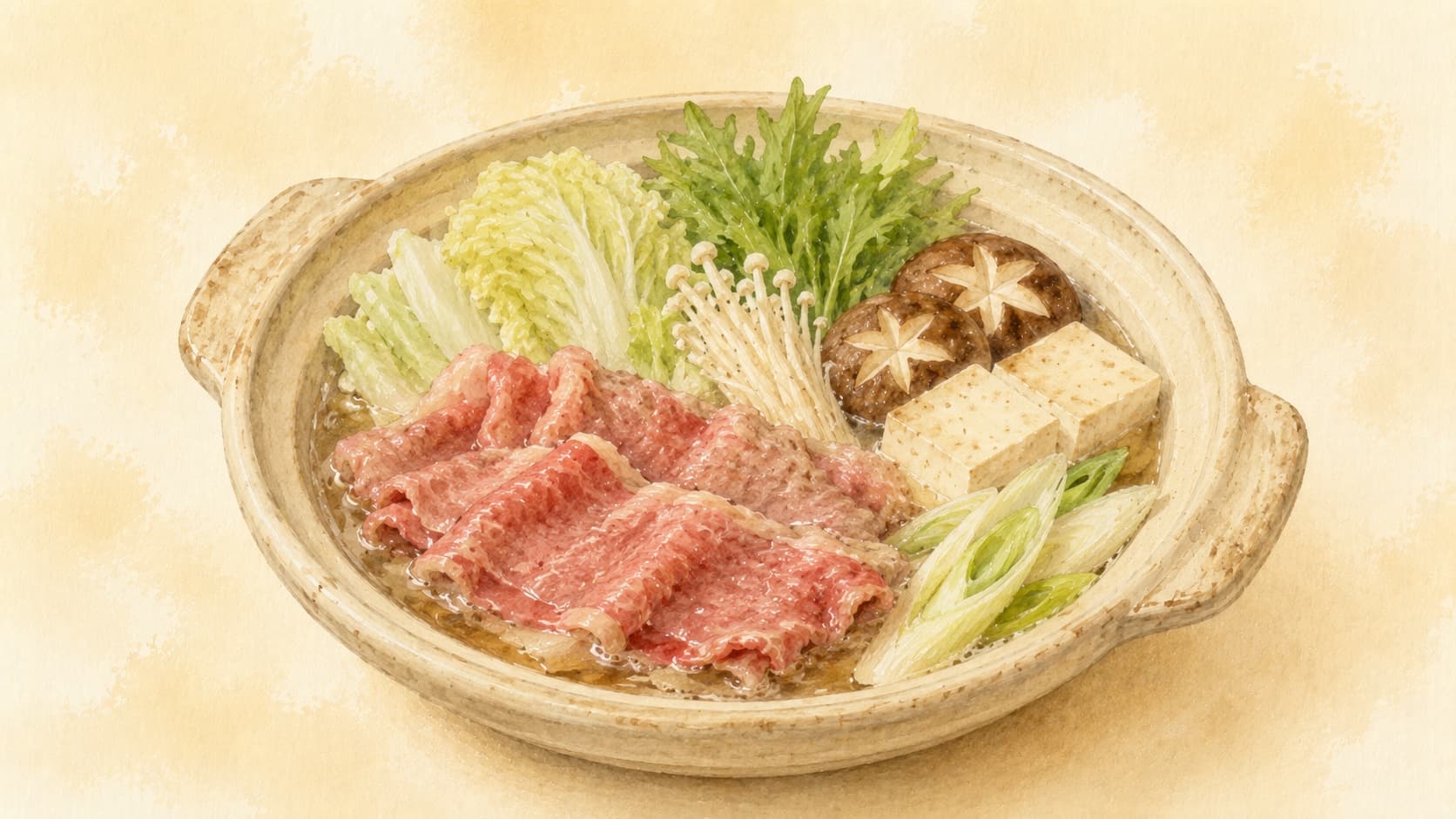
Ingredients
- 300g thinly sliced beef
- 200g shiitake mushrooms, sliced
- 200g napa cabbage, chopped
- 100g tofu, cubed
- 100g carrots, julienned
- 100g green onions, sliced
- 1 liter dashi broth
- Soy sauce, for seasoning
Steps
Prepare the dashi broth in a large pot and heat until simmering.
Arrange the sliced beef, mushrooms, cabbage, tofu, carrots, and green onions on a platter.
Once the broth is simmering, dip the vegetables and beef in the pot for about 30 seconds.
Serve immediately with soy sauce for dipping.
Repeat until all ingredients are cooked and enjoyed.
Tools you'll want
Why this works
Shabu shabu relies on the rapid cooking of thinly sliced meat and vegetables in hot broth. The key is the temperature of the broth, which should be just below boiling, around 85-90°C (185-194°F). This allows the ingredients to cook quickly without becoming tough. The thin slices of meat ensure even cooking, allowing them to remain tender.
The balance of ingredients is crucial. Vegetables like napa cabbage and shiitake mushrooms release flavors into the broth, enhancing its taste. Dashi broth provides umami, complementing the meat's richness. The quick cooking maintains the vegetables' crunch, offering a satisfying texture contrast.
Serving the dish immediately after cooking helps retain the freshness of the ingredients. Dipping sauces, such as soy sauce, further add to the flavors, allowing for personalization.
Common mistakes
Using meat sliced too thick.
Target: Beef sliced paper-thin (1.5 mm) — visible light through the slice. Pre-sliced shabu beef from a Japanese market is ideal.
Why it matters: Shabu-shabu's (Japanese hot pot where paper-thin slices are cooked one at a time in simmering broth) defining technique is "shabu shabu" — swishing the slice through hot broth for just 3–5 seconds. Thick slices need longer cooking, which toughens them and overcooks the texture you're trying to preserve. Thin slices retain pink centers and silken texture.
What to do: Buy pre-sliced shabu beef OR partially freeze a ribeye (40 minutes) and slice yourself with a sharp knife across the grain.
Workarounds:
- No Japanese market? Korean BBQ-cut beef is similar enough.
- For pork shabu (also classic), use thin loin slices the same way.
Wrong cut of beef.
Target: Well-marbled ribeye, sirloin, or chuck — at least 15 % visible fat.
Why it matters: Shabu beef's pleasure is the fat melting into the dipping sauce. Lean cuts produce dry, chewy strips that lose flavor in the broth instead of releasing it.
What to do: Look for visible marbling. Japanese A4 or A5 wagyu is ideal; Prime ribeye works well.
Workarounds:
- Budget version → choose a fattier USDA Select ribeye over a leaner Choice. The fat ratio matters more than the grade.
Overcrowding the pot.
Target: Each diner cooks 1–2 slices at a time, never more.
Why it matters: Adding many slices simultaneously drops the broth temperature, switches cooking from quick-swish to slow-poach. Vegetables wilt all at once instead of being eaten in waves.
What to do: Each person uses their own chopsticks to swish their own slice. Multiple people simultaneously is fine — but no one piles meat in.
Workarounds:
- For 4+ diners, use a divided shabu pot ("Yin-Yang" pot) — separate chambers prevent overcrowding any one section.
Boiling the broth.
Target: Gentle simmer — small bubbles rising occasionally, broth at about 85 °C.
Why it matters: A rolling boil overcooks the meat in the 3-second window, and disturbs the broth so it scatters bits of fat and protein everywhere. Gentle simmer preserves the broth clarity AND the meat's perfect texture.
What to do: Use a tabletop burner with adjustable heat. Start at medium for the broth to come up, then reduce to low for cooking.
Workarounds:
- No tabletop burner? Use a slow cooker on warm setting — slow but works.
Using plain water as broth.
Target: Kombu dashi (kelp-based Japanese stock made by steeping dried kombu in water) (just kombu + water) — light enough to let meat flavor through, but with umami (the savory "fifth taste" carried by glutamates in foods like kombu and tomatoes) foundation.
Why it matters: Plain water provides no umami, leaving the broth flavorless. Heavy dashi (with bonito) is too strong and overwhelms the beef. Kombu-only dashi is the Goldilocks zone for shabu.
What to do: Soak a piece of kombu (10 cm × 10 cm) in 1.5 L water for 30 minutes (or overnight in the fridge). Remove kombu just before boiling.
Workarounds:
- No kombu? Light chicken stock is the next best — adds umami without too much character.
- For ponzu-only shabu, plain water is acceptable because the dipping sauce carries all the flavor.
Skipping the dipping sauces.
Target: Two sauces minimum: ponzu (citrus soy) and goma dare (sesame). Both prepared in small individual bowls.
Why it matters: Shabu meat is intentionally under-seasoned — it gets its character from the dipping sauce. Without sauce, the dish reads as bland. Two sauces give textural and flavor variety.
What to do: Make ponzu fresh: 3 tbsp soy + 3 tbsp citrus juice (yuzu, lemon, or sudachi) + 1 tsp mirin. Goma dare: 3 tbsp tahini + 2 tbsp soy + 1 tbsp sugar + 1 tbsp rice vinegar.
Workarounds:
- Ponzu can be bought bottled (Mizkan brand is widely available) — slightly less fresh but acceptable.
- For variety, set up additional sauces: yuzu kosho, momiji-oroshi (grated daikon + chili), or chopped green onion + ginger.
What to look for
- Ingredients should retain vibrant colors.
- Broth should simmer gently, not boil furiously.
- Meat should be tender and slightly pink after cooking.
- Vegetables should remain crisp and bright.
- The aroma of the broth should be savory and inviting.
Chef's view
Shabu shabu is a modern Japanese dish: the name was coined in 1952 at the Suehiro restaurant in Osaka, and the style grew out of Japan's older communal hot-pot (nabemono) tradition, adapted from the Chinese instant-boiled mutton that postwar cooks had encountered. It emphasizes connection, as diners cook together at the table. The dish reflects simplicity, focusing on high-quality ingredients rather than complex techniques.
The technique emphasizes the harmony of flavors and textures. Each ingredient contributes uniquely to the broth. This dish showcases the essence of Japanese cuisine: seasonal ingredients, respect for nature, and the joy of sharing food.
<!-- beginner-glossed v1 -->Get the essays in your inbox — free
Weekly notes on flavor, fermentation, and food history — the writing behind the Atlas of Flavor. No spam; unsubscribe anytime.