
Classic Sangria
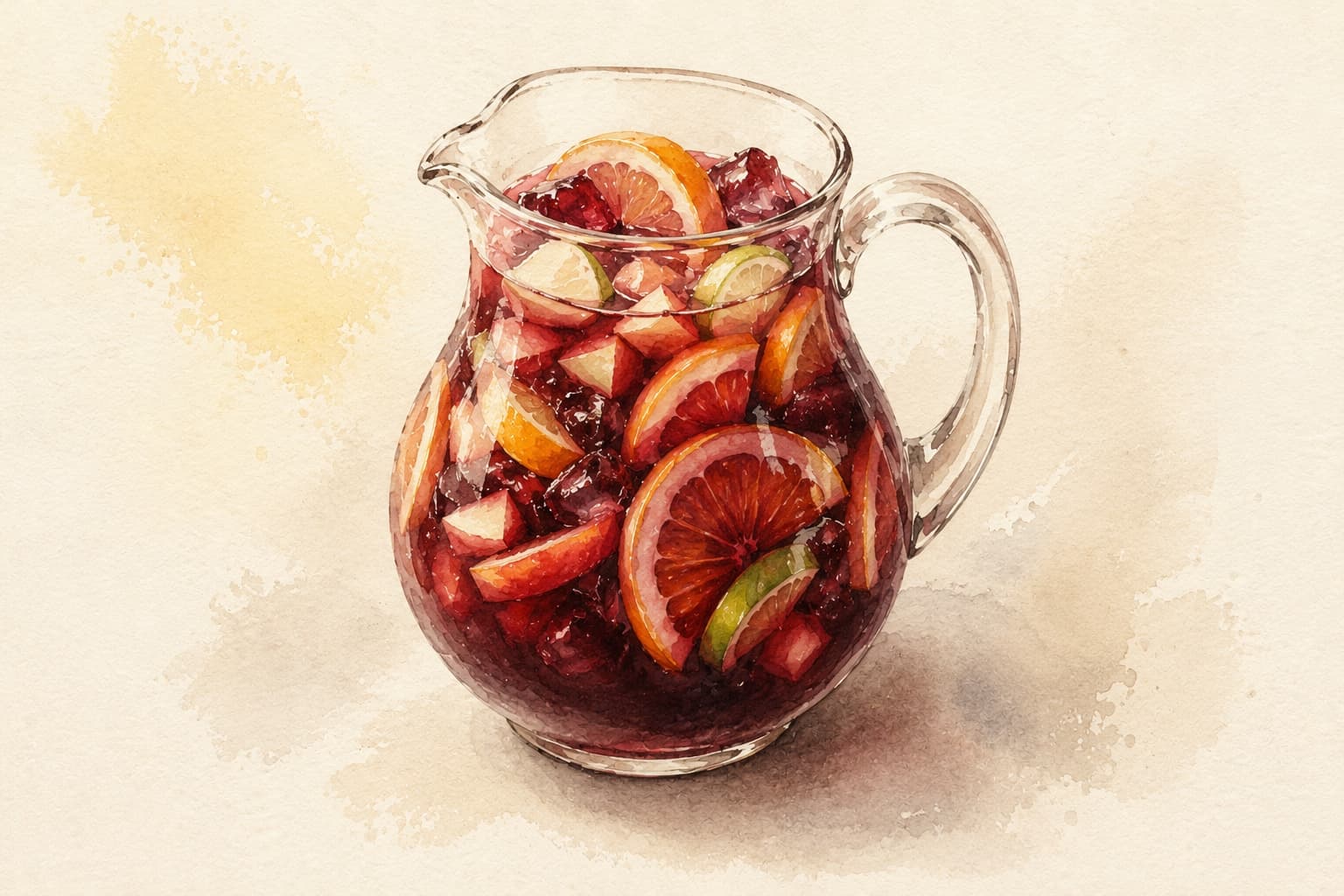
This recipe balances fruit, wine, and spices for a refreshing, aromatic drink.
Contents (5 sections)▾
Ingredients
- 1 bottle red wine (750ml)
- 1 orange, sliced
- 1 lemon, sliced
- 1 lime, sliced
- 1 apple, cored and diced
- 1 cup orange juice
- 1/4 cup brandy
- 2 tablespoons sugar
- 1 cinnamon stick
- 1 cup soda water
- Ice cubes
Steps
In a large pitcher, combine red wine, orange juice, and brandy.
Add sliced orange, lemon, lime, and diced apple.
Stir in sugar and add the cinnamon stick.
Refrigerate for at least 2 hours to allow flavors to meld.
Prior to serving, add soda water and ice cubes.
Garnish with additional fruit slices if desired.
Tools you'll want
Why this works
Sangria relies on the balance of wine and fruit for flavor. Red wine provides tannins, which add depth. Citrus fruits enhance acidity, creating brightness. Sweeteners like sugar counterbalance the tartness. Chilling the mixture allows for flavor integration, resulting in a more harmonious drink.
The combination of brandy enriches the wine's body without overpowering it. The soda water introduces effervescence, making the drink lively. The cinnamon stick infuses warm spices, enhancing complexity. Each ingredient plays a role, contributing to the overall experience.
Chilling for a minimum of two hours is crucial. This allows the fruit to infuse the wine while keeping the drink cool. Serving over ice ensures freshness, preventing dilution of flavors.
Common mistakes
Macerating the fruit too long.
Target: Macerating (soaking sliced fruit in liquid so its flavour and juice mix with the surrounding wine) — 1–4 hours is the sweet spot; 8 hours is the upper limit.
Why it matters: The white pith (albedo) of citrus releases bitter limonoid compounds over time, soaking the entire batch in a harsh aftertaste. Soft fruits like peach or strawberry break down at the cellular level and turn waterlogged. Apples brown from polyphenol oxidation.
What to do: Set a timer and respect the window.
Workarounds:
- If you need to prep the night before, add only firm fruit (apple, orange) up front and stir in soft fruit (peach, strawberry, grape) one hour before serving.
- To eliminate bitterness entirely, peel the citrus and remove the white pith before slicing, or use the juice only.
- Toss apple slices with a splash of lemon juice to slow browning.
Adding the soda water too early.
Target: Within 10 minutes of serving — ideally as you pour each glass.
Why it matters: Dissolved CO₂ diffuses out of the liquid steadily; a few hours in the fridge and the sparkle is gone. Flat sangria loses the lightness that is the entire point of the format.
What to do: Chill the wine + fruit + sweetener + liqueur ahead of time. Add the soda only at the moment of service.
Workarounds:
- For a crowd, top up the pitcher in small additions to preserve the fizz.
- For single servings, pour soda directly into each glass — the bar method, and the best one.
Choosing a wine that is too cheap.
Target: A real table wine you would drink on its own.
Why it matters: Oxidized notes, harsh tannin (the dry, mouth-puckering grip in red wine that comes from grape skins and seeds), or off-flavors cannot be masked by sugar or fruit — sugar often amplifies them into an unpleasant sweet-harsh combination.
What to do: Reach for Spanish Tempranillo, Merlot, or Syrah — fruit-forward reds that complement the macerated fruit.
Workarounds:
- If you are stuck with a thin wine, infuse a cinnamon stick + 2–3 cloves for 30 minutes (no heat) to layer aromatic complexity over the rough edges.
- If the red is too tannic, switch to a white sangria (sangría blanca) — whites carry inexpensive bottles more gracefully.
Committing to a sweetness level too early.
Target: Start with half the listed sugar; taste; add more.
Why it matters: Tannin levels, fruit ripeness, and liqueur sweetness vary widely batch to batch. "Recipe-as-written" almost always overshoots or undershoots.
What to do: Taste twice — once after mixing, once after chilling. Cold dulls perceived sweetness, so if it tastes right at room temperature it will under-deliver from the fridge.
Workarounds:
- Honey or maple syrup adds body the way sugar does not.
- For a drier profile, lean on a cinnamon stick or star anise for complexity instead of sweetness.
- To boost fruit character without more sugar, add a splash of orange juice.
Not chilling long enough.
Target: 1 hour minimum, 2–3 hours ideal — beyond that, the maceration concerns above apply.
Why it matters: Flavor transfer from fruit to wine is a diffusion process: gradual, time-dependent. Under an hour, you are drinking wine with fruit floating in it; at three hours, you are drinking sangria.
What to do: Mix in the morning, drink in the evening — or split the timing as described above.
Workarounds:
- Slice fruit thinly to increase surface area and speed diffusion.
- Pre-chill the wine in the freezer for 30 minutes before mixing.
- Use frozen fruit (grapes, berries) as the "ice" so the drink does not dilute as it chills.
What to look for
- Bright colors from the fruits.
- Clear separation of layers (wine and fruit).
- Bubbles from soda water when served.
- Aromatic scent of citrus and spices.
Chef's view
Sangria has roots in Spain, reflecting the country’s vibrant fruit harvest. Traditionally enjoyed in summer, it's a communal drink, perfect for gatherings. Each region may have its twist, but the essence remains the same: refreshment and enjoyment.
The art of sangria lies in balance. The interplay of sweet, tart, and aromatic elements creates a memorable experience. This drink embodies the spirit of sharing, where each sip tells a story.
<!-- beginner-glossed v1 -->Get the essays in your inbox — free
Weekly notes on flavor, fermentation, and food history — the writing behind the Atlas of Flavor. No spam; unsubscribe anytime.