
Samosa
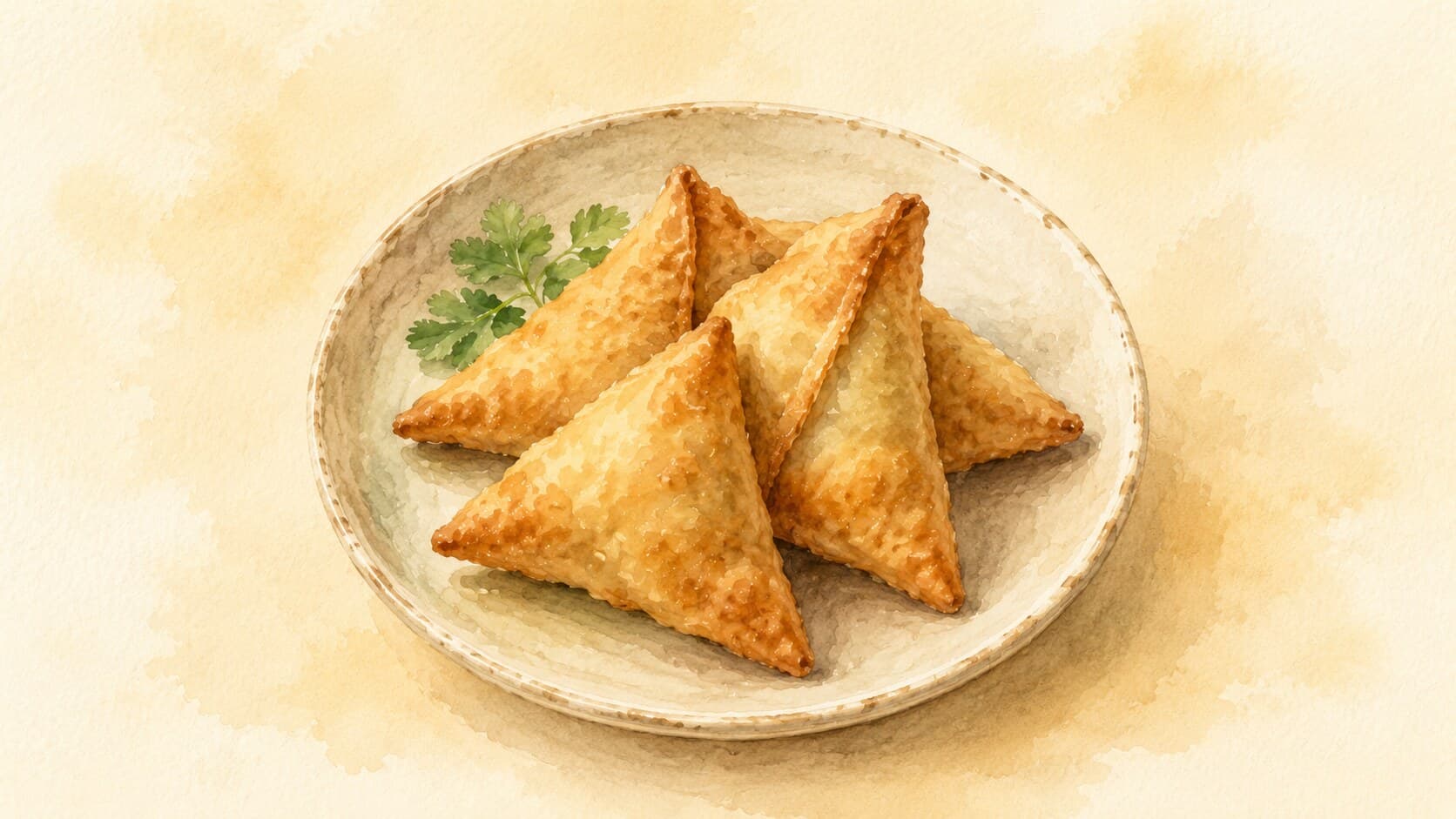
A triangular pastry filled with spiced potatoes and peas, deep-fried to achieve a crispy texture.
Contents (5 sections)▾
Ingredients
- 2 cups all-purpose flour
- 4 tablespoons oil
- 1/2 teaspoon salt
- 1/4 cup water
- 2 large potatoes, boiled and mashed
- 1/2 cup green peas, cooked
- 1 teaspoon cumin seeds
- 1 teaspoon garam masala
- 1 teaspoon chili powder
- 1 tablespoon lemon juice
- Oil for frying
Steps
In a bowl, mix flour, salt, and oil until crumbly.
Gradually add water to form a smooth dough; cover and set aside.
In a pan, heat oil and add cumin seeds; allow them to splutter.
Add mashed potatoes, peas, garam masala, chili powder, and lemon juice; mix well.
Roll out dough, cut into circles, fill with potato mixture, and fold into triangles.
Fry in hot oil until golden brown; drain on paper towels.
Tools you'll want
Why this works
The dough must be kneaded until smooth for optimal elasticity. This allows the samosas to hold their shape during frying. A higher fat content in the dough leads to a flakier texture. The filling should be well-seasoned to ensure every bite is flavorful. Cooking the filling prior to stuffing allows moisture to evaporate, preventing a soggy samosa.
Frying at the right temperature is crucial. Too hot, and the exterior burns before the filling is heated; too cool, and the samosas absorb excess oil. Aim for around 350°F (175°C). The final product should have a crisp exterior and a well-cooked, spiced interior.
Common mistakes
Wrong oil temperature.
Target: 160 °C — relatively low for deep frying. Fry slowly for 8–10 minutes until deep golden.
Why it matters: High-heat frying produces samosas with bubbles on the surface (overheated dough) and pale interiors. Authentic samosas have smooth, even, deeply golden surfaces from slow, low-heat frying.
What to do: Use a thermometer. Test with one samosa first — surface should be smooth as it fries.
Workarounds:
- Bubbly surface? Reduce heat to 150 °C for the rest of the batch.
Skipping the second flour-paste seal.
Target: Make a thick flour-water paste (1 part flour + 1 part water), use to seal edges.
Why it matters: Water alone doesn't reliably seal samosa edges — they pop open during frying, spilling filling and creating a mess. The flour paste creates a reliable bond.
What to do: Mix paste in a small bowl. Brush onto edges before sealing each samosa.
Workarounds:
- Beaten egg white works similarly (Indian recipes vary).
Boiling potatoes for the filling.
Target: Steam or boil potatoes whole with skin on, then peel and cube AFTER cooking.
Why it matters: Pre-peeled cubed potatoes boiled in water become waterlogged and mushy. Whole-skin cooking preserves structure — the cubes hold shape in the filling, giving the samosa textural identity.
What to do: Steam or boil whole, cool slightly, peel, then dice 1 cm cubes.
Workarounds:
- Crispier filling → roast diced potatoes at 220 °C for 25 minutes instead of steaming.
Not toasting whole spices.
Target: Toast cumin seeds, coriander seeds, fennel seeds in dry pan for 30 seconds before grinding or using whole (toasting means heating spices briefly with no oil to wake up their aroma).
Why it matters: Pre-ground spices have lost most of their volatile aromas. Toasted whole spices ground or used immediately produce dramatically more aromatic samosas.
What to do: Toast spices, then grind in a mortar (or use whole). Mix into the filling.
Workarounds:
- For shortcut, use good garam masala (a North Indian warming spice blend usually built around cumin, coriander, cardamom, cinnamon, and clove) as a finishing spice — adds aroma without grinding.
Skipping the chutneys.
Target: Serve with mint-cilantro chutney AND tamarind-date chutney — sweet and herbaceous contrast.
Why it matters: Samosas without chutney are dry and one-dimensional. The two chutneys provide acid, freshness, and sweetness that balance the fried, spiced filling.
What to do: Make chutneys ahead. Mint-cilantro: blend mint + cilantro + green chili + lime + salt. Tamarind: simmer tamarind + jaggery + dates + cumin.
Workarounds:
- Bottled chutneys from Indian groceries are acceptable.
What to look for
- Golden-brown color on the exterior.
- Crisp texture when bitten into.
- A fragrant aroma of spices wafting from the filling.
- The filling should be visibly steaming when cut open.
Chef's view
Samosas have a rich history in Indian cuisine, believed to have originated in the Middle East before making their way to India. They exemplify the fusion of flavors and textures, marrying a crisp exterior with a spiced interior.
In many Indian households, making samosas is a communal activity, often involving family members working together to prepare the dough and filling. This reflects the cultural significance of sharing food, which fosters connection and community.
<!-- beginner-glossed v1 -->Get the essays in your inbox — free
Weekly notes on flavor, fermentation, and food history — the writing behind the Atlas of Flavor. No spam; unsubscribe anytime.