
Saag Paneer
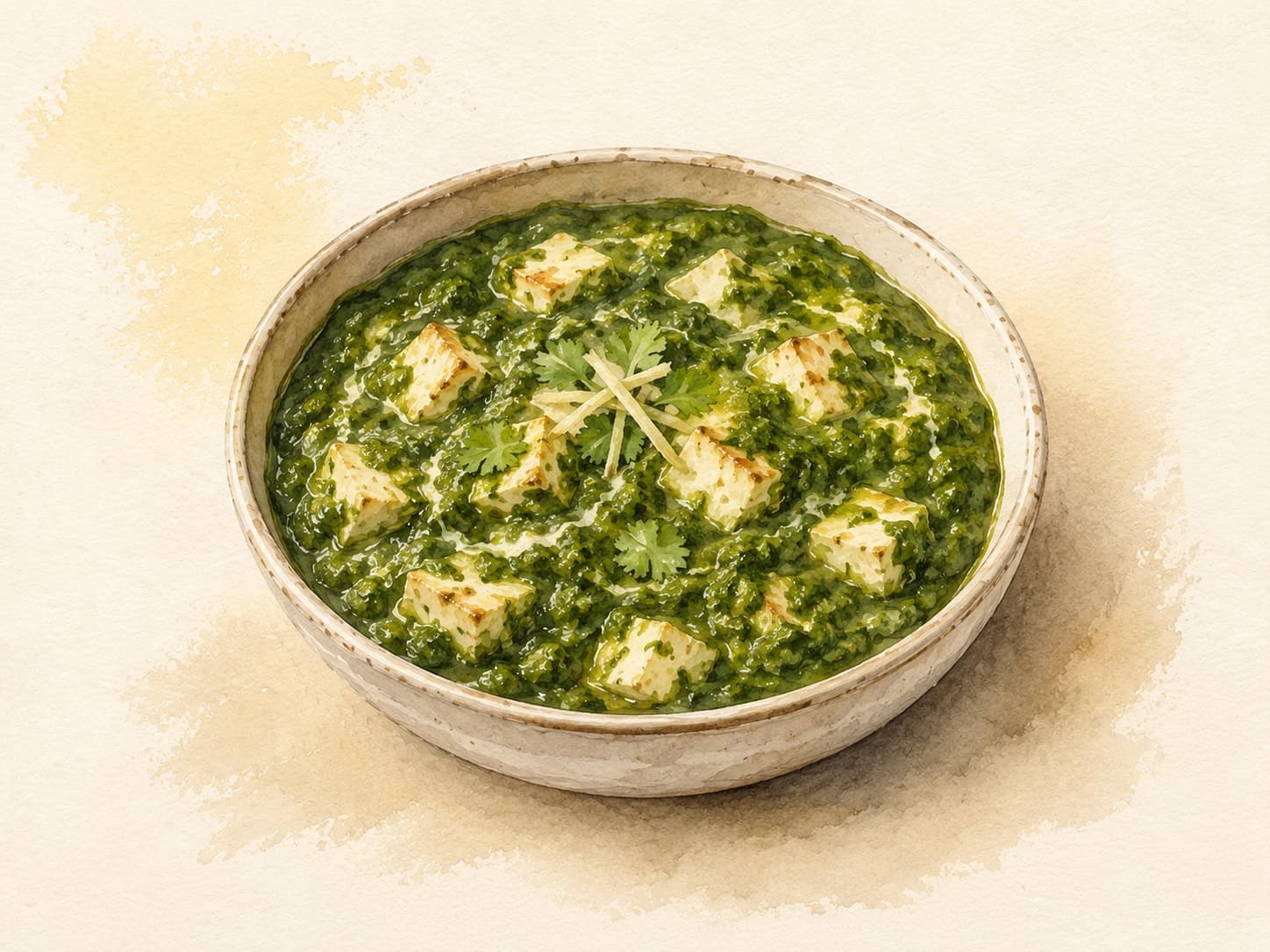
Combining spinach and paneer creates a nutritious, flavorful dish with a creamy texture.
Contents (5 sections)▾
Ingredients
- 500g fresh spinach
- 200g paneer, cubed
- 1 large onion, finely chopped
- 2 tomatoes, chopped
- 2 green chilies, slit
- 1 tsp ginger-garlic paste
- 1/2 tsp cumin seeds
- 1/2 tsp garam masala
- 2 tbsp oil
- Salt to taste
- 1/4 cup cream (optional)
- Fresh coriander for garnish
Steps
Blanch the spinach in boiling water for 2 minutes, then cool and blend into a smooth paste.
Heat oil in a skillet, add cumin seeds, and sauté until they crackle.
Add onions and cook until golden brown, then stir in ginger-garlic paste and green chilies.
Add tomatoes, cook until soft, then mix in the spinach paste and simmer.
Add paneer cubes and garam masala, cook for 5 minutes, then stir in cream if using.
Garnish with fresh coriander and serve hot with naan or rice.
Tools you'll want
Why this works
Cooking spinach at high temperatures briefly preserves its vibrant color and nutrients. Blanching (briefly plunging into boiling water, then ice water to lock in color) softens the leaves, allowing for a smooth puree that retains flavor. The addition of cream enriches the sauce, balancing the earthiness of spinach. Paneer (a mild Indian fresh cheese that holds its cube shape when cooked) absorbs the flavors of the spices, enhancing its creamy texture.
Common mistakes
Blanching too long.
Target: Blanch spinach for 60 seconds in salted boiling water, then immediately ice-bath to lock in color.
Why it matters: Over-blanched spinach turns dull olive-brown instead of vibrant green. The ice bath stops cooking immediately, preserving the chlorophyll. Brown saag = unappetizing saag.
What to do: Have ice water ready. Blanch quickly, shock immediately, drain.
Workarounds:
- Frozen spinach? Skip the blanch entirely — already cooked. Just thaw and squeeze dry before blending.
Frying the paneer too long.
Target: Fry paneer cubes in ghee for 2–3 minutes per side until LIGHTLY golden. NOT deep brown.
Why it matters: Over-fried paneer becomes rubbery and chewy. Lightly golden paneer stays tender inside while developing a faint Maillard crust. The texture contrast is essential.
What to do: Medium heat, watch carefully. Pull when each side is just gold.
Workarounds:
- For softer paneer, soak fried paneer in warm water for 10 minutes before adding to the saag.
- Skip frying entirely for a "softer" saag paneer — add raw cubes to the gravy in the final 5 minutes.
Skipping the kasuri methi.
Target: Add 1 tsp crushed dried fenugreek leaves (kasuri methi) in the final 2 minutes.
Why it matters: Kasuri methi is what makes saag paneer taste authentically Indian. Without it, the dish reads as "creamed spinach with cheese" — fine but missing the dimension.
What to do: Source from an Indian grocery. Crush between palms before adding to release aroma.
Workarounds:
- No kasuri methi? 1/2 tsp fenugreek seeds toasted and ground approximates the flavor.
Using all spinach (no mustard greens).
Target: Traditional saag uses a MIX of greens — spinach + mustard greens + radish leaves. Pure spinach makes "palak paneer" (a related but different dish).
Why it matters: The mustard greens add the distinctive slightly bitter, peppery depth that defines "saag." All-spinach versions are softer and one-note.
What to do: Mix 50/50 spinach + mustard greens. Add some bathua (chenopodium) if available.
Workarounds:
- No mustard greens? Spinach + a handful of arugula approximates the slight bitterness.
Using cream as the only fat.
Target: Ghee as the cooking fat, with a touch of cream at the end for richness.
Why it matters: Ghee's nutty butterfat provides the foundational depth. Cream alone makes the dish taste dairy-heavy and Westernized. Authentic saag uses ghee.
What to do: Use ghee for tempering spices and frying paneer. Stir in 2 tbsp cream at the end for richness.
Workarounds:
- Vegan? Use coconut oil + 2 tbsp cashew paste instead of ghee and cream.
What to look for
- A vibrant green color in the sauce indicates freshness.
- The paneer should be soft and not overly chewy.
- The aroma of spices should be pronounced but not overpowering.
- A creamy texture in the sauce without excessive liquid.
Chef's view
Saag paneer (a North Indian dish of leafy greens simmered with cubes of fresh cheese) represents the essence of North Indian cuisine, blending fresh greens with dairy. This dish has roots in Punjabi traditions, where dairy is celebrated. The technique of blending and simmering allows for a rich, harmonious flavor. Each ingredient plays a vital role, creating a comforting meal that celebrates simplicity and nutrition.
<!-- beginner-glossed v1 -->Get the essays in your inbox — free
Weekly notes on flavor, fermentation, and food history — the writing behind the Atlas of Flavor. No spam; unsubscribe anytime.