
Risotto alla Milanese
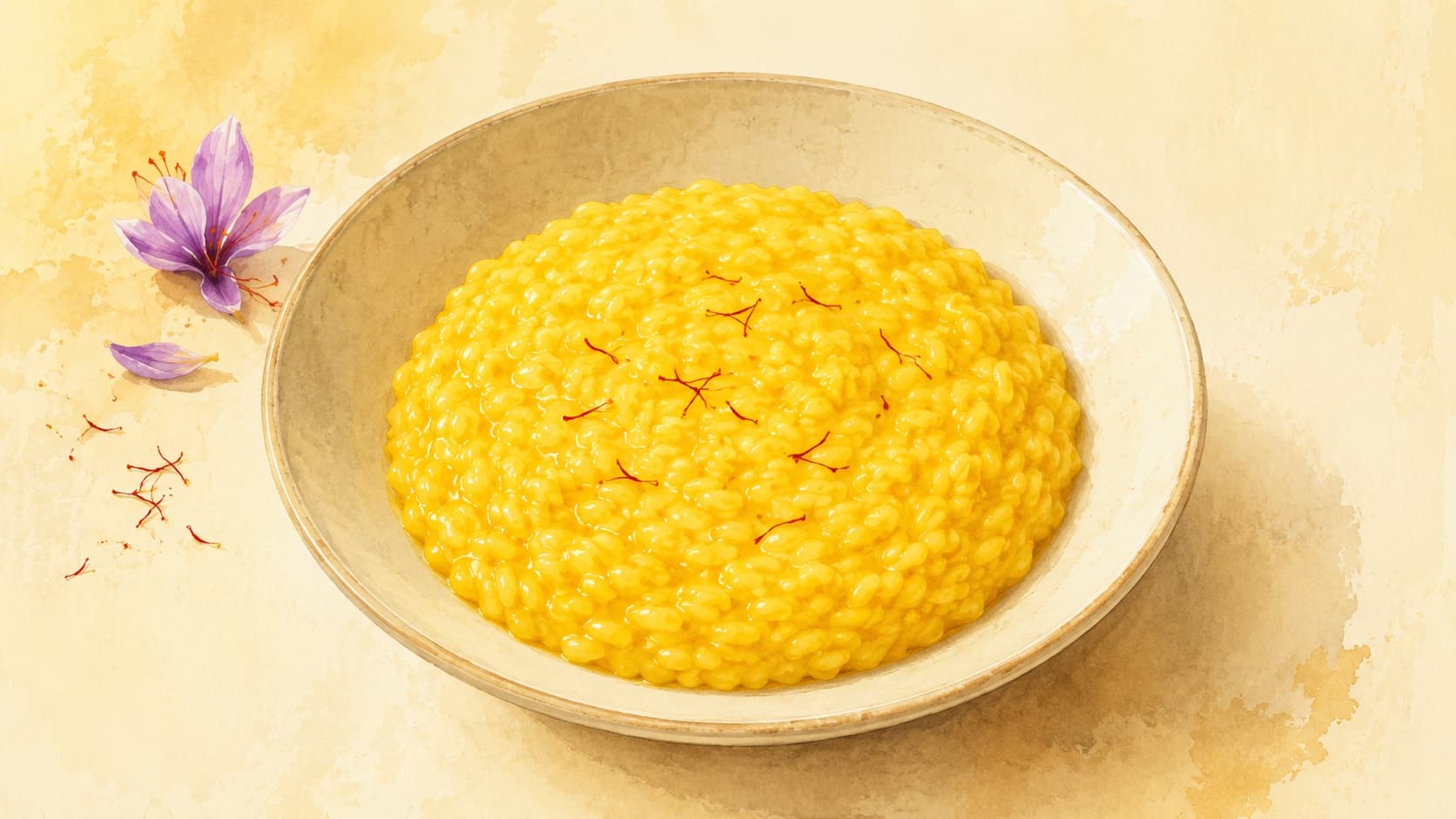
This dish combines the creamy texture of Arborio rice with the aromatic infusion of saffron, creating a luxurious experience.
Contents (5 sections)▾
Ingredients
- 1 ½ cups Arborio rice
- 4 cups chicken or vegetable broth
- 1 small onion, finely chopped
- 1 cup dry white wine
- 1 teaspoon saffron threads
- 3 tablespoons unsalted butter
- ½ cup grated Parmesan cheese
- Salt to taste
- Fresh parsley for garnish
Steps
Heat broth in a saucepan and keep it warm.
In a wide, heavy skillet, melt 2 tablespoons of butter over medium heat.
Add the onion and sauté until translucent.
Stir in the Arborio rice, cooking for 2 minutes until lightly toasted.
Pour in the wine and cook until absorbed, then add saffron and a ladle of broth.
Continue adding broth gradually, stirring frequently until rice is al dente, about 18 minutes.
Stir in remaining butter, Parmesan, and season with salt, then garnish with parsley.
Tools you'll want
- · Digital kitchen scale (gram precision)
Why this works
Risotto alla Milanese relies on the starch content of Arborio rice, which creates a creamy texture when cooked slowly. Gradual addition of warm broth allows the rice to absorb moisture evenly, promoting a tender yet slightly al dente bite. The infusion of saffron provides depth, and its oils release better at higher temperatures, enhancing flavor.
Maintaining a consistent simmer is crucial; too high a temperature can lead to uneven cooking and a sticky texture. Stirring frequently helps release starch, contributing to the creamy consistency without needing additional cream. The final incorporation of cheese and butter enriches the dish, balancing flavors and enhancing mouthfeel.
Common mistakes
Adding cold broth to the rice.
Target: Broth held at a low simmer (~85 °C) in a separate pot.
Why it matters: Each ladle of liquid that hits the rice should NOT drop the pan temperature. Cold broth stalls starch release, halts the cooking arc, and forces you to compensate by overcooking the rice later. The result is gummy and uneven.
What to do: Keep a small saucepan of broth simmering on a back burner. Ladle the broth in 1 cup at a time.
Workarounds:
- If you run out of warm broth, switch to hot tap water for the last addition — better than cold stock.
- A "fast risotto" technique pre-cooks the rice for 5 minutes in all the broth at once, then finishes in the traditional ladle-and-stir style — useful when you're rushed.
Overcooking past al dente.
Target: 16–18 minutes of cooking; the rice should have a slight bite (chalky core just gone).
Why it matters: Risotto continues cooking after you remove it from the heat (mantecatura adds 60–90 seconds of residual heat). Stopping at "perfect" means you serve "overcooked."
What to do: Pull the pan from the heat 1 minute before you think it's ready. Taste a grain — the center should be slightly firm.
Workarounds:
- If overcooked, fold in 50 g cold butter aggressively to drop the temperature fast and stop further softening.
- For dinner-party staging, spread the par-cooked risotto on a sheet pan to chill (the classic restaurant trick), then finish with broth at the moment of serving.
Adding saffron directly to the rice.
Target: Bloom saffron (the dried thread-like stigmas of a crocus flower, used as a fragrant golden spice) in warm broth or wine for at least 10 minutes before adding.
Why it matters: Saffron's aroma compounds (safranal, picrocrocin) are fat- and water-soluble but volatile. Tossing dry threads into the pan loses 60–70 % of the perfume to evaporation; blooming extracts them into liquid where they stay anchored.
What to do: Crumble the saffron into a small ladle of hot broth at the start of cooking. Add it at the halfway point.
Workarounds:
- No time to bloom? Toast the threads briefly in a dry pan first (10 seconds, no color) to volatilize moisture, then crumble — slightly less extraction loss.
- For deeper color without more saffron, add a pinch of turmeric to the broth (not traditional, but defensible for color-balance issues).
Skipping the toasting step (tostatura — Italian for the dry-toasting of the rice grains in fat before any liquid).
Target: Toast dry rice in butter or oil for 2–3 minutes until grains turn translucent at the edges.
Why it matters: Toasting partially gelatinizes the outer starch and seals the grain — this is what gives risotto its grain integrity (each grain stays distinct in the creamy emulsion). Skip it and the result is rice porridge, not risotto.
What to do: Always toast first. Listen for the grains to "click" against the pan.
Workarounds:
- No butter for tostatura? Use the rendered fat from the bone-marrow step (canonical for Milanese), or olive oil.
- For deeper toast flavor, allow the grains to take a pale gold color — not brown.
Skipping the wine.
Target: Half a glass of dry white wine, evaporated to dryness before the first broth addition.
Why it matters: The wine's acidity sharpens the dish and counteracts the richness of the marrow + butter + cheese. Without it, the dish reads as flat and one-note.
What to do: Pour the wine in after toasting, let it bubble out completely before ladling broth.
Workarounds:
- No wine? Use 1 tablespoon of white wine vinegar diluted in 50 ml of broth.
- For an alcohol-free version, finish the dish with a squeeze of lemon juice instead — covers the same acid-balance role.
Not finishing with mantecatura (the off-heat butter-and-cheese finish that makes the risotto creamy).
Target: Off-heat, fold in cold butter (50 g per 300 g rice) + grated Parmigiano (Italy's aged hard cheese, Parmigiano-Reggiano) in a single vigorous motion called "mantecare."
Why it matters: This is where the creamy emulsion happens. Adding cheese to a still-bubbling pan just melts it into oil pools; adding cold butter off-heat creates the proper amalgamation.
What to do: Pull the pan from the heat, add cold butter + cheese, stir vigorously for 30 seconds, rest covered for 1 minute, stir once more, serve.
Workarounds:
- If the mantecata seems too tight, loosen with a splash of hot broth.
- If it breaks (oil pools visible), whisk in a splash of cold broth to re-emulsify.
What to look for
- The risotto should have a creamy consistency, not soupy.
- Rice grains should be plump and tender with a slight bite.
- The color should be a vibrant golden hue from the saffron.
- A light sheen from the emulsified butter and cheese should coat the grains.
Chef's view
Risotto alla Milanese is a staple of Milanese cuisine, celebrated for its luxurious texture and rich flavor. It showcases the Italian philosophy of using simple, high-quality ingredients to create something extraordinary. The dish is often served during special occasions, reflecting its status as a comfort food that resonates with tradition.
In mastering risotto, one learns the importance of patience and technique. Each step, from toasting the rice to the gradual addition of broth, is vital in achieving the desired result. This methodical approach enhances skills and fosters a deeper appreciation for the art of cooking.
<!-- beginner-glossed v1 -->Get the essays in your inbox — free
Weekly notes on flavor, fermentation, and food history — the writing behind the Atlas of Flavor. No spam; unsubscribe anytime.