
Risotto ai Funghi
This dish exemplifies the balance of creamy texture and earthy flavor achieved through precise cooking techniques.
Contents (5 sections)▾
Ingredients
- 1 cup Arborio rice
- 4 cups vegetable broth
- 1 cup mushrooms, sliced
- 1 small onion, finely chopped
- 2 cloves garlic, minced
- 1/2 cup white wine
- 1/2 cup Parmesan cheese, grated
- 2 tablespoons olive oil
- 2 tablespoons butter
- Salt to taste
- Black pepper to taste
- Fresh parsley for garnish
Steps
In a saucepan, heat the vegetable broth over low heat.
In a wide heavy skillet, heat olive oil and butter over medium heat.
Add onion and garlic; sauté until translucent.
Stir in mushrooms; cook until softened.
Add Arborio rice; toast for 2 minutes.
Pour in white wine; stir until absorbed.
Gradually add broth, one ladle at a time, stirring continuously until absorbed.
Finish with Parmesan cheese, salt, pepper, and garnish with parsley.
Tools you'll want
Why this works
Risotto achieves its creamy texture through the release of starch from Arborio rice. The rice must be stirred continuously while gradually adding broth. This technique encourages even absorption and prevents clumping. The temperature should remain steady; too high can scorch the rice, while too low may not release sufficient starch.
The choice of mushrooms adds depth. Sautéing them before adding the rice enhances their flavor. Using white wine deglazes the pan, contributing acidity that balances the richness of the cheese. The gradual addition of broth allows for controlled cooking, ensuring the rice remains al dente.
Timing is crucial. Each ladle of broth should be fully absorbed before adding more. This process develops a cohesive dish, where flavors meld and the texture remains luxurious. The final addition of cheese enriches the risotto, creating a harmonious blend of flavors.
Common mistakes
Skipping the dried porcini soak.
Target: Soak 15–20 g dried porcini (Italian wild mushrooms sold dried, intensely savory) in 250 ml warm water for 30 minutes. Strain the soaking liquid through a coffee filter and use it as part of the broth.
Why it matters: The depth of "funghi" risotto (Italian for mushrooms) comes from the rehydration liquid as much as from the mushrooms themselves. Concentrated umami compounds (glutamate, guanylate) leach into the water — discarding it cuts the dish's complexity in half.
What to do: Soak first, then use the strained liquid. Reserve the rehydrated porcini and sauté them with the fresh mushrooms.
Workarounds:
- No dried porcini? Use any dried mushroom — shiitake, morel, even Japanese dried shiitake from Asian markets — they all add depth.
- For an even quicker route, add a teaspoon of mushroom soy sauce or a dash of MSG to the broth.
Adding fresh mushrooms too early.
Target: Sauté mushrooms in a separate pan first, add them to the risotto in the final 5 minutes.
Why it matters: Mushrooms are 90 % water. If you toss them in with the rice from the start, they release their water into the rice and never brown — producing the dreaded "soggy mushroom risotto." Browning them separately develops the Maillard compounds that distinguish good funghi risotto from grey mush.
What to do: In a hot pan with butter, sauté mushrooms in a single layer until golden, then season with salt only after browning.
Workarounds:
- For very small kitchens with no second pan, sauté the mushrooms first, set aside, then start the risotto in the same pan.
- For a one-pan version, cook mushrooms first, remove, do risotto, return mushrooms at the end.
Using cold broth.
Target: Broth simmering at 85 °C in a separate pot on a back burner.
Why it matters: Cold broth drops the pan temperature, stalls starch release, and forces over-cooking to compensate. Result: gummy texture.
What to do: Keep a saucepan of broth at a low simmer the entire cook.
Workarounds:
- Ran out of warm broth at the end? Hot tap water beats cold stock.
- Pressure-cook stock concentrate (1 cube + hot water + a splash of soaking liquid) for emergencies.
Skipping the wine.
Target: Half a glass of dry white wine, evaporated before broth additions begin.
Why it matters: The wine adds acid that balances the richness of butter, cheese, and mushrooms. Without it, the dish reads heavy and one-note.
What to do: Pour in after toasting the rice, simmer to dry before adding broth.
Workarounds:
- No wine? 1 tbsp dry vermouth or 1 tsp white wine vinegar diluted in 50 ml water.
- For alcohol-free, finish with a squeeze of lemon at the end.
Skipping mantecatura (the finishing step).
Target: Off-heat, fold in 50 g cold butter + 50 g grated Parmigiano (aged Italian hard cheese, Parmigiano-Reggiano) in one vigorous motion.
Why it matters: This is where the creamy emulsion happens. Stirring cheese into a still-simmering pan just melts it into oil pools; cold butter off-heat produces the proper amalgamation that defines a great risotto.
What to do: Pull from heat, add butter + cheese, stir hard for 30 seconds, rest covered 1 minute, stir once, plate.
Workarounds:
- Too tight? Loosen with a splash of hot broth.
- Broken (oil pools)? Whisk in a splash of cold broth to re-emulsify.
What to look for
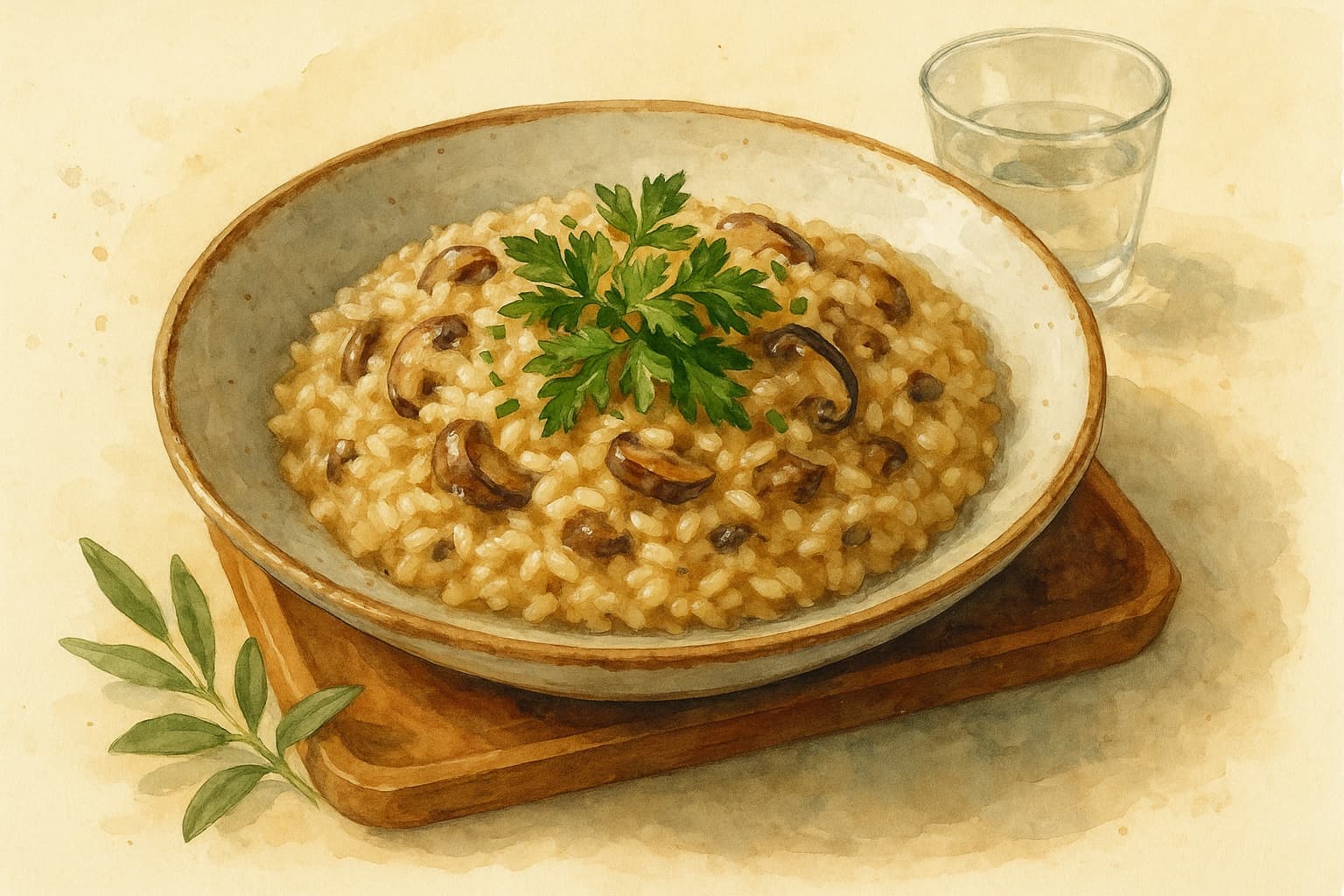
- A glossy, creamy consistency in the risotto.
- Rice grains that are tender yet firm to the bite.
- A fragrant aroma of sautéed mushrooms and garlic.
- A light golden hue from the wine and sautéing process.
- Fresh parsley garnish adding a pop of color.
Chef's view
Risotto is a staple of Northern Italian cuisine, traditionally made with local ingredients. The technique is as vital as the ingredients. Mastery of the slow, gradual cooking process defines a good risotto.
The cultural significance of risotto extends beyond taste. It's often a communal dish, bringing people together around the table. Learning to make risotto fosters a connection to Italian culinary traditions, emphasizing patience and care in cooking.
<!-- beginner-glossed v1 -->Get the essays in your inbox — free
Weekly notes on flavor, fermentation, and food history — the writing behind the Atlas of Flavor. No spam; unsubscribe anytime.